
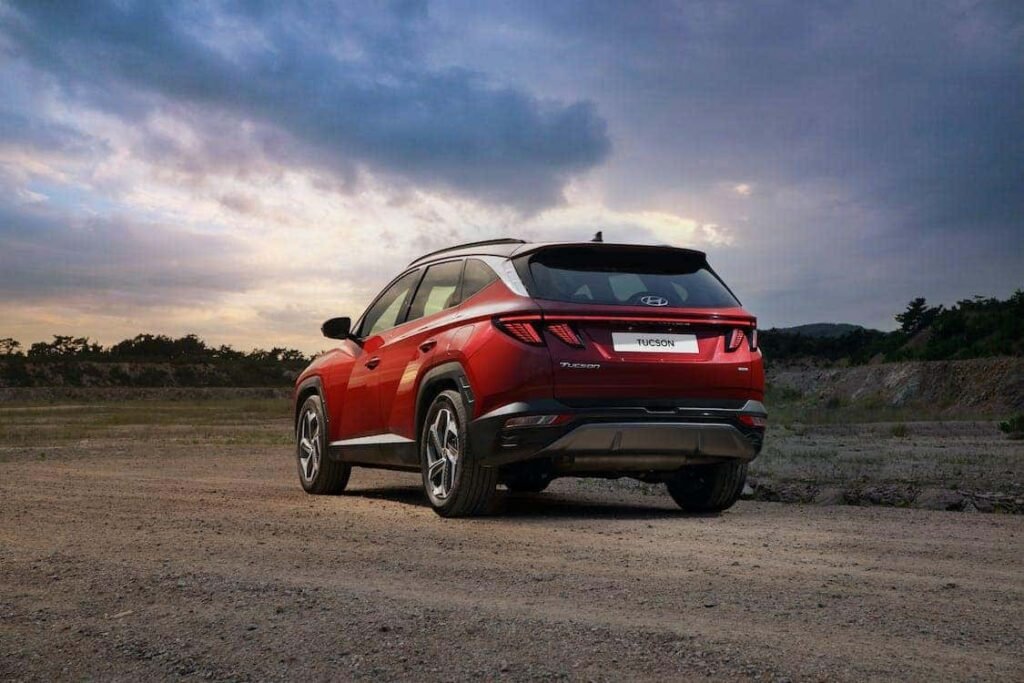
The Hyundai Tucson is a compact family SUV that first went on sale in 2004, and it is now the best selling model Hyundai makes. More than 7 million have been sold worldwide, 1.4 million of them in Europe. It is named after the city of Tucson in Arizona and shares its base parts with the Kia Sportage.
The recipe is simple. Five seats, a big boot, a high driving position and sensible running costs, in a car that is easy to live with. It suits families who want SUV space without SUV size, and used buyers after equipment for the money. The close rivals are the Toyota RAV4, the Honda CR-V and the Nissan Qashqai.
Sales show how well that recipe works. Hyundai sold more than 200,000 Tucsons in the US in both 2023 and 2024, and European sales passed 150,000 in the strongest years. Keen pricing, generous kit and a long warranty keep it at the sharp end of the UK family SUV class, and the hybrid versions pushed it up the US charts too.
Hyundai Tucson at a glance
Here is the short version of what the Tucson is and how the range fits together.
| Item | Details |
|---|---|
| Generations and years | Four generations from 2004 to today, with a fifth generation revealed in 2026 for the 2027 model year |
| Body style | Five door compact SUV |
| Main engines | Petrol in 1.6, 2.0, 2.4 and 2.5 liter sizes, diesel in 1.7 and 2.0 on older cars, and 1.6 turbo hybrid and plug in hybrid on the current car |
| Gearboxes | Six speed manual, six and eight speed automatic, and a seven speed dual clutch on some versions |
| Drive options | Front wheel drive as standard, with all wheel drive offered on many versions |
| Seats | Five |
| Boot space range | 513 liters with the seats up on the 2015 to 2020 car, and up to 1,096 liters quoted for the current long wheelbase US car. European cars use a shorter body, so check your market figure |
The short verdict, before the detail: the current hybrid is the best all round Tucson, and a facelift car from 2019 or 2020 is the best used value. The early dual clutch cars are the ones to approach with care.
Generations explained
Four generations matter to buyers, and a fifth is on the way.
| Generation | Years | What changed |
|---|---|---|
| First (JM) | 2004 to 2009 | The original, smaller and simpler, with 2.0 petrol, 2.7 V6 and 2.0 diesel engines. |
| Second (LM) | 2009 to 2015 | Sold as the ix35 in Europe and Australia, and as the Tucson in North America. Sleeker and more road focused, with four cylinder engines only. |
| Third (TL) | 2015 to 2021 | The Tucson name returned in Europe, with a bigger boot, safety tech, a turbo petrol and a dual clutch option. |
| Fourth (NX4) | 2020 to present | Bold styling, two body lengths, and the first hybrid and plug in hybrid Tucsons. Facelifted for the 2025 model year. |
| Fifth (NX5) | 2027 model year | Revealed in 2026, boxier, with turbo petrol and hybrid power. Not on sale yet, so the fourth generation is the car you can buy today. |
The 2015 to 2020 car, the TL, is the used buy most people will shop for. It was sold in the US as a 2016 to 2021 model. The boot grew to 513 liters, and safety kit such as blind spot detection arrived. The US got a simple 2.0 liter petrol with a normal automatic, or a 1.6 liter turbo with a dual clutch gearbox. Europe got those petrols plus 1.7 and 2.0 liter diesels. The 2018 facelift sharpened the styling, added safety kit and, in the US, dropped the turbo and the dual clutch for a 2.4 liter petrol with a normal automatic. Buy the facelift car if you can. It is the safer used buy, for reasons the problems section sets out.
The 2021 to present car, the NX4, was revealed in September 2020 and reached the US as a 2022 model. Europe gets a shorter car built in the Czech Republic, the US a longer one built in Alabama. The cabin went digital, and hybrid and plug in hybrid versions joined the range. A facelift in late 2023, sold as the 2025 model, cleaned up the cabin and restored proper switches. If your budget reaches this generation, it is the Tucson to have.
Generations in detail
- Hyundai Tucson 2015 to 2020: Specs, Problems and Costs
- Hyundai Tucson 2021 to Present: Specs, Problems and Costs
Engines and specs that matter
European petrols on the older car start with a 1.6 liter at about 130 hp. The 1.6 liter T-GDi turbo is the keen one, with 175 hp and a manual gearbox or the seven speed dual clutch automatic. US cars used a 2.0 liter with 164 hp and a normal automatic, and after the facelift a 2.4 liter with 181 hp replaced the turbo. None is fast, but all are fine for family work.
Diesel was a European story. The 1.7 CRDi came with 114 hp or 139 hp, and the 2.0 CRDi with 134 hp to 182 hp. The 2.0 diesel is the pick of the older range for long trips: strong from low revs, settled on the highway, and light on fuel next to the petrols. One warning: a diesel used only for short town trips can clog its particulate filter, covered below.
The current car is simpler. Europe gets a 1.6 liter T-GDi petrol at about 150 hp, plus mild hybrid versions up to 180 hp. The US gets a 2.5 liter petrol with 187 hp and an eight speed automatic. Testers call it steady rather than quick, but there is no turbo and no dual clutch to worry about. US figures put it at 26 to 28 mpg combined.
The hybrid pairs the 1.6 liter turbo with an electric motor for about 230 hp in total, drives through a six speed automatic, and US ratings put it at up to 38 mpg combined. The plug in hybrid has a bigger 13.8 kWh battery, makes 261 hp, and covers about 32 miles on electric power alone. In the US, petrol cars tow up to 2,500 pounds when properly equipped, and the hybrids up to 2,000 pounds.
So make the choice this way. Town and high mileage drivers: the hybrid, quicker and much lighter on fuel. Long distance drivers in Europe: a well kept 2.0 diesel from the older range, or the current hybrid. Budget buyers: the plain petrols, cheaper to buy and simple to maintain. Drivers who live in slow traffic: think hard before a dual clutch car, for the reasons below.
Common problems by generation
This section decides whether a used Tucson is a bargain or a bill. Each fault below comes with what to check, what to ask for, and what it can cost you.
The dual clutch gearbox is the biggest risk on the 2015 to 2020 car. It came with the 1.6 liter turbo, and it is known for hesitation when pulling away, lurching at low speed and judder in slow traffic. Some owners report it refusing to engage a gear at all. Hyundai issued software updates and service work for clutch judder on 2016 to 2018 cars, but software does not fix a worn clutch pack. Test it properly: creep in slow traffic, reverse, and do several hill starts. Ask the seller for gearbox service records and paperwork for any updates or clutch work. If it hesitates badly or shudders from a stop, walk away. Clutch or gearbox work can run to several thousand dollars, which wipes out any saving on the price.
Engine checks matter on US cars from this period. Certain 2017 Tucsons with the 2.0 liter Nu GDi engine were recalled for connecting rod bearing wear. A worn bearing knocks, and the engine can be wrecked or stall if it keeps running. Some owners of 2016 and 2017 cars also report heavy oil use. Check the dipstick yourself and listen for knocking from cold. Ask for dealer proof that the bearing recall was done, and budget for a full service after purchase if the history is patchy. A knocking engine is a walk away car, not a bargaining chip. This generation also had a US recall for an ABS module fault that could short and risk an engine bay fire. Run the VIN through a recall check before you buy. Outstanding recall work is free at a Hyundai dealer, but get it booked in straight away.
Diesel and smaller faults are worth a look too. On diesel cars, smoke from unburned fuel at start up or under load is a warning sign, and cars used only for short trips can clog the diesel particulate filter. Ask the seller how the car was used, and take a long test drive at highway speed. A replacement filter runs into four figures, so a clogged one is a real cost. Inspection reports also flag suspension clunks, clicking on tight turns from worn driveshaft joints, stiff steering, infotainment glitches and air con faults. None is a deal breaker alone, but each is a reason to ask for a fix before you buy, or money off. If a car blows warm air at idle, read our guide to car AC recharge costs and checks before you assume the fix is small.
The older ix35 list is shorter. US cars with Theta II engines share the rod bearing story of other Hyundais of the era, and owners report rough shifting from the automatic as miles climb. Check for rust and worn suspension, demand a full history, and keep a repair fund aside.
The current car has a cleaner record so far, with only some reports of oil use and leaking fuel injectors on the 2.5 liter petrol. Most are still in warranty, so check how much cover is left on the exact car.
Which Hyundai Tucson should you buy
Best value buy: a facelift third generation car from 2019 or 2020. In the US that means the 2.4 liter petrol with the normal automatic. In Europe, look for the 2.0 diesel with a normal automatic or a manual. These cars dodge the dual clutch problem and the early recall, and cost far less.
Best buy on a tight budget: a late ix35 or an early third generation 2.0 liter petrol with a full service history. Keep money aside for the small bills age will bring.
Best buy with more to spend: the current hybrid. The quickest Tucson here, the lightest on fuel, and many still carry factory warranty.
Years to treat with care: 2016 and 2017 turbo dual clutch cars carry the worst record of the range, and a 2017 US 2.0 liter car needs proof of the bearing recall work. Walk away from any car with gaps in the service history.
Whatever you view, run through this checklist first.
- Get proof that all recall work is done, checked against the VIN of the exact car.
- Test drive from cold, with slow traffic, reversing and a hill start.
- Check the oil level on the dipstick and listen for knocking or rattling from the engine.
- Service history showing the correct oil, changed on time.
- Make sure every warning light goes out, including the tire pressure light. If that one stays on, our tire pressure warning light guide explains what it is telling you.
- Air con blowing cold, every window and switch working, no clunks over rough roads.
Running and repair costs
Parts prices sit well below the German brands, and any good independent shop can work on the car. Brakes are the bill every owner meets first, and our brake pad replacement cost guide shows how that bill is built up. The table below gives typical US prices at an independent shop. Main dealer prices run higher.
| Job | Typical cost |
|---|---|
| Front brake pads fitted | $150 to $300 per axle |
| Battery replaced and fitted | $180 to $280 |
| One tire in the common sizes | $160 to $260 |
| Major service | $350 to $650 |
Use the numbers this way. On a used Tucson, set aside $700 to $1,000 a year for servicing, tires and wear items, on top of fuel and insurance. That fund covers a major service plus one wear item bill in a typical year. If a seller cannot show recent spending on brakes, tires or servicing, price the car as if that money comes out of your fund first.
The warranty is a real buying advantage. In the UK and Europe it was sold with a warranty of five years, so plenty of used cars still carry cover. In the US, Hyundai backs the powertrain for the first owner for ten years or 100,000 miles, far longer than most rivals offer. Cover for later owners can be shorter, so check the terms on the exact car before you count on it.
Questions and answers
Is the Hyundai Tucson reliable?
It depends on the generation. The current car and the facelift third generation cars have a solid record. The early third generation cars carry the dual clutch and engine issues set out above. With a full service history and all recall work done, a Tucson is a safe used buy. With gaps in its history, it is not.
What is the best year of Hyundai Tucson to buy?
For value, a 2019 or 2020 facelift car: the worst faults were fixed and prices are sensible. With more money, a hybrid from 2022 onward is the best Tucson of all, quicker, lighter on fuel, and often still in warranty.
How much fuel does a Hyundai Tucson use?
The current US petrol car is rated at 26 to 28 mpg combined, the hybrid at up to 38 mpg, so the hybrid saves real money over big miles. Older petrols use more, and town driving pulls the figure down hard. The older European diesels use the least on long runs.
Should I choose the hybrid or the petrol?
The hybrid, if you drive in town or cover high miles: quicker, smoother at low speed and much lighter on fuel. The plain petrol, if you buy on price, cover low miles, or want the simplest engine to maintain. The plug in hybrid only if you can charge at home and most trips fit inside its electric range of about 32 miles.