
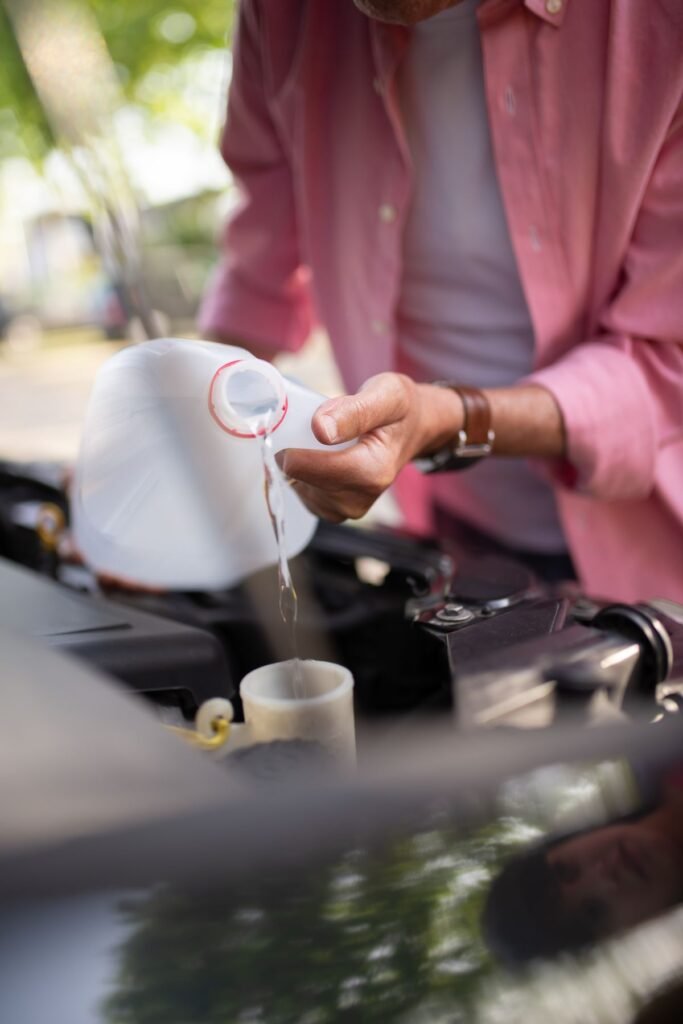
Coolant does not last forever. Over time it loses its corrosion protection, collects rust and scale, and stops protecting your engine as well as it should. The short answer: an engine coolant flush at a shop usually costs $130 to $270, with Kelley Blue Book putting a radiator flush at $131 to $209, and a DIY drain and refill costing $30 to $60 in coolant alone. Your first decision is whether your car needs a full flush or just a drain and refill, because a flush replaces almost all the old fluid, while a drain and refill leaves a good amount of old fluid still in the engine block and heater core.
Coolant, also called antifreeze, keeps the engine at a safe temperature, stops it freezing in winter, and protects metal parts, hoses, and seals from corrosion. When its additives wear out, rust and deposits build up in the radiator, the heater core, and narrow passages. That buildup reduces cooling efficiency and can lead to overheating, a blocked heater core, or a failed water pump. A flush is preventative maintenance, not a repair after something breaks.
When does a coolant flush become due
Check your owner manual first, because intervals depend on coolant type. Older green coolant often needs replacing every 2 to 3 years or 30,000 miles. Modern long life coolants often last 5 to 10 years and 100,000 to 150,000 miles. Your action: if your car is near its interval, book the flush even if the temperature gauge looks normal. Coolant that looks dirty, rusty, or oily, or a heater that blows lukewarm air, are signs to act sooner.
Also act promptly if coolant types have been mixed. Mixing green coolant with orange coolant can form a gel that blocks the heater core and narrow passages. Your action: if you know different types were mixed, ask for a full machine flush, not a simple drain and refill, and tell the shop what was mixed so they can flush thoroughly.
Flush versus drain and refill
A drain and refill opens the radiator drain, lets old coolant out, and refills with fresh coolant. It is cheaper and quicker, but it leaves old coolant in the engine block, the heater core, and hoses, often 30 to 50 percent of the total. A machine flush pushes fresh coolant through the whole system, removing far more old fluid and deposits, and it usually includes a cleaner for heavy buildup. Your action: choose a full flush when the coolant is very old, discoloured, or contaminated, and when the manual interval is overdue. Choose a drain and refill only for a routine top up of the schedule when the coolant still looks clean and the car is well within its interval.
For the right fluid for your car, read our guide on radiator fluid before you buy coolant, because using the wrong specification is one of the most common flush mistakes.
Average costs at a glance
| Service | Typical total | What it includes |
|---|---|---|
| Coolant flush, shop, most cars | $130 to $270 | New coolant, labour, disposal |
| Radiator flush, Kelley Blue Book average | $131 to $209 | Flush and refill at a shop |
| Quick lube coolant exchange | $90 to $160 | Machine exchange, vehicle dependent |
| DIY drain and refill | $30 to $60 | Coolant only, your time |
| Luxury or large vehicle flush | $200 to $400 plus | More coolant, specialist fluid, complex bleeding |
Your action: when you compare quotes, ask whether the price is for a full flush or a drain and refill, which coolant specification will be used, and whether a pressure test is included. A cheap drain and refill quoted as a flush is not the same service, and the difference shows up in how long the fresh coolant stays effective.
What a proper flush should include
A proper service drains the old coolant, flushes the system with clean water or a flushing cleaner if buildup is present, refills with the correct coolant mixed to the right concentration, and bleeds air from the system. Air trapped in the system can cause overheating and a cold heater even with fresh coolant. Your action: after any flush, check that the heater blows hot air, the temperature gauge stays steady, and the reservoir level is correct after a short drive and a cool down. If the level drops after the first drive, top it up with the same coolant and watch it for a few days, because a small drop after bleeding is normal, but a steady drop means a leak.
The shop should also dispose of old coolant properly, because coolant is toxic to pets and wildlife and must not be poured down a drain or onto the ground. Your action: never DIY flush without a sealed container for old coolant and a plan to take it to a recycling centre. That disposal step is part of the job, not an afterthought.
Signs you need a flush sooner
Watch for rust coloured coolant, floating debris in the reservoir, a sweet smell that never clears, an engine that runs hotter than usual in traffic, or a heater that stays lukewarm. A radiator that needs cleaning often shows the same signs. For cleaning costs and method, read our guide on radiator cleaning cost and compare it with a full flush before you choose. Your action: if you see rust or debris, book a flush rather than just topping up, because topping up adds fresh additives to a system already full of deposits, and it does not remove the deposits.
If the drained coolant looks oily or milky, stop and get a diagnosis first. Oil in coolant can mean a head gasket or oil cooler problem, and a flush alone will not fix that. Your action: ask the shop to check for oil contamination and exhaust gas in the coolant before they flush, because flushing a car with an internal leak wastes the new coolant.
DIY or workshop
A DIY drain and refill is realistic for a careful home mechanic on many cars, costing $30 to $60 in coolant, plus a container for old fluid. You need the engine cold, the correct coolant, and your car manual bleeding procedure. Your action: only DIY if you can find the radiator drain, you know the correct coolant specification, and you can bleed the system fully. On cars with complex bleeding procedures or hidden bleed points, a shop flush is safer and often not much more expensive than a DIY mistake.
Leave a full machine flush to a shop. It needs flushing equipment, a way to capture all old fluid, and experience with bleeding. Your action: if your coolant is heavily contaminated, or if you have never bled a cooling system before, pay for the shop service. Overheating from trapped air can cost far more than the flush saved.
How to make fresh coolant last
Use only the coolant specification in your manual, keep the reservoir at the correct level, and fix small leaks promptly so the system never runs low. Check the coolant colour and level at each service, and do not top up with plain water for long periods, because water dilutes the corrosion protection. Your action: after a flush, note the date and mileage in your service records, and set the next flush by the manual interval for your coolant type, not by guesswork. That record also helps at resale, because buyers value a car with cooling system maintenance on record.
Frequently asked questions
Is a coolant flush really necessary
Yes, on the manual interval, because coolant additives wear out even when the car runs normally. Skipping flushes lets corrosion and deposits build up quietly until a radiator, heater core, or water pump fails. Your action: treat a flush as scheduled maintenance like an oil change, not as an optional extra.
Can I just top up coolant instead of flushing
Topping up fixes a low level, but it does not restore worn out additives or remove deposits. Your action: top up to the correct level for safety, then book the flush if the interval is due. Topping up is a short term fix, not a substitute for a flush.
How long does a coolant flush take
Usually 1 to 2 hours at a shop, depending on the car and whether a cleaner or extra flush cycles are needed. Your action: allow time for a proper bleed and a test drive, and do not rush the shop to skip the bleed step, because trapped air is the most common cause of a post flush overheating complaint.
An engine coolant flush is cheap insurance for the most expensive part of your car. Use the correct coolant, choose a full flush when the fluid is old or contaminated, bleed the system properly, and record the service. Done on schedule, it keeps temperatures steady, protects the radiator and heater core, and prevents the kind of corrosion damage that turns a routine service into a major repair.
Pingback: Coolant Level Low in Your Car: Causes, What to Check and When to Stop Driving