
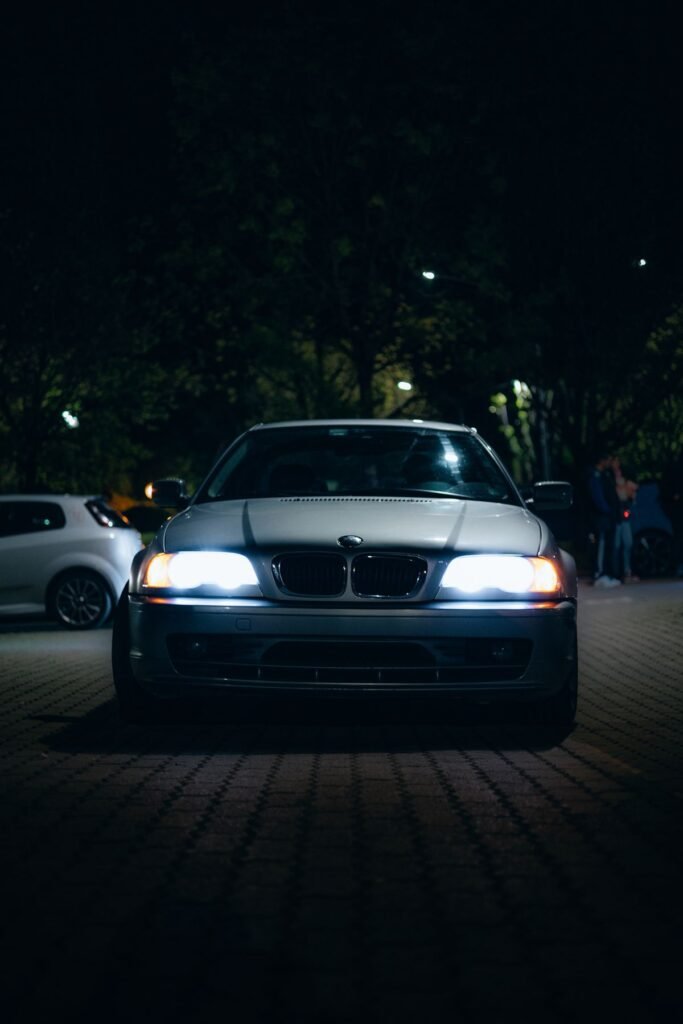
One front light out at night cuts your visibility and makes your car harder for other drivers to see, and it can also earn you a fine in many places. The short answer: changing a front headlight bulb is a simple job on many cars, taking 10 to 30 minutes, with a shop charging $30 to $300 depending on bulb type and access, and a DIY bulb costing $10 to $50 for a standard halogen bulb. Your first decision is to find out which bulb your car uses and how it is accessed, because some cars give easy access behind the headlight, while others need the wheel arch liner or the whole headlight unit removed.
Front lights do more than light the road. Low beam lights let you see and be seen at night and in bad weather, high beam lights extend your view on dark roads, and daytime running lights make your car visible in daylight. A single failed bulb changes the light pattern, which can dazzle oncoming drivers on one side and leave a dark patch on the other. That is why you should fix a failed front light promptly, and check both sides while you are at it.
First, find the right bulb
Check your owner manual for the bulb type, or look at the old bulb markings once it is out. Common halogen types include H11, H7, and 9005, but the exact type varies by car, model year, and trim. Your action: buy the exact type and wattage listed for your car. A bulb with the wrong wattage can overheat wiring, trigger a bulb warning, or give a poor beam pattern. If your car uses LED or HID bulbs, check whether the bulb is a separate replaceable part or part of a sealed unit, because sealed units are a shop job and cost far more than a bulb alone.
Buy bulbs in pairs when you use halogen bulbs. Halogen bulbs dim with age, so a new bulb on one side and an old bulb on the other gives uneven light. Your action: replace both front bulbs at the same time, keep the old working bulb as a spare in the glovebox, and test both lights before you put tools away.
Average costs at a glance
| Job | Parts | Typical shop total |
|---|---|---|
| Standard halogen bulb, easy access | $10 to $50 | $30 to $100 |
| Halogen bulb, hard access | $10 to $50 | $100 to $200 |
| LED bulb, replaceable type | $50 to $200 | $100 to $300 |
| HID or xenon bulb, replaceable type | $50 to $200 | $150 to $300 plus |
| DIY halogen bulb | $10 to $50 | Your time only |
Your action: if a shop quotes far above this range for a simple halogen bulb, ask how many labour hours it allows and whether headlight removal is really needed. Some cars do need extra work, but many do not, and a clear labour explanation separates an honest quote from an inflated one.
Step by step: changing a front bulb with easy access
Work on a cool engine, on level ground, with the car switched off and the keys out of the ignition. Open the bonnet and find the back of the headlight unit. Your action: check both sides before you start, because the battery, air filter box, or washer bottle can block one side and change the job completely.
Remove the dust cover or cap at the back of the headlight, unplug the wiring connector, and release the metal clip or twist lock holding the bulb. Pull the old bulb straight out without touching the glass of the new bulb. Your action: hold the new bulb by its base only. Skin oil on halogen glass creates hot spots that shorten bulb life dramatically, so if you do touch the glass, clean it with rubbing alcohol and a clean cloth before fitting it.
Fit the new bulb in the same orientation as the old one, refit the clip or lock, reconnect the wiring, and refit the dust cover. Switch the lights on and check low beam and high beam on both sides before you close the bonnet. Your action: if the new bulb does not light, check the connector seating and the fuse before you assume the bulb is faulty. A loose connector is a common cause of a new bulb appearing dead.
When access is hard
On some cars, the back of the headlight is blocked, and access comes through the wheel arch. That means turning the steering wheel, removing clips from the arch liner, and reaching in from the side. On other cars, the bumper or the headlight unit must come off. Your action: if you need to remove the bumper, a wheel, or the headlight unit, and you are not confident with clips and alignment, book a shop. Broken clips and a misaligned headlight cost more to fix than the labour you saved.
For cars with HID or LED systems, take extra care. HID systems use high voltage, and you should never work on them with the lights on or immediately after switching them off. Your action: for HID bulbs, or for any sealed LED unit, let a shop handle the job. The part price and the safety risk both argue against DIY in that case.
After fitting: check alignment and clarity
A new bulb in a cloudy headlight still gives poor light. If the lens looks yellow or hazy, cleaning it makes a real difference. For a cleaning guide, read our article on how to clean foggy headlights before you judge the new bulb. Your action: park facing a wall at night, switch on low beam, and check that both beams sit at a similar height and point straight ahead. If one beam points high, low, or sideways, get the alignment checked at a shop, because a misaimed headlight dazzles other drivers and reduces your own view.
Also check the other front lights while you are there: indicators, side lights, and daytime running lights. Your action: replace any other failed front bulb in the same session, because a second visit for a small bulb wastes time and risks another night drive with poor visibility.
Other visibility jobs worth doing together
Front lights work with wipers and a clean windscreen to keep your view clear in rain and at night. If your wipers streak or judder, they are due for replacement too. For that job, read our guide on how to replace windshield wipers and do both jobs in one session. Your action: test wipers and washers after any bulb job, because a clear light behind a dirty windscreen still gives a poor view.
Frequently asked questions
Can I drive with one headlight out
Only to get it fixed, and only with care. One headlight reduces your view, makes your car look like a motorcycle to oncoming drivers, and can lead to a fine. Your action: avoid night driving and bad weather until the bulb is replaced, and use low beam rather than high beam to reduce dazzle from the uneven pattern.
Should I upgrade to LED bulbs
Only if your car and local rules allow it, and only with bulbs designed for your headlight type. An LED bulb in a housing designed for halogen can scatter light, dazzle other drivers, and fail an inspection. Your action: check your car manual and local rules first, and favour a proper LED headlight unit over a cheap bulb swap in a halogen housing.
Why does my new bulb keep failing
Common causes are touching the glass during fitting, a loose or corroded connector, vibration from a missing dust cover, or a charging system problem that sends voltage too high. Your action: check the connector and dust cover first, fit the bulb by its base only, and if bulbs keep failing on the same side, get the charging voltage and wiring checked at a shop.
Changing a front light is one of the most useful small jobs you can do for your car. Find the exact bulb type, fit it by its base only, test both beams before you finish, and check alignment and lens clarity while you are there. Done properly, it restores full night visibility in under half an hour. Left undone, a single failed bulb quietly makes every night drive less safe.
Pingback: Hazard Lights: What They Are, When to Use Them and How to Fix Them