
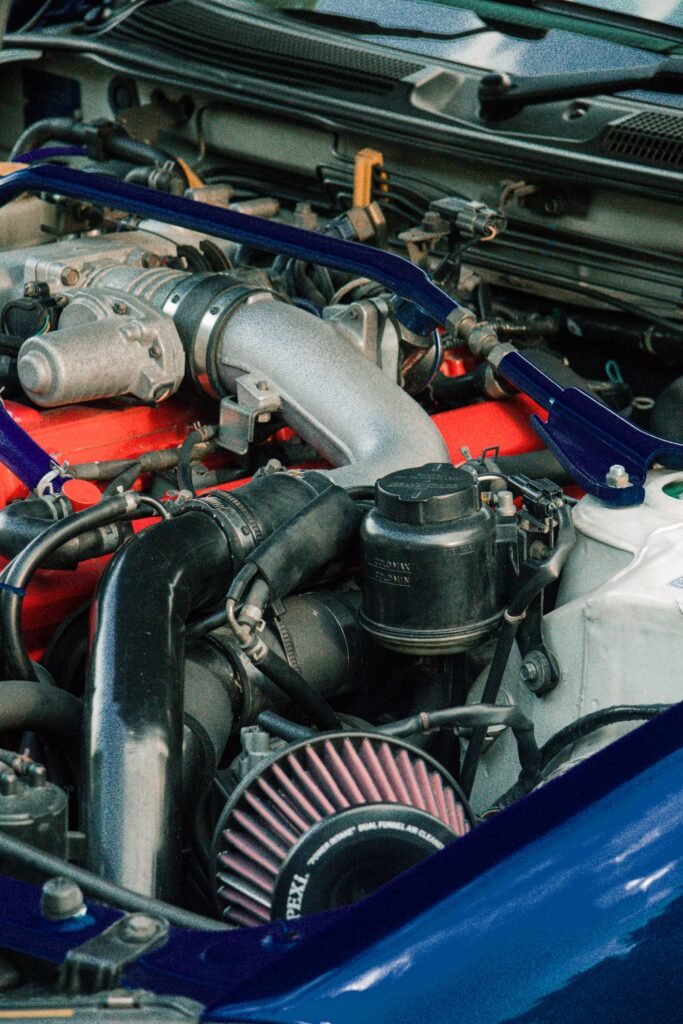
Engine knocking is a sharp metallic pinging or deep knocking sound from the engine, often heard when accelerating, climbing a hill, or carrying a heavy load. The short answer: if the sound is light pinging under load, switch to the correct fuel grade, check oil level, and book a diagnosis soon. If the sound is a deep knock that gets louder with revs, or if it comes with low oil pressure, loss of power, or a warning light, stop driving and get the car towed. Repair costs vary widely by cause, from about 150 to 600 dollars for a fuel system cleaning or carbon removal, about 200 to 500 dollars for a knock sensor replacement, and 1000 to 3000 dollars or more for internal engine repairs, based on current workshop pricing guides checked during this run. Your first decision is to tell light pinging apart from deep mechanical knock, because one needs prompt attention and the other needs the engine stopped.
Knocking has two broad meanings, and drivers often mix them up. Detonation knock, also called pinging or pre ignition, happens when fuel ignites too early or unevenly in the cylinder, creating a pressure spike that rattles the piston. Mechanical knock happens when a worn bearing, piston, or other internal part has too much clearance and strikes as it moves. Light detonation can often be fixed by correcting fuel, timing, or carbon buildup. Mechanical knock usually means internal wear that will get worse quickly, and driving on can destroy the engine. That difference is why you should not guess from sound alone for long.
What the sound tells you
Listen for when the noise appears. Pinging under acceleration or uphill, especially in hot weather or with a heavy load, often points to fuel grade, carbon buildup, timing, or a knock sensor fault. A light tapping from the top of the engine at idle often points to lifters or valve train wear. A deep rhythmic knock from the lower engine that gets louder as revs rise often points to rod bearing wear, which is serious. A knock that appears only on cold starts and fades as oil pressure builds can point to oil supply, piston slap, or a worn component that tightens as it warms. Your action: record a short video with sound, note whether the noise is worse hot or cold, at idle or under load, and whether any warning light is on, because that record helps a technician far more than a vague description.
Also check the basics before you assume the worst. Low oil level, very old oil, or the wrong oil viscosity can all make engine noises louder and reduce protection. Overheating can also trigger knock, because hot cylinders ignite fuel more easily. Your action: check oil level on level ground, check coolant level only when the engine is cold, and check the temperature gauge. If the engine is overheating, stop and let it cool before driving further, because heat plus knock is a fast route to head gasket or piston damage.
Step 1: check fuel grade first
Open the fuel flap or the owner manual and confirm the required octane rating. Many performance and turbocharged engines require premium fuel, and using regular fuel in those engines can cause pinging under load, reduced power, and long term damage. Even on an engine that normally runs on regular fuel, a tank of poor quality or contaminated fuel can cause temporary pinging. Your action: if you recently filled up with a lower grade than required, fill with the correct grade at the next opportunity, drive gently, and avoid hard acceleration and steep hills until the tank is refreshed. If pinging stops after the correct fuel, you have found a likely cause, but still mention it at the next service so timing and carbon buildup can be checked.
Do not keep driving hard on the wrong fuel in the hope that the engine computer will fully protect the engine. Modern knock sensors do retard timing to reduce knock, but they cannot fully compensate for a large octane gap or for heavy carbon buildup. Your action: if pinging continues on the correct fuel, book a diagnosis rather than trying a higher octane grade as a permanent fix, because a higher grade can mask a timing, sensor, or carbon problem that still needs repair.
Common causes and what to do for each
Carbon buildup
Carbon deposits on pistons, valves, and combustion chambers create hot spots that ignite fuel early. Direct injection engines are especially prone to this, because fuel does not wash the intake valves. Symptoms often include rough idle, poor fuel economy, and pinging under load. Professional carbon cleaning commonly costs 200 to 600 dollars. Your action: use good quality fuel, keep oil changes on schedule, and ask about carbon cleaning only after a diagnosis confirms deposits, rather than paying for cleaning as a guess.
Faulty knock sensor or ignition timing
The knock sensor listens for detonation and tells the engine computer to retard timing. If the sensor fails, the computer cannot protect the engine, and knock gets worse. Fault codes in the P0325 to P0334 range often point to knock sensor circuits. A knock sensor replacement commonly costs 200 to 500 dollars on most cars, more on engines where the sensor sits under the intake manifold. Incorrect timing from a stretched timing chain, a wrongly fitted timing belt, or a control fault can also cause knock. Your action: ask for a scan and a timing check before replacing parts, and do not ignore a check engine light that appears with knocking, because that light often carries the code that names the fault.
Worn spark plugs or ignition faults
Worn, fouled, or incorrectly gapped spark plugs can cause incomplete combustion, misfires, and knock like symptoms. A weak ignition coil can have a similar effect on one cylinder. Your action: if plugs are due, replace the full set with the exact plug type and gap in your manual, and check coils at the same time. For plug symptoms to compare, read our guide on signs of bad spark plugs and note whether your car also shows rough idle, hard starting, or poor fuel economy.
Worn bearings or internal damage
Rod bearing or main bearing wear creates clearance that produces a deep knock, often with low oil pressure, metal particles in oil, or a loss of power. This is the most serious form of knocking. Internal repairs commonly cost 1000 to 3000 dollars or more, and a full rebuild or replacement can cost 4000 to 10000 dollars, depending on the engine. Your action: if the knock is deep, rhythmic, and louder with revs, or if oil pressure is low, stop driving and tow the car. Continued driving can turn a bearing job into a seized engine, and no additive repairs worn bearing clearance.
When to stop driving at once
Stop and tow if the knock is deep and getting louder, if oil pressure is low, if the temperature gauge is in the red, if power drops sharply, if you hear grinding or metal on metal sounds, or if the engine stalls and will not restart smoothly. Your action: switch the engine off as soon as it is safe, do not restart it repeatedly to test the sound, and tell the tow driver and the shop exactly when the noise started and what changed just before it appeared. That history can save diagnostic time and prevent further damage.
If the noise is light pinging only, you can usually drive gently to a shop, avoiding hard acceleration, high revs, and steep hills. Keep the engine cool, use the correct fuel, and book the visit promptly rather than waiting for the next scheduled service. Your action: if light pinging appears suddenly after a service, a fuel fill, or a repair, return to the shop or station involved first and report the change, because a recent timing, plug, or fuel change is often the clue.
How to prevent knocking
Use the fuel grade your manual requires, keep oil changes on schedule with the correct viscosity, replace spark plugs at the stated interval, and fix overheating and cooling faults promptly. Avoid lugging the engine, which means accelerating hard in a high gear at low revs, because that loads the cylinders heavily and encourages detonation. Your action: on a manual car, downshift before a hill or a merge rather than forcing a high gear. On an automatic, let the transmission downshift rather than pressing the throttle hard and holding a high gear. For oil change timing, which affects carbon and wear, read our guide on how often should you change your oil and match its interval to your driving style and oil type.
Frequently asked questions
Is engine knocking always serious
Not always, but it should always be checked. Light pinging from wrong fuel or carbon buildup can often be fixed cheaply, while deep bearing knock is serious and can destroy an engine if ignored. Your action: treat every knock as real until a diagnosis proves otherwise, and never assume a knock sensor fault explains a deep mechanical sound without a proper inspection.
Can I fix knocking with a fuel additive
A fuel system cleaner can help with mild carbon related pinging, but it will not repair a faulty sensor, wrong timing, or worn bearings. Your action: use a cleaner only as a maintenance step after a diagnosis, not as a substitute for one, and stop driving and seek help if the knock is deep, loud, or paired with low oil pressure.
How long can I drive with engine knock
With light pinging, a short gentle drive to a shop is usually reasonable. With deep knock, low oil pressure, overheating, or power loss, do not drive at all. Your action: the safer rule is simple. If the sound worries you, if it is getting louder, or if any warning light is on, tow the car and let a technician decide, because the cost of a tow is small beside the cost of a seized engine.
Engine knocking is your engine asking for a decision, not a sound to turn up the radio over. Check fuel grade and oil level, note when the noise appears, get a scan for sensor and timing faults, and stop driving if the knock is deep or paired with low oil pressure or overheating. Handled early, knocking often ends as a sensor, plug, or cleaning job. Ignored, it can end as a rebuild.
Pingback: Common Car Problems and Symptoms: A Practical Guide