
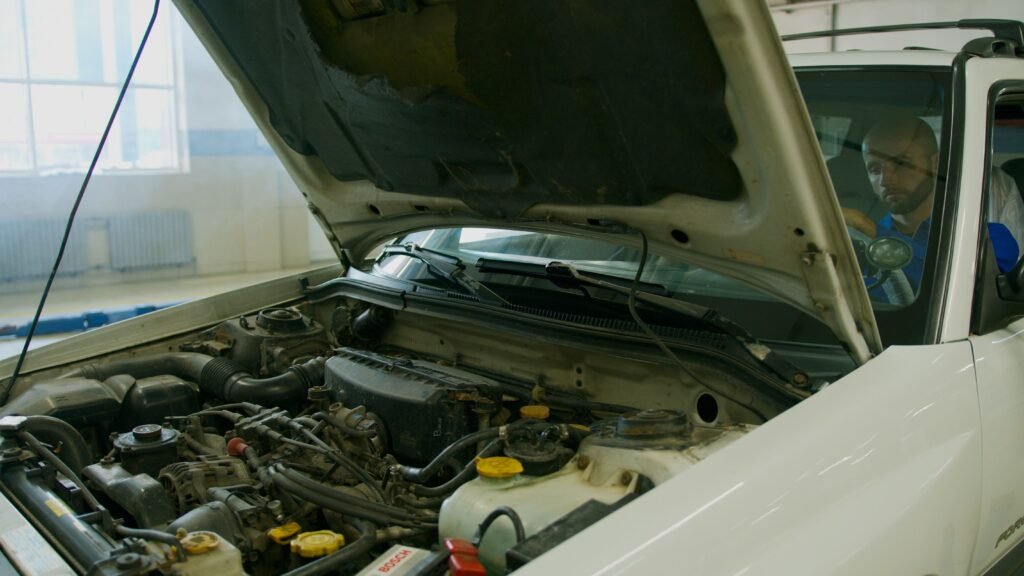
Car engine problems are frightening because the engine is expensive, and a wrong decision can turn a small fault into a large one. Your direct answer is this: stop and check safely first, do not drive on with a red warning, overheating, low oil pressure, smoke, or a sudden loss of power, and use the safe first check sequence below to decide whether you can drive carefully to a garage, or whether you need a tow. This guide gives you engine symptoms, likely causes in plain language, safe first checks, and car engine problems and solutions at the level of what to do next, not at the level of internal engine repair, which belongs to a qualified mechanic.
Decision first: the safe first check sequence
When an engine problem appears, do not start by guessing a part or by searching for a repair video. Start with this sequence, in order, and stop at the first step that tells you not to drive on. Your action is to follow the steps calmly, with the car parked safely where possible, and to note what you find for the mechanic.
- Stop safely, if you are driving. Action: pull over where safe, switch off if a red warning, overheating, smoke, or major leak is present, and switch hazard lights on.
- Look and listen, without touching a hot engine. Action: note warning lights, colour and behaviour, smoke or steam, smells, and any leak under the car.
- Check levels only when safe and cool, where your manual allows it. Action: check oil and coolant levels only with a cool engine, and only if you know the correct locations and specifications.
- Try a careful restart only if no red warning, overheating, smoke, fuel smell, or major leak is present. Action: if the car restarts and runs normally with no warning, drive carefully to a garage for diagnosis, and avoid motorways and hard driving until it is checked.
- Decide drive or tow. Action: if any stop now symptom from the table below is present, arrange a tow or recovery rather than driving on.
That sequence protects the engine, protects you, and gives the mechanic a clear history. A driver who follows it rarely makes an engine fault worse. A driver who drives on through a red warning often does.
Stop now versus drive carefully: the engine triage table
Use this table before you drive on. If you are unsure between two rows, choose the more urgent one. That rule is especially important for engines, because oil, cooling, and lubrication faults can cause damage in minutes, not days.
| Symptom | Urgency | Your action |
|---|---|---|
| Red oil pressure warning, staying on | Stop now | Stop as soon as safe, switch off, and arrange recovery. Do not drive to a garage |
| Overheating warning, temperature in the red, or steam | Stop now | Stop safely, switch off, let the car cool, do not open a hot cooling system, and get help |
| Smoke from the engine bay, or burning smell that is strong | Stop now | Stop safely, switch off, move away if smoke is strong, and get help |
| Fuel smell, strong or growing | Stop now | Switch off, do not smoke or use a naked flame, and get help |
| Sudden loss of power, stalling in traffic, or flashing check engine light | Drive to a garage today, or stop now if power loss is severe | Drive carefully only if the car is controllable and close to help, otherwise arrange recovery |
| Steady amber check engine light, car runs normally | Drive to a garage today | Book a diagnosis today, drive carefully, and avoid hard driving and long trips until checked |
| Rough idle or hesitation, no warning light, car still drivable | Book this week | Book a diagnosis this week, note when it happens, and do not ignore it for a month |
| Small oil or coolant leak, levels stable, no warning | Book this week | Check levels safely, note the leak, and book a leak diagnosis this week |
Common engine symptoms, and what they usually mean
Car problems engine owners report most often fall into a few patterns. The patterns below are general causes, not diagnoses for your car, and they are given so you can describe the problem well and decide urgency, not so you can order a part by guesswork.
- Hard starting, slow crank, or no start. Likely areas: battery, starter, fuel supply, or, less often, engine sensor or ignition faults. Your action: note cold versus warm starting, whether lights are dim, and whether the car has sat for a while, then follow the starting guidance in the troubleshooting article and book a diagnosis if starting stays unreliable.
- Rough idle, shaking, or hesitation. Likely areas: ignition, fuel, air intake, sensor, or vacuum faults, and in older cars, worn engine mounts can add vibration. Your action: note whether it happens cold, warm, at idle, or under load, and book a diagnosis this week, or today if a warning light is on.
- Loss of power, especially under load or uphill. Likely areas: fuel, air, exhaust, turbo where fitted, or sensor faults, and in some cases transmission problems that feel like engine power loss. Your action: note speed, load, and warning lights, avoid hard driving and motorways until checked, and book a diagnosis today if power loss is sudden or severe.
- Knocking, ticking, or rattling from the engine. Likely areas: low oil, worn components, or, in some cases, fuel or ignition timing issues. Your action: check oil level only when safe and cool, stop and get help if the noise is loud, new, and linked to low oil pressure or a warning light, and book a diagnosis today for any new engine knock.
- Overheating, or temperature gauge rising above normal. Likely areas: low coolant, coolant leak, thermostat, fan, water pump, or radiator faults. Your action: stop safely, let the car cool, do not open a hot system, check coolant only when cool, and get a cooling diagnosis. Driving on while overheating can cause severe engine damage.
- Excessive smoke from the exhaust. Likely areas: oil burning, coolant burning, fuel mixture, or exhaust faults, depending on smoke colour and when it appears. Your action: note smoke colour, white, blue, or black, and whether it happens at start up, under load, or all the time, then book a diagnosis this week, or today if smoke is heavy or linked to a warning.
- Oil or coolant consumption that keeps rising. Likely areas: leaks, worn seals, or internal consumption that needs professional diagnosis. Your action: record levels, dates, and mileage, top up only with the correct specification, and book a diagnosis if consumption keeps rising, because a trend matters more than one low reading.
Common car failure reasons: wear, neglect, and heat
Common car failure reasons for engines are rarely mysterious. They are usually wear over time, missed service, low or wrong fluids, overheating, or a small fault left until it damages a larger part. Mechanical issues often start small: a leak that lowers oil or coolant, a filter that blocks airflow, a sensor that drifts out of range, or a belt that wears and then fails. Your action is to break that chain early. Service on time, check levels monthly, act on a new noise or warning at once, and never drive on through overheating or low oil pressure. Those four habits do more to prevent engine failure than any additive or guessed part change. If you buy a used car, ask for the service record, check for leaks and smoke on a cold start, and consider a pre purchase inspection, because a missing record and a hidden leak are the two most common surprises for used car buyers.
Car engine problems and solutions: what a solution really means
When owners search for car engine problems and solutions, they often want a part name and a fix. For engines, a responsible solution starts with diagnosis, not with a part. A solution has three parts: a confirmed cause, a repair that matches that cause, and a check that the repair worked. Your action is to ask the mechanic for those three parts in writing: what was found, what was changed or repaired and why, and what was tested after the repair. If a garage offers a part change without a diagnosis, ask what test points to that part, and what happens if the symptom remains after the change. That question protects you from paying for a guessed repair, and it helps the mechanic focus on evidence rather than on the most common guess. For a complex engine fault, a second opinion is a sensible action, not a sign of distrust, especially if the quote is large or the diagnosis is vague.
Defects and recalls: a separate check from wear and failure
Car defects are different from wear and failure. Wear happens with age and use. A defect is a fault in design, manufacture, or a part batch that the maker may need to correct, sometimes through a recall or a service campaign. Your action is to check for recalls and campaigns separately from your service history, using your vehicle identification number and the official recall source for your country, or a dealer check if you are unsure which source applies where you live. Do not assume that a fault is just wear because the car is older, and do not assume that a recall applies to your car because another car of the same model had one. Recalls are specific to vehicle identification numbers, model years, and part batches. If a recall or campaign applies to your car, follow its instructions, even if the car feels fine, because a safety recall is about risk, not about current symptoms. Keep the recall notice and the repair record with your service history, because a future buyer will ask about it.
The engine note to take to a mechanic
Take this note to the garage, filled in as fully as you can, and it will speed up diagnosis.
- Car: make, model, year, mileage, engine type, and powertrain.
- Symptom: noise, smoke, smell, power loss, overheating, or warning light, in plain words.
- When: cold or warm, at start up, at idle, under load, uphill, or at a certain speed.
- Warning lights: colour, steady or flashing, and whether performance changed at the same time.
- Levels: oil and coolant levels, dates checked, and whether either keeps dropping.
- Recent work: last service date and mileage, recent repairs, fuel fill, or long trip, if relevant.
- Urgency you chose: stop now, drive to a garage today, or book this week, and why.
Your action is to use that note even if the symptom seems small. Engine faults are easier and cheaper to diagnose when the history is clear, and a note written on the day is more accurate than a memory recalled weeks later at the garage desk.
Frequently asked questions
What should I do first if my engine warning light comes on?
Note the colour and behaviour, check whether performance, temperature, or braking changed, and follow the triage table in this article. A red light, overheating, smoke, or fuel smell means stop now. A steady amber light with normal running means drive to a garage today for diagnosis.
Can I drive with a steady check engine light?
Often you can drive carefully to a garage for diagnosis, but avoid hard driving, motorways, and long trips until it is checked, and do not ignore it for weeks. A flashing check engine light is more urgent, and needs prompt diagnosis.
What causes most engine failures?
Wear over time, missed service, low or wrong fluids, overheating, and small faults left until they damage larger parts are among the most common reasons. Timely service, monthly level checks, and early action on warnings break that chain.
Is a car defect the same as wear?
No. Wear happens with age and use. A defect is a design, manufacture, or part batch fault that may be covered by a recall or service campaign. Check recalls separately, using your vehicle identification number and the official source for your country.
Should I add an additive or change a part to fix an engine symptom?
Do not guess a part or additive before diagnosis. Ask for a confirmed cause, a repair that matches that cause, and a test after repair, in writing. A guessed repair can waste money and hide the real fault.
When does an engine problem need a tow, not a drive?
Arrange a tow if you have a red oil pressure warning, overheating, smoke, major leak, fuel smell, severe power loss, or a car that is unsafe to control. Driving on in those cases can cause severe damage or a safety risk.
More guides in this series: common car problems and symptoms, what is wrong with my car, the car preventative maintenance checklist and how to service your car at home.
Pingback: Common Car Problems and Symptoms: How to Spot Trouble Early - MotorVento
Pingback: What Is Wrong With My Car: A Simple Troubleshooting Guide for Any Problem - MotorVento