
Common car problems and symptoms are easier to fix, cheaper to fix, and safer to live with when you spot them early. Your direct answer is this: every new symptom needs an urgency decision, stop now, drive to a garage today, or book this week, and a clear note for the mechanic about when it happens, what it sounds or feels like, and whether any warning light is on. This guide gives you that urgency for the most common issues, grouped by symptom, so you can decide in minutes rather than worrying for days or ignoring a fault until it strands you.
Decision first: the three urgency levels
Use these three levels for every symptom in this article, and for any new symptom not listed here. If you are unsure between two levels, choose the more urgent one. That rule is safer than guessing downwards.
- Stop now: stop as soon as it is safe, do not drive on, and arrange help or recovery. Use this for red warning lights, loss of brakes or steering, overheating, major fluid loss, fuel smell, smoke, or a tyre failure.
- Drive to a garage today: drive carefully, avoid motorways and long trips if you can, and get a diagnosis today. Use this for a steady amber warning light, a new brake noise, a steering change, a growing leak, or a car that feels unsafe but is still controllable.
- Book this week: the car is safe to drive for short trips, but the symptom needs a booking this week, not next month. Use this for a minor noise, a small leak with stable fluid levels, a wiper or light fault that does not affect safety, or a comfort fault such as air conditioning.
Your action, when a symptom appears, is to pick a level, act on it, and write the note described at the end of this article. A symptom with a level and a note is a problem being managed. A symptom with no level and no note is a problem being ignored.
Starting and battery symptoms
Common issues with cars often start with starting. A slow crank, a clicking sound, dim lights, or a car that needs a jump start usually points to battery, charging, or connection problems, but the urgency depends on the pattern. Your action is to note whether the problem happens when cold, after the car has sat, or after a short trip, and whether lights and electrics behave normally once the car is running. If the car will not start at all, or if a battery smells strong, looks swollen, or leaks, do not keep trying to start it and do not touch a damaged battery. Get help. If the car starts slowly but runs normally, book a battery and charging check this week, and avoid a long trip until it is checked, because a weak battery can fail suddenly in cold weather or after a short stop.
| Symptom | Urgency | Your action |
|---|---|---|
| Slow crank, but car starts and runs normally | Book this week | Book a battery and charging check, and note cold versus warm starting |
| Clicking, no start, lights dim | Drive to a garage today, or get help if you cannot start | Do not keep cranking for long periods, and get a battery and charging diagnosis |
| Battery swollen, leaking, or strong smell | Stop now | Do not touch it, and get professional help |
| Warning light for battery or charging while driving | Drive to a garage today | Drive carefully, avoid switching the car off in a remote place if you can reach help, and get a diagnosis today |
Warning lights: what to do before you look up the symbol
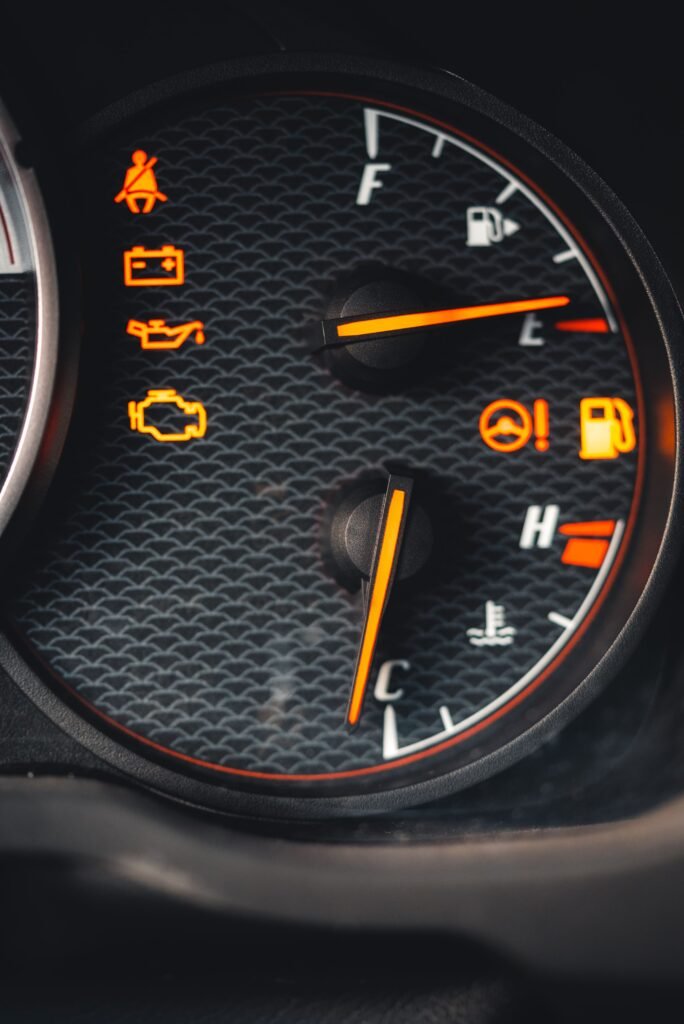
A warning light is a symptom, not a diagnosis, and the colour matters more than the exact symbol for your first decision. Red usually means stop, or a serious fault that needs attention at once. Amber usually means a fault that needs diagnosis soon, but the car may still be drivable with care. Green or blue usually means a system is on, such as high beam or cruise control, and is not a fault. Your action is to check your manual for the exact symbol, note whether the light is steady or flashing, and note whether performance, braking, steering, or temperature changed at the same time. A flashing check engine light, a red oil pressure light, a red brake warning, or a red temperature warning should be treated as stop now, or drive to a garage today at the very latest, with a call to the garage first to ask whether driving is safe. Never clear a warning light by disconnecting a battery or resetting a reminder, because that hides the fault and loses diagnostic information the mechanic needs.
Noises: the symptom drivers notice first
Common car issues often announce themselves as noise before they show as a warning light. Your action is to note four facts about any noise: when it happens, where it seems to come from, what it sounds like, and whether it changes with speed, braking, steering, or bumps. Those four facts help a mechanic far more than a vague it makes a noise report.
- Squeal when braking: urgency is drive to a garage today. Action: book a brake inspection before your next long drive, and sooner if braking feels different.
- Grinding when braking: urgency is stop now, or drive very carefully to the nearest garage if it is close and safe. Action: do not drive a long distance, because grinding often means metal on metal.
- Knocking or clunking over bumps: urgency is drive to a garage today if steering or handling feels normal, or stop now if handling feels unsafe. Action: book a suspension and steering check, and note whether the noise is front, rear, left, or right.
- Whining that changes with speed: urgency is book this week if handling is normal, or drive to a garage today if it is loud or growing. Action: note whether it changes with speed, gear, or steering, because that helps narrow the source.
- Rattle at idle that stops when driving: urgency is book this week, unless it is linked to exhaust, steering, or a warning light. Action: note when it happens, and mention it at your next visit, with a booking made rather than a vague plan.
Leaks, smells, and smoke: symptoms to take seriously
Leaks and smells are common automotive problems that drivers often delay, because the car still drives. That delay is risky, because a leak can point to oil, coolant, brake fluid, transmission fluid, or fuel, and each one matters differently. Your action is to note the colour, location under the car, and smell of any leak, and to check fluid levels if it is safe to do so with a cool engine. A small clear water drip under a car after air conditioning use is often condensation, but a coloured, oily, or sweet smelling leak is not. A fuel smell is always urgent. Smoke, steam, or a burning smell is always urgent. Stop safely, let the car cool, and get help rather than opening a hot cooling system or driving on with a fuel smell.
| Finding | Urgency | Your action |
|---|---|---|
| Small clear water drip after air conditioning use | Book this week, or monitor | Note it, check it is clear and odour free, and mention it if it changes |
| Dark oil spot, growing over days | Drive to a garage today | Check oil level if safe, top up only with the correct grade, and book a leak diagnosis |
| Sweet smelling or coloured coolant leak | Drive to a garage today, or stop now if overheating | Do not open a hot system, check coolant only when cool, and get a cooling diagnosis |
| Brake fluid leak, or brake pedal change | Stop now | Do not drive on if braking feels different, and arrange help |
| Fuel smell, inside or outside the car | Stop now | Switch off, move away from the smell if safe, and get help, do not smoke or use a naked flame |
| Smoke or steam from the engine bay | Stop now | Stop safely, switch off, let the car cool, and get help, do not open a hot bonnet at once if steam is strong |
Handling, braking, and vibration symptoms
Common faults in cars that affect handling and braking deserve a fast decision, because they affect safety directly. A car that pulls to one side, vibrates at speed, bounces excessively after a bump, or brakes unevenly is telling you something about tyres, brakes, suspension, steering, or alignment. Your action is to note when the symptom happens, at what speed, and whether it changes with braking or steering, then choose an urgency level honestly. If handling feels unsafe, that is stop now, even if no warning light is on. If handling feels different but controllable, that is drive to a garage today. Do not test a handling fault at high speed to see if it gets worse. A controlled drive to a garage at moderate speed, on a quiet road where possible, is safer than a high speed test.
Performance symptoms: power, stalling, and fuel use
A loss of power, hesitation, stalling, rough idling, or a sudden rise in fuel use can have many causes, from a simple filter or sensor fault to a more serious engine or transmission problem. Your action is to note when it happens, whether a warning light is on, whether the car restarts normally, and whether the problem is worse when cold, hot, loaded, or at a certain speed. If the car stalls in traffic, loses power suddenly, or has a flashing warning light, treat it as drive to a garage today, and avoid motorways until it is checked. If the car runs roughly but safely, book this week, and do not ignore it for a month, because a small fault can damage a larger system if left, such as a misfire damaging an exhaust component over time. Keep a note of fuel use and performance changes, because a trend over weeks helps a mechanic more than a single bad day.
The exact note to take to a mechanic
This note is the most useful part of common car problems and troubleshooting. A mechanic can diagnose faster, and charge less diagnostic time, when the note is clear. Copy this template, fill it in, and take it to the garage or send it when you book.
- Car: make, model, year, mileage, and powertrain, gas, hybrid, or electric.
- Symptom: what you see, hear, feel, or smell, in plain words.
- When: when it started, and whether it happens cold, warm, at start up, at speed, when braking, when steering, or over bumps.
- Warning lights: which light, what colour, steady or flashing, and whether performance changed at the same time.
- Urgency you chose: stop now, drive to a garage today, or book this week, and why.
- What you checked: fluid levels, tyre pressures, or visual checks you did safely, with results.
- What changed recently: recent service, tyre change, long trip, fuel fill, or weather change, if relevant.
Your action is to use that note every time, even for a small symptom. A good note turns a vague visit into a focused diagnosis, and it creates a record you can use if the symptom returns or if you need a second opinion.
Frequently asked questions
What are the most common car problems and symptoms?
Starting and battery problems, warning lights, brake noises, leaks, handling changes, vibration, power loss, and electrical faults are among the most common, and this guide groups them by symptom with an urgency for each one.
When should I stop driving at once?
Stop as soon as it is safe if you have a red warning light, loss of brakes or steering, overheating, major fluid loss, fuel smell, smoke, or a tyre failure. Arrange help rather than driving on.
Is a steady amber warning light urgent?
It needs a diagnosis today or very soon, depending on the symbol and whether performance changed. Check your manual, note the symbol and behaviour, and call the garage for advice rather than ignoring it for weeks.
What should I tell a mechanic about a noise?
Tell them when it happens, where it seems to come from, what it sounds like, and whether it changes with speed, braking, steering, or bumps. Those four facts help a diagnosis far more than a vague description.
Can I drive with a small leak?
It depends on the fluid and the rate. A small clear condensation drip is different from an oil, coolant, brake fluid, or fuel leak. Check levels safely if you can, and book a diagnosis today for a coloured, oily, sweet smelling, or growing leak.
Why does a symptom note help?
It helps a mechanic find the fault faster, it reduces diagnostic guesswork, and it creates a record if the symptom returns. Use the template in this article for every new symptom.
More guides in this series: car engine problems, what is wrong with my car, the car preventative maintenance checklist and how often you should service your car.
Pingback: Car Engine Problems: Symptoms, Causes, and What to Do Before You Drive On - MotorVento
Pingback: What Is Wrong With My Car: A Simple Troubleshooting Guide for Any Problem - MotorVento
Pingback: What Is a Car Service: What a Basic Service Includes, What It Costs, and What New Owners Should Ask - MotorVento
Pingback: How to Service Your Car at Home: Safe DIY Basics Every Beginner Can Do - MotorVento