
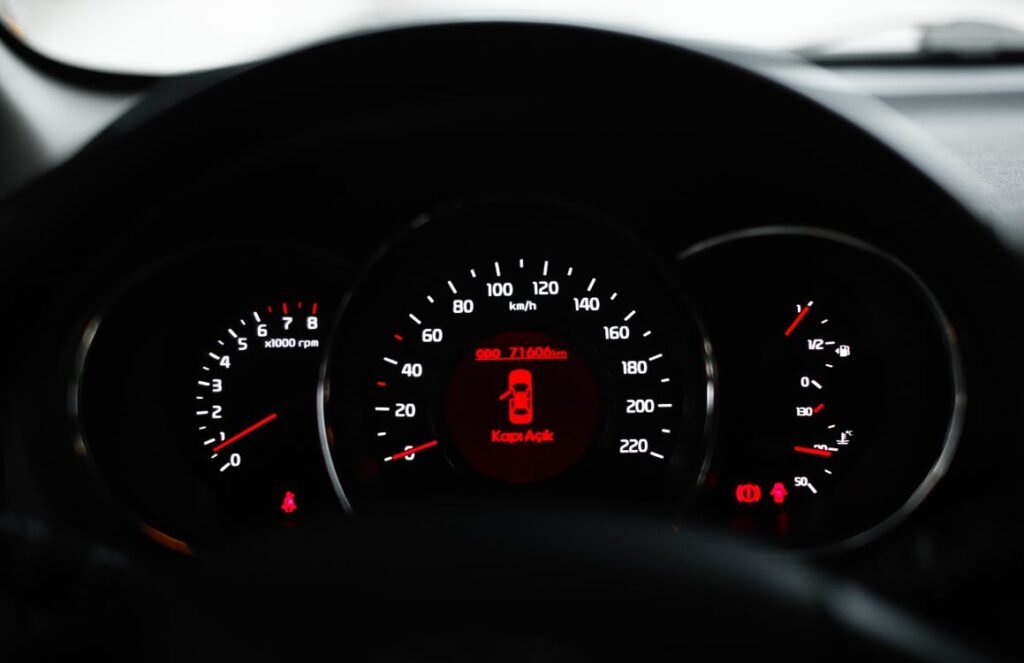
A blinking red light in your car is a stop now warning, not a check it later warning. The short answer: pull over safely as soon as you can, switch the engine off if the light is for oil pressure, temperature, or brakes, and do not keep driving to see if it clears. A steady red light is already urgent, and a blinking red light usually means the problem is active, getting worse, or changing quickly. Your first decision is where to stop safely, not what the light might mean.
Red lights are reserved for problems that can damage the engine, affect braking, or affect safety. Amber lights usually mean get it checked soon. Green and blue lights usually mean a system is on. That colour system is why a blinking red light deserves a different response from a steady amber light. If you are not sure which symbol is lit, take a photo of the dashboard while parked, then check your owner manual for that exact symbol, because the same colour can cover several different systems.
Step 1: pull over safely and switch off if needed
Your action: ease off the accelerator, switch on your hazard lights, and move to a safe flat spot away from moving traffic. Do not stop in a live lane unless the car has already lost power and you have no choice. Once stopped, apply the parking brake, keep your seat belt on until you are safely out of traffic if you need to leave the car, and move to a safe place behind a barrier where possible.
Switch the engine off at once if the blinking light is the oil pressure light, the temperature light, or the brake warning light. Low oil pressure can damage an engine in minutes, overheating can warp engine parts, and a brake fault can leave you without reliable stopping power. For a blinking brake light, read our guide on brake light on dash and work through the parking brake and fluid checks only after you are safely parked. If the light is the security or immobiliser light and the car will not start, the action is different: that is covered below, and switching off will not fix it.
What a blinking red light can mean
A blinking red light while driving is most often one of these: oil pressure dropping, coolant temperature rising, brake system pressure falling, battery charging failing, or the check engine light flashing because of an active misfire. A flashing check engine light is more urgent than a steady one, because a misfire can send unburned fuel into the exhaust and damage the catalytic converter. Your action: if the check engine light is flashing and the car is shaking, losing power, or smelling of fuel, pull over and call for a tow rather than driving on.
Other red symbols need a calmer but still prompt response. A red battery light means the car is running on battery power alone and may stop once the battery runs flat, so drive only to the nearest safe place and do not switch the engine off until you are there, because it may not restart. A red seat belt or door open light is a simple fix: stop, fasten the belt, or close the door properly. A red airbag light means the airbag system may not work in a crash, so book a diagnostic scan promptly even if the car drives normally. For a full map of symbols, read our guide on car dashboard symbols and meanings before you guess at a symbol you have not seen before.
Blinking red light when the car is parked and off
A small red light blinking when the car is parked and switched off is usually normal. Many cars flash a security light to show the immobiliser is armed. Your action: check whether the light stops when you unlock the car and start the engine normally. If it does, and no other warning stays on, there is nothing to fix.
If the security light keeps blinking after you start the car, or stays on solid, the car may not recognise the key. Your action: try the spare key if you have one, check that the key battery is not flat, and hold the key close to the start button or ignition as your manual describes. If neither key works, call a locksmith or dealer who can reprogram keys, because forcing the ignition will not help and may add cost. Do not disconnect the battery to reset a security light unless your manual tells you to, because that can lock other systems and erase radio and window settings.
Checks you can safely do after stopping
Once the car is safely parked and the engine has cooled, you can do three basic checks. First, check the oil level on the dipstick, but only after the engine has cooled and the car is level. Low oil can explain an oil pressure warning, but topping up does not fix a failing oil pump or a blocked pickup, so a warning that returns after topping up still needs a shop visit. Second, check the coolant level in the overflow tank, never by opening a hot radiator cap, because hot coolant can burn badly. Third, check the brake fluid reservoir level against the minimum and maximum marks, and look for wet spots near the wheels or under the car.
Your action: write down exactly what you saw before you call a shop, including which symbol blinked, whether it blinked only while driving or also at idle, whether the car shook or lost power, and what the fluid levels looked like. That note helps the shop decide whether to send a tow truck or to book a diagnostic scan, and it stops you paying for parts that were never faulty. For warning lights that stay on without blinking, read our guide on lane departure warning to see how driver assistance warnings differ from engine and brake warnings, because the response for a driver assistance fault is very different from the response for an oil or brake fault.
When to tow and when to drive slowly to a shop
Tow the car when any of these apply: the oil pressure light is blinking, the temperature gauge is in the red zone, the brake pedal feels soft or sinks, the car is shaking badly, there is smoke, a strong fuel smell, or a fluid leak under the car. Your action: call roadside assistance, tell them the exact warning and the location, and stay in a safe place away from traffic while you wait.
Drive slowly to a nearby shop only when the car drives normally, the pedal feels firm, the temperature gauge is normal, the oil level is correct, and the only light is a battery light, a seat belt reminder, or an airbag light with no other symptom. Your action: switch off air conditioning, radio, and heated seats to save battery power if the battery light is on, avoid motorways, and go straight to the shop without stopping for errands. If anything changes on the way, pull over again and call for a tow.
What not to do
Do not keep driving and hope the light clears, because a blinking red light is already telling you the fault is active. Do not top up coolant or oil and then drive a long distance without finding why the level dropped. Do not ignore a flashing check engine light because the car still moves, because converter damage can turn a coil or plug job into a much larger bill. Do not tape over a warning light, pull its fuse, or disconnect the battery to hide it, because that hides the warning without fixing the fault and can create new faults.
Frequently asked questions
Is a blinking red light worse than a steady red light
Usually yes. A steady red light means a fault is present, while a blinking red light often means the fault is active or worsening right now. Your action: treat a blinking red light as a stop now warning, and a steady red light as a stop soon and get it checked before your next journey warning, unless the steady light is for oil, temperature, or brakes, in which case stop now as well.
Can I drive a short distance with a blinking red light
Only to reach a safe parking spot, or to a very nearby shop when the car drives normally and the light is not for oil, temperature, or brakes. Your action: if you are unsure which system the light covers, tow the car. A tow bill is small compared with an engine rebuild or a brake failure.
Why does a red light blink when my car is parked
That is usually the security system showing it is armed, and it is normal. Your action: check whether it stops when you start the car normally. If it keeps blinking or stays on after starting, try the spare key and then call a locksmith or dealer.
A blinking red light is your car asking for an immediate decision, not a later appointment. Pull over safely, switch off for oil, temperature, or brake warnings, note exactly which symbol blinked, and tow the car when the fault affects lubrication, cooling, braking, or engine running. Handled that way, a frightening light usually ends as a clear diagnosis. Ignored, the same light can end as serious damage that was avoidable.