
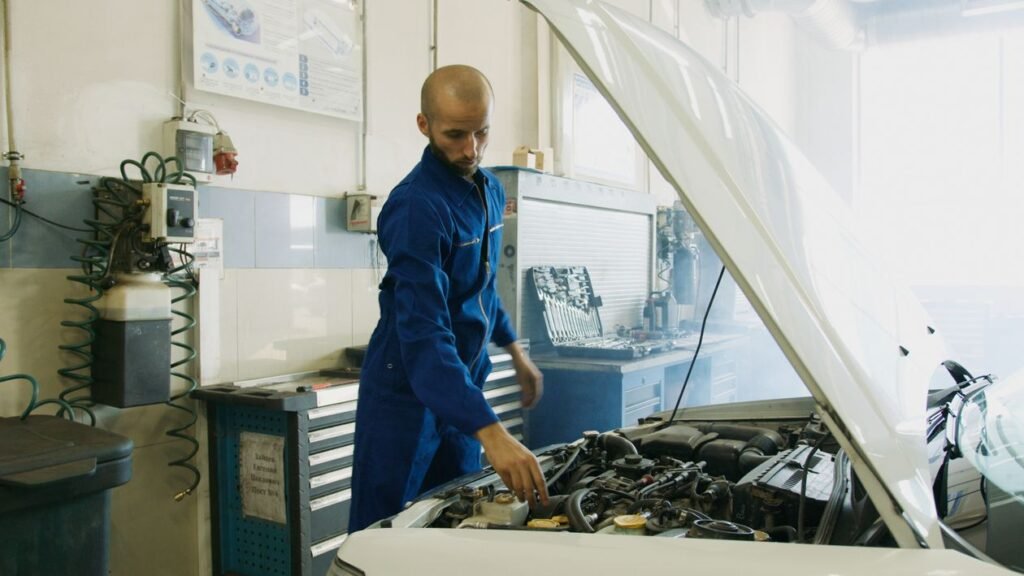
Rough idle means your engine shakes, shudders, or revs unevenly while the car is stopped with the engine running. The short answer: if the check engine light is flashing, tow the car, and if the light is steady or off, start with the simple checks below, then book a diagnostic scan before replacing parts. A rough idle is a symptom, not a diagnosis, and the fix depends on whether the cause is spark, fuel, air, or engine mounts. Guessing at parts is the most expensive way to fix it.
A healthy idle should feel smooth, with steady revs and no shaking through the steering wheel or seats. A brief higher idle on a cold start is normal, and a light shudder when the air conditioning compressor kicks in is also normal. Sustained shaking, revs that rise and fall on their own, stalling at junctions, or a strong fuel smell are not normal, and they deserve attention this week, not at the next service.
Step 1: note when it happens and check the warning lights
Your action: before you open the bonnet, note three things. Does it shake only when cold, only when warm, or all the time. Does it shake only with the air conditioning on, or only when you press the brake. And is the check engine light on, flashing, or off. Those three answers narrow the cause a lot. Shaking only when cold points to a sensor or fuel mixture issue. Shaking that changes with the air conditioning points to idle speed control or engine load. Shaking that worsens when braking can point to a vacuum leak in the brake booster area.
If the check engine light is flashing, stop driving and call for a tow, because a flashing light usually means an active misfire that can damage the catalytic converter. If the light is steady, you can drive short distances carefully to a shop, but book the scan promptly. A scan reads fault codes that point to the misfiring cylinder or the lean or rich condition, and that single step prevents replacing plugs, coils, and sensors one by one.
Common causes and what to check first
Spark problems are the most common cause. Worn spark plugs, a failing ignition coil, or damaged plug leads can cause a misfire that feels worst at idle, when engine speed is lowest and combustion is most sensitive. Your action: check your service history for when plugs were last changed, and if they are overdue, start there. For plug symptoms and timing, read our guide on signs of bad spark plugs and compare what you feel with the signs listed there. A single bad coil often affects one cylinder, while worn plugs often affect several.
Air problems come next. A dirty throttle body, a dirty mass airflow sensor, or a vacuum leak lets extra air into the engine or disrupts the air measurement, and the engine then runs lean and rough. Your action: look for cracked or disconnected vacuum hoses, listen for a hissing sound near the intake, and check the air filter, because a blocked filter starves the engine of air. Do not spray cleaner into the throttle body or airflow sensor unless you know the correct product for your car, because the wrong cleaner can damage the sensor.
Fuel problems are the third group. Clogged fuel injectors, low fuel pressure, or a failing fuel pump can starve one or more cylinders at idle, while the engine may still feel smoother at higher revs when fuel flow is higher. Your action: note whether the car also hesitates when accelerating, struggles to start, or smells of fuel, because those signs support a fuel cause. Fuel injector cleaning is cheaper than replacement, but it only helps when the injectors are dirty rather than electrically faulty, so a scan and a fuel pressure test should come before a parts order.
Other causes worth knowing
Worn engine mounts can feel like a rough idle even when the engine itself is healthy. Mounts are rubber and metal parts that hold the engine and absorb vibration, and when they wear, vibration reaches the cabin even though revs stay steady. Your action: check whether the shaking is worst in drive at a stop and eases in neutral or park, and whether you feel a clunk when shifting, because both signs support a mount cause. Mount replacement is a workshop job, and it should only be booked after spark, air, and fuel causes have been checked, otherwise you may pay for mounts while a misfire continues.
Exhaust gas recirculation valve faults, carbon buildup on intake valves, and low compression are less common but more serious causes. Your action: if the idle is rough, the car has high mileage, and basic checks plus a scan have not found the cause, ask the shop to check compression and to inspect for carbon buildup, rather than authorising a series of small parts changes. Low compression in one cylinder points to internal engine wear, and that changes the repair decision completely, from a simple service item to a major engine job.
What it costs to fix
Cost depends entirely on the cause, so do not accept a single price before diagnosis. Current repair guides checked during this run put many rough idle fixes in the 80 to 600 dollar range, covering throttle body cleaning, a coil or plug change, or a small vacuum hose repair. Larger jobs, such as several injectors, engine mounts, or a fuel pump, can reach 400 to 1000 dollars or more, depending on the car. Your action: ask the shop for a diagnostic scan first, then a quote that names the faulty part, the labour time, and whether cleaning or replacement is proposed, before you approve work.
For plug costs specifically, read our guide on spark plug replacement cost so you can judge whether a plug quote is in a normal range for your car. For knocking and misfire related damage, read our guide on engine knocking and note how ignoring a misfire can damage the converter, because that is the main reason a flashing light should never be driven on.
What to avoid
Do not pour injector cleaner, fuel additives, or oil additives into the car as a first step and hope the idle smooths out, because additives mask symptoms and delay diagnosis. Do not replace all coils or all injectors at once without a scan, because that is a costly guess. Do not ignore a rough idle for months, because a small vacuum leak or a weak coil strains other parts, raises fuel use, and can fail an emissions test. Do not rev the engine hard to clear a rough idle, because that can worsen a misfire and damage the converter.
Frequently asked questions
Can I drive with a rough idle
If the check engine light is flashing, no, tow the car. If the light is steady or off and the car drives normally apart from shaking at idle, short trips to a shop are usually fine, but book the scan this week. Your action: avoid motorway driving and hard acceleration until the cause is known, and pull over if the car stalls, loses power, or starts smelling of fuel.
Will new spark plugs always fix a rough idle
Only when plugs are the cause. Plugs are a common cause and a sensible first check when they are overdue, but a vacuum leak, a dirty throttle body, a bad coil, or a fuel fault will still shake after new plugs. Your action: get a scan first, then change plugs if the scan or the service history supports it, and recheck the idle before ordering more parts.
Why does my car idle roughly only when cold
Cold engines need a richer fuel mixture and higher idle speed, so sensor, fuel, and air faults show up most when cold and may fade as the engine warms. Your action: note the cold behaviour for the shop, because a fault that disappears when warm still needs a scan, and cold only shaking is not a reason to ignore it.
Rough idle is your engine telling you combustion is uneven at low speed. Note when it shakes, check the warning lights, get a diagnostic scan before buying parts, and work through spark, air, and fuel causes in that order. Handled that way, most rough idles end as a modest service fix. Ignored, the same shake can end as converter damage or a failed emissions test that costs far more.