
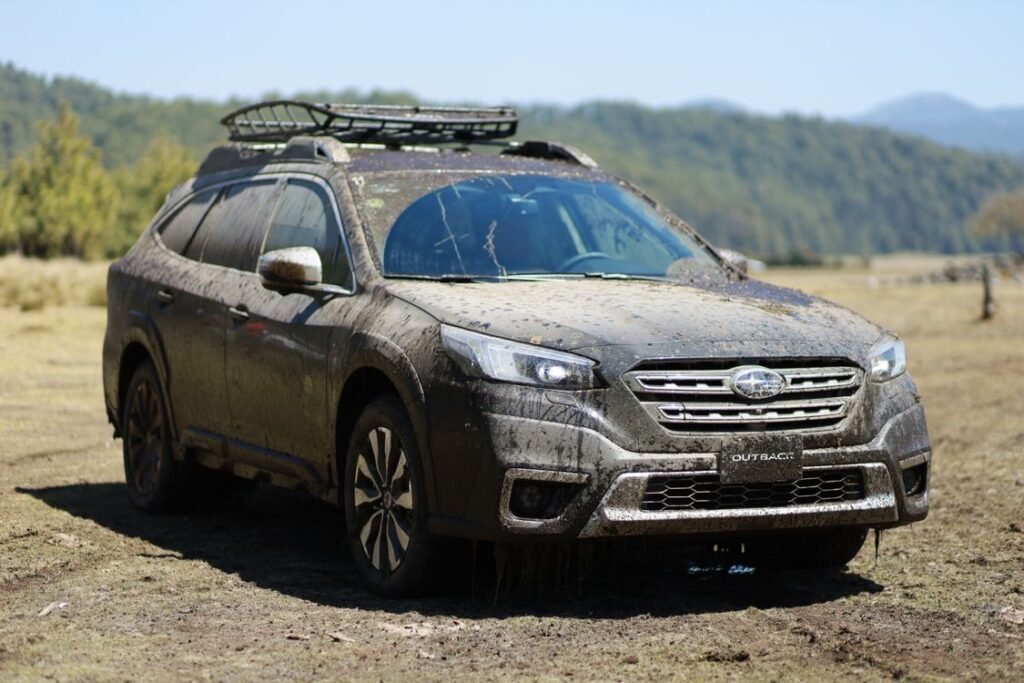
The Subaru Outback is the wagon that America buys when it wants car comfort, SUV ground clearance, and all wheel drive in one package. On sale since the 1995 model year and through six generations, it has moved from a raised Legacy wagon to a large, technology heavy wagon with a turbo engine option. That long history is your advantage as a used buyer, because parts are easy to find, every garage knows the boxer engines, and every fault is documented.
So who does it suit? Families who need wagon space without SUV bulk, drivers who face snow, gravel and rough roads, and buyers who want a comfortable motorway car that can still handle a dirt track to a trailhead. People cross shop the Outback against the Toyota RAV4 and the Honda CR V, and the Outback usually wins on all wheel drive value and wagon practicality.
One thing to know first: the generations matter more than the badge. A 2013 car can hide heavy oil consumption, a 2005 car can hide head gasket seepage, and a 2022 car can be a superb modern buy, while the cars either side of those years need careful checks. This page covers the generations, the engines worth having, the problems owners actually report, the years to buy, and what the car costs to run.
Subaru Outback at a glance
The quick facts first. The Outback has always been a raised wagon at heart, with five seats throughout its life, and it has offered Symmetrical All Wheel Drive as standard on most cars.
| Item | Details |
|---|---|
| Generation count and years sold | Six generations, on sale since the 1995 model year and still in production today |
| Body styles | 5 door wagon, plus a sedan based Outback variant on early cars in some markets |
| Main engines | 2.5 four cylinder boxer engines through most generations, 3.0 and 3.6 six cylinder boxer engines on many older cars, 2.4 turbo four with 260 hp on current cars, 2.5 four with 182 hp on current cars |
| Gearboxes | Manuals on early cars, 4 speed and 5 speed automatics on early cars, Lineartronic continuously variable transmission on most cars from 2010 onwards |
| Drive | Symmetrical All Wheel Drive as standard on most cars |
| Seats | 5 on every generation |
| Ground clearance highlight | 8.7 inches on current cars, which is more than many SUVs |
Generations explained
Six generations cover the Outback, and the faults move with these splits, so knowing which generation a car falls in is half the buying decision.
| Generation | Years | What changed |
|---|---|---|
| First | 1995 to 1999 | The original Outback, a raised Legacy wagon. Simple mechanics, but age and head gasket checks matter now. |
| Second | 2000 to 2004 | Larger and more refined, with 2.5 four and 3.0 six engines. Head gasket and timing belt checks matter. |
| Third | 2005 to 2009 | Larger cabin and better safety, with 2.5 four, 2.5 turbo four and 3.0 six engines. Head gasket seepage checks matter. |
| Fourth | 2010 to 2014 | More car like wagon with a continuously variable transmission. Oil consumption on 2013 to 2014 cars and early CVT checks matter. |
| Fifth | 2015 to 2019 | Refined platform, improved piston rings, and stronger safety technology. Late cars are the reliability sweet spot. |
| Sixth | 2020 to present | Larger, more technology heavy wagon, with a 2.5 four with 182 hp and a 2.4 turbo four with 260 hp. Early car software and battery checks matter. |
The sixth generation car, sold from 2020 to the present, is the used buy most people will meet first, with a 2.5 four with 182 hp and a 2.4 turbo four with 260 hp. The fifth generation car from 2015 to 2019 is the value pick, with a 2.5 four and a 3.6 six, and late cars from 2018 to 2019 are widely rated as the most reliable Outbacks. The fourth generation car from 2010 to 2014 needs the closest checks, because 2013 to 2014 cars suffered severe oil consumption and early CVT trouble.
The older cars still have their fans, but head gasket history, timing belt history and rust matter more than mileage alone on Outbacks.
Generations in detail: Subaru Outback 2026 to Present and Subaru Outback 2020 to 2025
Engines and specs that matter
The current 2.5 four is the heart of the modern Outback story, and it is the safest place to start. It makes 182 hp, it pairs with a Lineartronic continuously variable transmission, and it offers Symmetrical All Wheel Drive as standard. For most buyers, a 2.5 Outback is the default right answer, and it is the car to buy if you want the lowest risk ownership with strong wagon practicality and 8.7 inches of ground clearance. Choose the 2.5 if you cover big miles, want simple servicing, and do not need extra pace.
The 2.4 turbo four is the smart buy for pace, towing and motorway confidence. It makes 260 hp, and it gives the Outback the strongest performance in its history. Buy the turbo if you tow, drive fully loaded, or climb steep grades often, because the extra torque makes a loaded wagon feel effortless. The turbo needs the closest oil checks, because turbo engines punish missed oil changes more than naturally aspirated engines. Our guide to how often to change your oil explains the service habit that keeps these engines healthy.
The older engines still make sense on a budget, with care. The 3.6 six, fitted to fourth and fifth generation cars, is smooth and strong, and it suits buyers who want effortless pace without a turbo. The 2012 car with the 3.6 six and a 5 speed automatic is rated by many guides as the most reliable car of its generation. The 2.5 four on fifth generation cars is efficient and quiet, with improved piston rings that fixed the fourth generation oil problem. The 2.5 turbo four on third generation cars is fun, but it needs careful turbo and head gasket checks.
Gearboxes are the key Outback decision. Manuals and 4 speed and 5 speed automatics on early cars are simple and proven. The Lineartronic continuously variable transmission, fitted to most cars from 2010 onwards, is smooth and efficient when healthy, but early versions suffered valve body failures and shuddering. Test it cold and warm, at low speed and at motorway speed, and walk away from shudder, hesitation, slipping, or a delay when you select drive or reverse. Our guide to transmission slipping explains what shudder and hesitation are telling you on any automatic or CVT.
Which engine suits you? Want the safest modern buy, take a sixth generation 2.5. Want the best pace, the 2.4 turbo is the answer. Want the lowest purchase price with proven reliability, a 2018 or 2019 fifth generation car is honest value. Do big motorway miles on a budget, the 2.5 in any late generation is a good compromise, provided the CVT history is clean. On any car, check the oil level yourself and ask about oil change and CVT fluid history, because those two habits separate good Outbacks from tired ones.
Common problems by generation
The Outback problems are well documented because so many are sold, and they are specific enough that you can check for every one of them. These are the issues that come up again and again in owner reports, technical bulletins and buying guides.
First and second generations, 1995 to 2004
Head gasket failure is the headline risk here. Early 2.5 engines used gasket material that failed at a higher rate than normal, with external seepage and, in some cases, overheating. The underlying engine blocks were tough, but the gasket job is expensive because it is an engine out repair on many cars. Buy an early Outback only with proof of head gasket replacement, a timing belt history, and a careful rust inspection.
Third generation, 2005 to 2009
Head gasket seepage continues here, especially on 2.5 engines, with expensive engine out repairs where needed. Turbo cars need extra care, because turbo and cooling history matter more than mileage alone. On any third generation car, look for coolant and oil seepage around the head gaskets, check the coolant level, ask about timing belt history, and test every gear change thoroughly.
Fourth generation, 2010 to 2014
Oil consumption and early CVT trouble are the headline risks here. The 2013 and 2014 cars with the FB25B 2.5 engine suffered defective piston rings that caused excessive oil consumption, with some owners adding a quart every 500 to 2,000 miles. A class action lawsuit settled in 2016 extended warranty cover to eight years or 100,000 miles for affected engines, but that cover has now expired on most cars. Early CVTs in this generation were also prone to valve body failures and shuddering. On any fourth generation car, check the oil level yourself, ask how often the owner tops up the oil, test the CVT thoroughly, and avoid 2013 to 2014 cars unless the engine has been replaced or the price reflects the risk.
Fifth generation, 2015 to 2019
The fifth generation is largely clean, with smaller issues as the main caution. Early 2015 cars had software glitches, sensor calibration problems and minor electrical faults, but by 2016 and 2017 those problems were engineered out. Weak windshields and battery drain were reported on some cars, so check the glass and the battery carefully. The 2018 and 2019 cars are widely rated as the best Outbacks to buy, with a mature platform and sorted electronics. On any fifth generation car, test every screen and assistance feature, check the windshield for cracks or chips, and ask about battery history.
Sixth generation, 2020 to present
The sixth generation is largely clean after its first year. The 2020 model year suffered battery drain, infotainment glitches, windshield problems, and a CVT drive chain recall in July 2022 for a possible loss of drive. The 2021 to 2025 cars are much more refined, with software updates and hardware revisions addressing those issues. On any sixth generation car, test every screen, camera and assistance feature, check for battery drain warnings, confirm the CVT drive chain recall is closed by VIN, and prefer a 2022 or newer car if your budget allows.
Which Subaru Outback should you buy
On a tight budget, look at a 2012 fourth generation car with the 3.6 six and full history, provided the head gasket and CVT checks pass, because that car is rated as the most reliable of its generation. On a modern budget, a 2018 or 2019 fifth generation car is the smart buy: mature platform, sorted electronics, and reliable powertrains.
In the middle ground, a 2022 or newer sixth generation 2.5 is the smart modern buy: larger cabin, stronger safety kit, and a much cleaner record than the 2020 car. Drivers who want pace should look at the 2.4 turbo, provided they budget for its servicing and check its oil history carefully.
Years to be careful with are 2013 to 2014 for oil consumption and CVT trouble, 2020 for first year software, battery and CVT drive chain issues, and any early car without head gasket proof. The late cars of each generation are always the safer buy.
Whatever the generation, run through this checklist before you hand over money:
- Check the oil level yourself and ask how often the owner tops up the oil.
- Test the CVT cold and warm, and walk away from shudder, slipping or hesitation.
- Look for head gasket seepage and ask for head gasket replacement proof on older cars.
- Ask for CVT fluid change history, not just engine oil history.
- Test every screen, camera and assistance feature, and check for battery drain warnings.
- Confirm the CVT drive chain recall is closed by VIN on sixth generation cars.
- Check the windshield for cracks or chips, especially on fifth and sixth generation cars.
- Check tyre date codes and look at all four tyres for uneven wear.
Running and repair costs
The Outback is a mid range wagon to run, with parts easy to find and every independent garage familiar with the boxer engines. Typical US prices for the common jobs look like this:
| Job | Typical cost in US dollars |
|---|---|
| Front brake pads, fitted | 150 to 300 |
| Four tyres, fitted | 500 to 900 |
| 12 volt battery, fitted | 150 to 250 |
| Major service at an independent garage | 300 to 600 |
| CVT fluid change, where the shop recommends it | Ask for a quote before you buy, because fluid pricing varies by shop |
The expensive Outback bills come from head gasket work on older cars, neglected CVTs, and neglected oil consumption. Keep the oil topped up, the CVT fluid fresh, and the cooling system checked. Our guide to brake pad replacement cost shows what one of the most common jobs involves, and on a wagon that covers big miles it pays to use quality pads rather than the cheapest parts available.
Questions and answers
Is the Subaru Outback reliable?
Yes, in its fifth and later sixth generation forms, and it is one of the most practical wagons you can buy. The weak spots are specific and avoidable: head gasket seepage on early cars, oil consumption on 2013 to 2014 cars, and early CVT trouble. Buy a late car in any generation with records and a clean CVT test, and it is superb.
Which is the best Subaru Outback year to buy used?
The consensus pick is a 2018 or 2019 fifth generation car for proven reliability and value, or a 2022 or newer sixth generation car for a modern cabin and sorted electronics. On a tight budget, a 2012 car with the 3.6 six and full history can still be a fine buy, but only with head gasket proof.
Should I buy the Outback 2.5 or the 2.4 turbo?
Buy the 2.5 if you want the lowest running costs with strong wagon practicality, because 182 hp is plenty for most drivers. Buy the 2.4 turbo if you tow, drive fully loaded, or climb steep grades often, because the extra torque makes the wagon feel effortless.
What is the Subaru Outback oil consumption problem?
It is a pattern of excessive oil burning on 2013 to 2014 cars with the FB25B 2.5 engine, caused by defective piston rings. Some owners added a quart every 500 to 2,000 miles. Later engines fixed the piston ring design, but the check is the same on every car: check the oil level yourself, ask how often the owner tops up, and walk away from any car that burns oil heavily.