
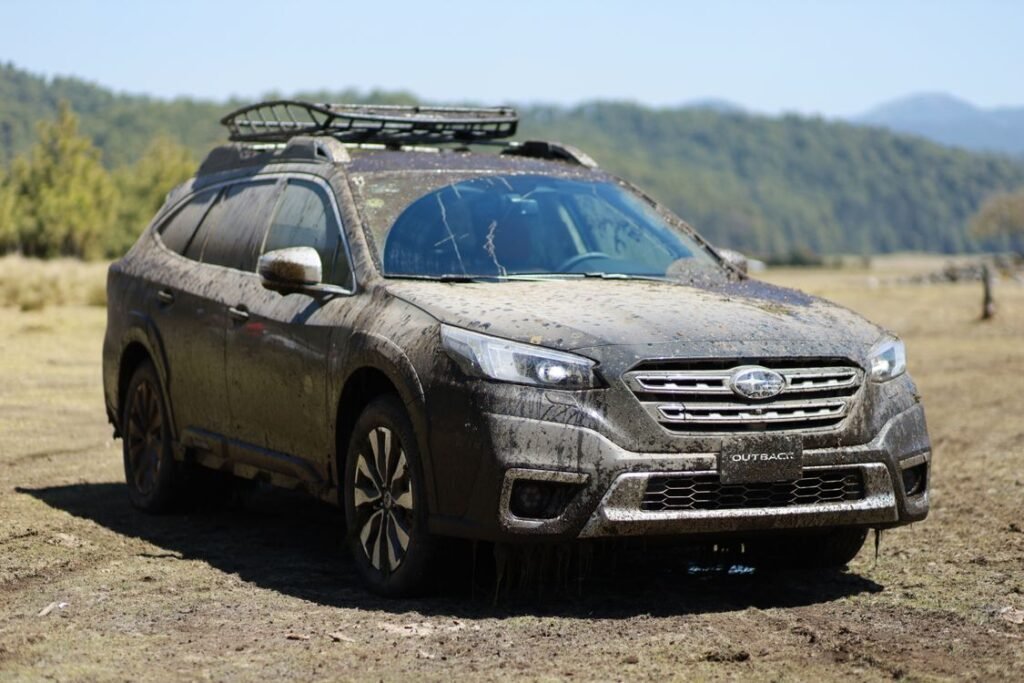
The 2026 Subaru Outback is the biggest change in the nameplate for 30 years. For the first time the Outback is a proper SUV, not a raised wagon, with a taller, boxier body, a new 12.1 inch touchscreen cabin, and EyeSight driver assistance. The engines are familiar, a 2.5 litre four with 180 hp and a 2.4 litre turbo four with 260 hp, both with all wheel drive as standard.
So who does it suit? Families who liked the old Outback but wanted a car that looks and feels like an SUV, and buyers who want the newest safety kit Subaru makes. Our Subaru Outback model guide compares every generation side by side.
This page covers the seventh generation car: the new SUV body, the two engines, the safety kit, what is too new to judge yet, which trim to buy, and what it costs to run.
Subaru Outback 2026 to present at a glance
| Item | Details |
|---|---|
| Generation and years sold | BU, the seventh generation. Revealed in April 2025, on sale from late 2025 for the 2026 model year. |
| Body style | 5 door SUV. The wagon body is gone after 30 years. |
| Main engines | 2.5 litre boxer four with 180 hp. 2.4 litre turbo boxer four with 260 hp on XT and Wilderness cars. |
| Gearbox | Lineartronic continuously variable transmission with an 8 speed manual shift mode on every car. |
| Drive | Symmetrical All Wheel Drive as standard on every car. |
| Seats | 5 |
| Ground clearance | 8.7 inches, 9.5 inches on the Wilderness. |
| Fuel economy highlights | 2.5 cars return 25 mpg city and 31 mpg highway. Turbo cars return 21 city and 29 highway, or 27 highway on the Wilderness. |
| Towing | 2,700 pounds with the 2.5 engine, 3,500 pounds with the turbo engine. |
| Price | From 34,995 dollars MSRP for the Premium, before destination charges. The Wilderness starts at 44,995 dollars MSRP. |
Engines and specs that matter
The 2.5 litre boxer four is the one to get if you are buying for value and simplicity. It makes 180 hp and 178 pound feet of torque, it pairs with a Lineartronic continuously variable transmission, and it offers Symmetrical All Wheel Drive as standard. It is a proven engine carried over from the previous generation with only small changes, which is good news on a brand new car. Test it fully loaded before you commit.
The 2.4 litre turbo four is the smart buy for pace, towing and motorway confidence. It makes 260 hp and 277 pound feet of torque, and it raises the towing limit from 2,700 pounds to 3,500 pounds. Buy the turbo if you tow, drive fully loaded, or climb steep grades often, because the extra torque makes a loaded car feel effortless. The turbo needs the closest oil checks, because turbo engines punish missed oil changes more than naturally aspirated engines. Our guide to how often to change your oil explains the service habit that keeps these engines healthy.
The safety kit is the real reason to buy a 2026 car over a late used one. EyeSight now offers hands free driving on highways at speeds up to 85 mph, and Emergency Stop Assist, which pulls the car over and alerts emergency services if the driver stops responding. Inside, the 12.1 inch touchscreen runs on a Google Android Automotive system with wireless Apple CarPlay and Android Auto, a 12.3 inch digital instrument cluster sits in front of the driver, and the heating controls are physical buttons and knobs again. Cargo space grows to 34.6 cubic feet behind the rear seats and 80.5 cubic feet with the seats folded, so check it with your own luggage.
Which engine suits you? Do mostly town and highway driving and want the best value, take the 2.5 in Premium or Limited trim. Want the strongest Outback with the best towing, take a Limited XT or Touring XT. Want the toughest Outback for rough tracks, take the Wilderness.
Common problems of this generation
This car is too new for a real problems record, and any guide that lists faults for it is guessing. The engines and the transmission are proven units carried over from the previous generation, while the body, the cabin electronics and the safety systems are all new.
No problems record yet, and no crash ratings yet
The 2026 Outback went on sale in late 2025, so there is no long term owner data and no recall history to report at the time of writing. Neither the IIHS nor the NHTSA had published crash test ratings for the 2026 car at the time of writing either. That does not mean the car is unsafe, but you are buying before the independent safety verdict exists. Check the ratings before you sign if you can wait.
First year risks to watch
Every first year car carries more risk than the same car two years later, and the 2026 Outback is a full redesign, not a facelift. The infotainment system runs on a Google Android Automotive operating system and the EyeSight system is a new generation. Test the 12.1 inch screen through every menu, test wireless phone pairing and the voice assistant, and test every assistance feature on a proper drive. Our guide to lane departure warning explains what these assistance systems do and what to check when one stops working. Ask the dealer about software updates.
Fuel economy and price have both moved the wrong way
The new car is thirstier and dearer than the car it replaces. The 2.5 now returns 25 mpg city and 31 mpg highway in EPA figures, against 26 city and 33 highway on the outgoing car. The entry point has also moved up: the cheap base trim is gone, the Premium is now the cheapest Outback at 34,995 dollars MSRP before destination charges, and the Onyx Edition has gone too. Budget for the higher price and the extra fuel, and compare the real on the road price with a late 2025 car, which may now be the better value.
Styling that divides opinion
The boxy SUV look is the most argued about part of this car. The split headlights, the squared off wheel arches, the full width tail light bar and the big OUTBACK lettering across the tailgate are a deliberate break from 30 years of wagon styling. It has practical effects too: the taller roofline and wider C pillar change rear visibility, and the raised load floor changes how easily you lift heavy items in. Check the mirrors and the rear view, and load your own luggage before you decide.
Should you buy this generation
This Outback suits buyers who want the newest Subaru and the most modern cabin and safety kit, and who are happy to pay the higher price for it. If you tow regularly, the turbo cars with 3,500 pounds of towing are the strongest Outbacks ever built for the job. If you drive rough tracks, the Wilderness is the most capable Outback Subaru has sold.
Who should skip it? If you want proven reliability data, wait a year and let the first owners find the faults, because no long term record exists yet. If you loved the wagon shape, a late 2025 car keeps the old shape with the same engines. If your budget is tight, a 2023 to 2025 car gives you nearly the same car for much less money.
The good buys are the Premium 2.5 for value, the Limited XT for pace and towing, and the Wilderness for off road use. A Premium 2.5 suits most families, a Limited XT suits towers, and the Wilderness suits only genuine off road drivers.
Whatever the trim, run through this checklist before you hand over money:
- Check whether IIHS and NHTSA crash ratings have been published yet, and read them before you sign.
- Test the 12.1 inch screen, wireless phone pairing, voice assistant and every EyeSight feature on a proper drive.
- Drive the 2.5 fully loaded before you decide, because 180 hp moves a taller, heavier car than before.
- Check the rear visibility and the raised load floor with your own luggage.
- Confirm the price with destination charges, because the headline 34,995 dollars excludes them.
- On a Wilderness, check the all terrain tyres, the roof load limits and the towing kit you need.
Running and repair costs
Running costs on a new car are mostly fuel, tyres and servicing, and the turbo cars and the Wilderness cost more to fuel and to tyre than the base 2.5. Typical US prices for the common jobs look like this:
| Job | Typical cost in US dollars |
|---|---|
| Front brake pads, fitted | 150 to 300 |
| Four tyres, fitted | 600 to 1,000 |
| 12 volt battery, fitted | 150 to 250 |
| Major service at a dealer | 400 to 700 |
| Annual fuel, 12,000 miles a year | About 1,400 to 1,700, estimated at typical pump prices |
The expensive 2026 Outback bills do not exist yet, because the car is too new for a repair pattern to form. The risk to budget for is first year software fixes, which should be covered by warranty, and the higher tyre cost on cars with 19 inch wheels. Keep the oil fresh on the turbo cars.
Questions and answers
Is the 2026 Subaru Outback still a wagon?
No. The seventh generation Outback is a 5 door SUV with a taller, boxier body, squared off wheel arches and a higher roofline. The wagon body is gone after 30 years, because the Legacy sedan it shared its proportions with has been discontinued. It keeps the same wheelbase as the old car.
Does the 2026 Outback still have a turbo engine?
Yes. The 2.4 litre turbo boxer four continues on XT and Wilderness cars, still making 260 hp and 277 pound feet of torque, and it still raises the towing limit to 3,500 pounds. The 2.5 litre four continues as the standard engine with 180 hp. Both engines pair with a Lineartronic continuously variable transmission and standard all wheel drive, and there is no hybrid and no manual option.
Is the 2026 Subaru Outback reliable?
Too new to say with confidence. The engines and the transmission are proven units carried over from the previous generation, which is reassuring, but the body, the infotainment system and the EyeSight system are all new, and no long term owner data exists yet. No crash test ratings had been published at the time of writing either.
Which 2026 Outback should I buy?
Buy the Premium 2.5 if you want the best value, because it has the standard engine, the new screen and the full EyeSight kit at the lowest price. Buy a Limited XT or Touring XT if you tow or drive fully loaded, because the turbo makes the car feel effortless and tows 3,500 pounds. Buy the Wilderness only if you genuinely drive rough tracks.