
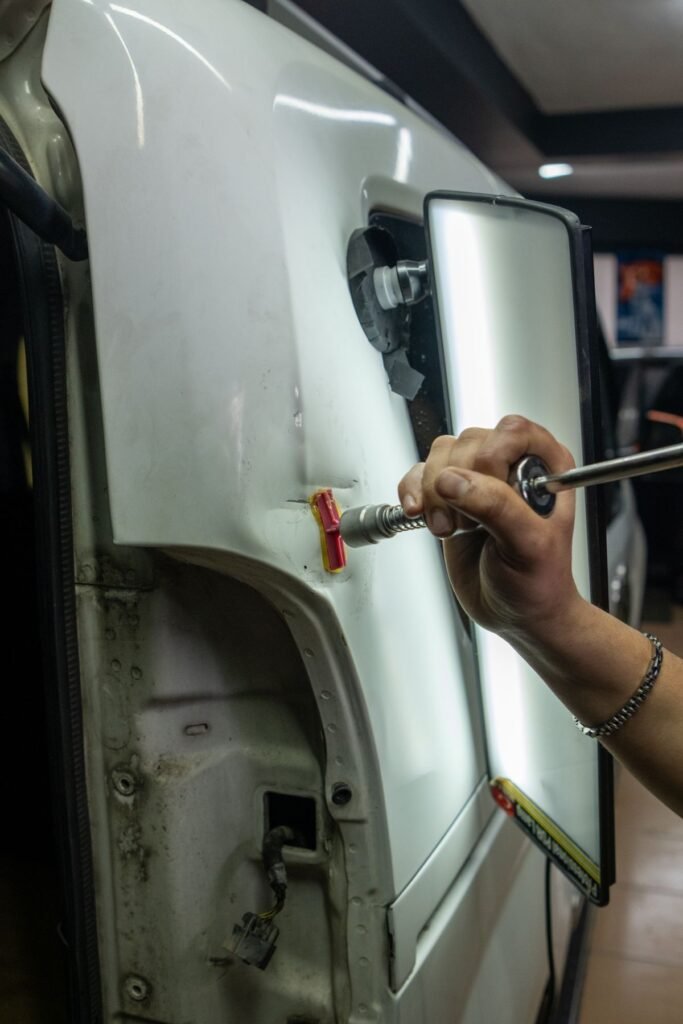
Car dent repair in the United States typically costs 75 to 300 dollars per dent for paintless dent repair on a small dent with intact paint, 300 to 1000 dollars for a traditional repair on a panel with paint damage, and 1000 to 3000 dollars or more for major damage with paint work or panel replacement. The short answer: choose paintless dent repair when the paint is intact and the metal is not stretched or creased, and choose traditional bodywork when the paint is cracked, the metal is stretched, or the dent crosses a body line. Paint condition decides the method, and the method decides the price.
Paintless dent repair, often called PDR, works by pushing or pulling the metal back to shape from behind the panel, without sanding, filler or repainting. Traditional repair works by filling, sanding, priming and repainting the panel. The first method keeps the factory paint and is faster and cheaper when it fits, while the second method can fix almost any dent but costs more and takes days. This guide breaks down the cost by method, the checks that decide which method fits, and the traps that turn a small dent into a large bill.
Cost by method
| Method | Typical cost in dollars | When it fits |
|---|---|---|
| Paintless dent repair, small dent | 75 to 300 | Small dent, paint intact, metal not stretched |
| Paintless dent repair, larger dent | 250 to 600 | Larger shallow dent, good access, paint intact |
| Traditional repair, single panel | 300 to 1000 | Paint damage, crease, or dent that PDR cannot fix |
| Traditional repair, major damage | 1000 to 3000 or more | Deep dent, stretched metal, multi panel damage or panel replacement |
| Hail damage, multiple dents | 1200 to 4000 or more | Many dents across roof, bonnet and panels, method depends on paint |
Use that table as a planning range, not a quote. Your action: ask the shop to state the method, the number of panels and whether paint blending is included. A paintless quote and a traditional quote for the same dent are not comparable, because they are different jobs with different results.
Does your dent qualify for paintless repair
Start with paint. Your action: look closely in good light for cracked, chipped or missing paint in the dent. If the paint is cracked, paintless repair is usually out, because the panel will need paint work anyway. If the paint is intact and smooth, paintless repair is worth a quote first.
Next, check size, depth and place. Your action: measure the dent, note whether it is shallow or deep, and check whether it crosses a sharp body line or sits on an edge. A shallow dent on a flat panel with good access behind it is the best paintless candidate, while a deep dent, a sharp crease and a dent on a body line are harder and may cost more or need traditional work.
Then check access. Your action: ask the technician whether they can reach behind the panel without removing major trim. A door dent with good access is a quick job, while a roof rail dent or a dent behind a brace can take longer and cost more, even with paintless methods.
Paintless versus traditional: a genuine comparison
Paintless repair keeps the factory finish, usually takes 1 to 3 hours for a small dent, and avoids paint mismatch. Your action: choose it for parking dings, hail dents with intact paint and small door dents, and ask to see the panel in good light before you pay, because a good paintless repair should be hard to find, not just better than before.
Traditional repair can fix stretched metal, creases and paint damage that paintless methods cannot. Your action: choose it when paint is damaged, when the metal is stretched, or when the panel needs reshaping, and ask whether blending into the next panel is included. A single panel repaint without blending can show a colour edge in sunlight, especially on metallic and pearl paints.
For related bodywork costs, read our guide on car bumper repair cost if a bumper was hit as well, check how much it costs to paint a car to see full panel paint pricing, and read car door replacement cost if the door damage goes beyond a dent.
Insurance, DIY and what to avoid
Compare the repair quote with your deductible before you claim. Your action: if a paintless repair costs 75 to 300 dollars and your deductible is 500 dollars, pay it yourself. If hail damage runs into four figures, get an insurance estimate and photos of every panel before any work starts, because a second inspection after panels are repaired is hard to prove.
Avoid DIY suction cups and hot water tricks on a dent you care about. Your action: a suction tool can pull paint off a damaged panel, and heat can warp trim or damage paint, turning a paintless candidate into a traditional repair. Leave a dent that matters to a technician with proper tools, and use DIY only on a car where a poor result does not matter.
Also avoid delaying a dent with cracked paint. Your action: if paint is broken and bare metal is showing, get it sealed or repaired promptly, because rust can start under a cracked paint edge and spread beyond the dent. A small paint seal now is cheaper than a rust repair later.
Frequently asked questions
How much does paintless dent repair cost per dent
Typically 75 to 300 dollars for a small dent, rising to 250 to 600 dollars for a larger shallow dent, depending on size, depth, access and location. Your action: get a per dent quote, not a per car guess, because a car with five dents is priced dent by dent, not as one job.
When is paintless dent repair not possible
It is usually not possible when paint is cracked or missing, when metal is badly stretched or creased, when the dent is on a sharp body line with no access, or when the panel is badly distorted. Your action: ask the technician to show you the paint break or the crease, so you understand why traditional repair is needed.
Does paintless dent repair affect resale value
A good paintless repair usually protects resale value, because it keeps the factory paint and leaves no paint record. Your action: keep the invoice and before photos, because a buyer who can see a clean repair history is more confident than a buyer who only sees a dent.
How long does dent repair take
Paintless repair usually takes 1 to 3 hours for a small dent, while traditional repair usually takes 3 to 7 days including paint curing and blending. Your action: confirm the time before you book, because a traditional job needs a courtesy car or a plan for days without the car.
Car dent repair cost follows paint first, then size and access. A small dent with intact paint stays in the low hundreds with paintless repair, a panel with paint damage moves into the high hundreds with traditional work, and major or multi panel damage moves into four figures. Check paint, get a method specific quote, and protect a cracked paint edge promptly.