
The garage just called with a number that made your stomach drop, and now you are wondering whether that quote is fair or whether someone is taking you for a ride. Brake caliper replacement cost is one of those bills that can land anywhere from a few hundred dollars to well over a thousand, and the difference is rarely explained. This guide gives you the real ranges, shows you what sits behind each line on the bill, and leaves you with one question answered by the end: should you pay for a repair, or pay for a full replacement?
Here is the short answer first. Brake caliper replacement cost usually runs $250 to $600 per caliper at an independent shop, parts and labor included, for a common sedan or crossover. RepairPal puts its national average higher, at $898 to $968, because it prices new original equipment grade parts, while most independent shops fit a quality remanufactured caliper for far less. That gap is the whole story of this job, and it is why two honest quotes can sit hundreds of dollars apart. It is a worrying bill to face, because brakes are the one system you never want to gamble on, and nobody wants to overpay for safety either. The real example that shows the spread is a Toyota Camry, where RepairPal lists $510 to $578 for one caliper, while independent shop guides put the same job on a common sedan at $250 to $450. Same car, same part, very different price, and the reason is the part on the invoice.
What a Brake Caliper Does and Why It Fails
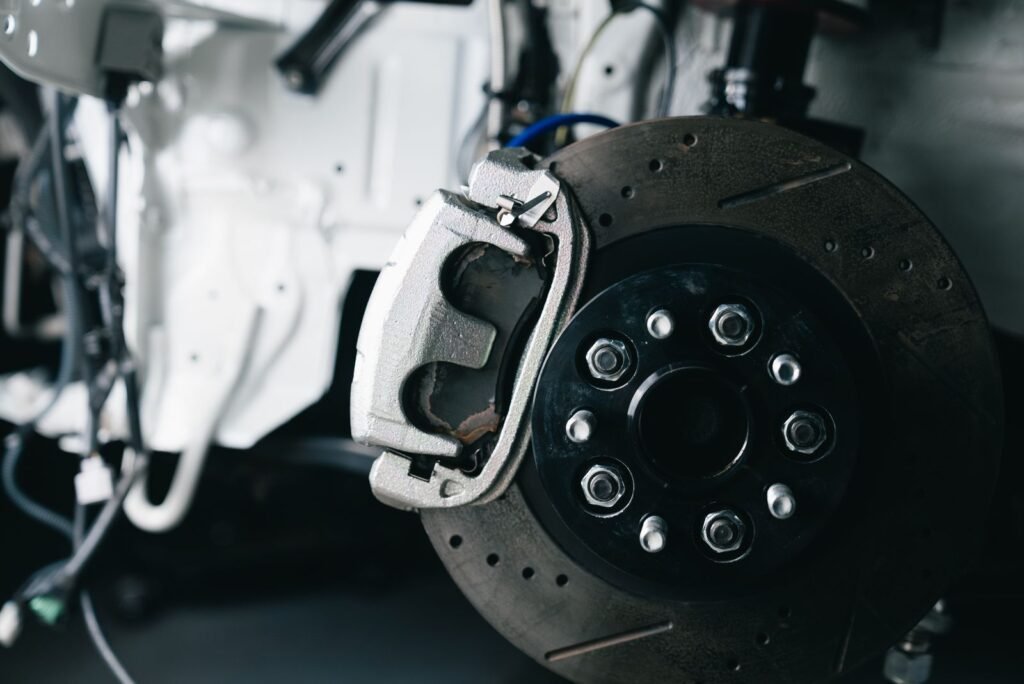
A brake caliper is the clamp that sits over the brake disc on each wheel. When you press the brake pedal, brake fluid pushes a piston inside the caliper, the piston squeezes the brake pads against the disc, and friction slows the wheel. When you lift your foot, the piston pulls back a fraction, the pads release, and the wheel spins freely again. It is a simple job, and it happens thousands of times on every drive, which is why a caliper that stops moving freely causes trouble fast.
Calipers fail in a few familiar ways. The piston can seize in its bore after years of heat and moisture, so the pad stays pressed against the disc. The slide pins that let a floating caliper move side to side can corrode and dry out, so the caliper drags on one side. The rubber boot that keeps dirt and water out of the piston can tear, and once grit gets in, wear speeds up. A leak can start at the piston seal or at the bleeder screw, and brake fluid loss is a fault to take seriously at once. Age, road salt, moisture in old brake fluid, and long periods parked all push a caliper toward failure, which is why cars in wet climates and cars that sit unused often need calipers sooner.
Most calipers last a long time. A Premium puts typical caliper life at 75,000 to 100,000 miles, or 7 to 10 years, and many last longer than that with regular brake fluid changes. So when a garage says you need a new one, ask what exactly failed. A seized piston, a cracked housing, or a leaking seal means replacement. A dry slide pin or a torn boot may mean a much cheaper fix, and that distinction is worth money. But knowing what a caliper does is only half the picture, because the price depends on which caliper your car uses and what else has worn with it.
How Much Brake Caliper Replacement Costs
The cost of replacing one brake caliper depends on your car, your area, and the part the shop fits, so treat every number here as a national average that varies by job. Independent shop guides put one caliper at $250 to $450 installed on a common sedan or crossover, and $300 to $600 per caliper is the wider range CarTreatments reports for most passenger cars. MechanicRank, working from posted independent shop prices, puts one caliper at $185 to $530, with parts at $90 to $250 and labor at 1 to 2 hours. RepairPal, which prices new original equipment grade parts, reports a national average of $898 to $968, with about $749 in parts and $150 to $219 in labor, updated 3 September 2026. These numbers disagree because they price different parts, not because one of them is wrong.
The table below breaks the bill into its parts, so you can see where your money goes and spot a quote that looks padded.
| What you pay for | Typical range | What it covers |
|---|---|---|
| Remanufactured caliper, part only | $70 to $200 | Rebuilt original caliper with new seals, boots and piston |
| New caliper, part only | $100 to $300 | Brand new caliper, usually original equipment or matching quality |
| Loaded caliper, part only | $120 to $300 | Caliper with bracket, slide pins and pads already fitted |
| Labor, one caliper | $150 to $220 | Removal, fitting, brake bleeding, road test, about 1 to 2 hours |
| One caliper fitted, independent shop | $250 to $600 | Part plus labor plus brake fluid, before tax |
| Both calipers on one axle, fitted | $520 to $950 | Two calipers, labor and a full fluid flush on a common car |
| Dealer or luxury car, one caliper | $800 to $1,500 | New original equipment part at dealer labor rates |
Extras can push the total higher, and a good quote lists them separately. New brake pads add $35 to $150 per axle, and a rotor adds $30 to $75 per rotor for the part, according to EngineerFix. A brake fluid flush adds $50 to $100. A collapsed brake hose, a corroded brake line, or a seized bracket can add parts and time too. Ask the shop to list each item on the written estimate, so you can see whether the caliper is the expensive part or whether the extras are doing the damage. But the table alone does not explain why your neighbor paid half what you were quoted, so next comes the list of factors that move the price.
What Pushes the Price Up or Down
Your car is the biggest factor. A compact car with a single piston sliding caliper uses a cheap, widely available part, and MechanicRank puts that job at $170 to $490. A midsize sedan or small SUV runs $185 to $530. A full size truck or large SUV runs $215 to $620, because the calipers are bigger, even though they are easy to reach. Luxury and European cars run $270 to $765 at independent shops, and far more at a dealer, because many use multi piston fixed calipers and electronic parking brake systems that need a scan tool to service. Hybrids sit at $205 to $585, and their calipers often seize from light use rather than wear, because regenerative braking does much of the stopping.
Front and rear calipers can cost different amounts on the same car. Rear calipers often carry the parking brake mechanism, and on cars with an electronic parking brake the rear job takes longer and needs special equipment, so a rear caliper can cost more than a front one. Performance cars are a world of their own, with fixed calipers that can cost $150 to $400 or more for the part alone, and carbon ceramic systems that cost far more again. If your car has a red painted caliper with a brand name on it, expect a higher quote, and ask the shop to confirm the part number before you agree to anything.
Where you live matters as well. MechanicRank found a median posted labor rate of $129 per hour across 207 independent shops, with the middle half charging $100 to $165. California shops posted a median of $160 per hour, while Ohio shops posted $75. Dealers typically charge $120 to $180 per hour, while independent shops charge $70 to $100 per hour in many areas, according to CarTreatments. A dealer quote will almost always sit above an independent shop quote for the same part, and a mobile mechanic often charges a little less than a shop. Get the part type and the labor rate in writing, then compare quotes on the same basis, because a cheap labor rate with a new original equipment part can still beat an expensive rate with a remanufactured part. But price is only one side of the choice, because the part itself comes in three versions, and picking the wrong one is an easy way to pay twice.
Remanufactured, New or Loaded: Which Caliper to Buy
A remanufactured caliper is your old caliper, or one just like it, taken apart, cleaned, fitted with new seals, boots and piston, then pressure tested. It is the industry standard part for this job, and it is a genuinely good product when it comes from a reputable rebuilder. CarTreatments puts a remanufactured caliper at $70 to $200 for the part, against $100 to $300 for a new one. Fixxr notes that the remanufactured caliper your independent shop actually installs sells for as little as $40 to $120 at the big parts chains. The catch is the core charge, a refundable deposit you pay until your old caliper goes back, so ask whether the quote includes it and whether it is refunded.
A new caliper costs more and makes sense in a few cases. If your car is new, rare, or high performance, a remanufactured unit may not be available, or may be hard to trust. If you plan to keep the car for many more years, a new caliper with a longer warranty can be worth the extra money. If the old caliper failed from internal corrosion, a new casting removes any doubt about the bore. For a common car that you plan to keep for a few more years, a quality remanufactured caliper is usually the smart buy, and most independent shops will warranty their work on it.
A loaded caliper arrives with the bracket, slide pins and pads already assembled, and Fixxr puts one at $300 to $600 fitted for the corner. It costs more up front but saves labor time, and it removes the risk of reusing a worn bracket or tired slide pins. An unloaded caliper is the caliper alone, and the shop reuses your bracket and hardware or fits new hardware separately. Ask which version the quote covers, because a loaded caliper quote and an unloaded caliper quote are not the same job, and comparing them without knowing that will mislead you. Choose the part first, then the price makes sense, but before you spend anything, check whether the caliper even needs replacing at all.
Repair or Replace: When a Cheaper Fix Is Enough
Not every caliper fault needs a new caliper, and knowing the difference can save you hundreds of dollars. If the slide pins are dry or corroded, cleaning them and regreasing with the correct brake grease can free the caliper, and MechanicRank notes that a slide pin fix can cost as little as $90. If the rubber boot is torn but the piston and bore are still sound, a seal kit and a clean can bring the caliper back. If the caliper is sticking because the brake hose has collapsed inside, replacing the hose is far cheaper than replacing a caliper that was never faulty, a point our guide to brake caliper sticking symptoms makes in detail.
Replacement is the right call when the piston is seized solid, the bore is pitted or scored, the housing is cracked, or the caliper leaks fluid from the piston seal. A caliper that has overheated badly enough to turn the disc blue has usually had its seals cooked as well, so a rebuild is a false economy. A caliper that keeps sticking after a clean and regrease has an internal fault, and throwing more labor at it only delays the same bill. If the car is high mileage and the other caliper is the same age, ask the shop to inspect it while the wheel is off, because catching the second one early lets you plan the cost instead of facing it as a surprise.
Never let a shop replace a caliper without showing you the fault. Ask to see the seized piston, the leaking seal, or the corroded slide pins, and ask why a repair will not hold. A good shop will show you gladly, and a shop that cannot show you a fault is a shop to get a second opinion from. If the caliper truly needs replacing, the next question is whether its partner on the same axle should go too.
One Caliper or Both: What to Replace Together
Calipers are a per wheel part, and replacing one at a time is normal. There is no rule that says both calipers on an axle must be replaced together, and MechanicRank makes the same point, that pairs are a judgment call, not a rule. If one caliper failed from a torn boot or a stone chip, and the other side moves freely with clean fluid, replacing one is fine. If both are the same age, both have lived through the same road salt and the same old brake fluid, and one has seized, the other is living on borrowed time, and replacing both now saves a second labor bill and a second brake bleed later.
Always replace brake pads on both sides of an axle together, even when only one caliper is replaced. Pads wear as a pair, and a new pad on one side with a worn pad on the other will pull the car under braking and wear unevenly. The same logic applies to rotors. If the dragging caliper has scored or overheated the rotor on its side, replace or resurface that rotor, and check the other side for matching wear. A new caliper gripping a worn rotor is unsafe and will shorten the life of the new parts, so do not let a shop skip the rotor check to keep the quote low.
When you do replace both calipers, ask for a full brake fluid flush at the same time. Old fluid absorbs moisture, moisture corrodes calipers from the inside, and fresh fluid protects the new parts from the start. Fixxr puts both calipers on an axle with a full fluid flush at $520 to $950 on a common car, which is often better value than two separate visits. Decide with the condition of the other side in front of you, not with a guess, and ask the shop to show you both calipers before you choose. But some symptoms do not wait for a decision, because they mean the car is unsafe to drive right now.
Signs You Should Stop Driving and Get It Checked at Once
Some brake faults are a book a visit soon problem. Others are a stop driving now problem, and telling them apart matters. Stop driving and get the car checked at once if the brake pedal sinks to the floor, if you have to pump the pedal to get any braking, or if the brake warning light is on with a soft pedal. Stop too if you smell burning brakes with smoke from a wheel, if one wheel is too hot to touch after a short drive, or if the car pulls hard to one side under braking. These signs point to a caliper that is stuck on, a fluid leak, or brake fade, and each one can leave you with no brakes when you need them most.
Book a check within days, not weeks, if you hear a grinding noise, if a squeal has turned into a scrape, or if the car feels sluggish and slow to roll, as if the handbrake is partly on. A dragging caliper overheats the pads, the disc and the tire on that wheel, and the damage spreads with every mile. If you are unsure whether a noise is brakes or something else, our guides to why your brakes squeak and to a squealing noise when driving will help you tell a pad warning from a caliper fault before you call the shop.
If you must drive a short distance to the garage with a suspect caliper, keep the drive slow and short, avoid motorways, leave a long gap to the car ahead, and brake early and gently. Do not drive through the fault, do not keep topping up brake fluid to hide a leak, and do not spray lubricant at a caliper through the wheel in the hope it frees up. If the pedal feels wrong or the car pulls strongly, stop in a safe place and call for recovery instead. A tow bill is cheap next to a crash, and no saving is worth driving a car that cannot stop properly. But once you know the car needs work, the next skill is getting a fair price for it.
How to Get a Fair Quote and Avoid Overpaying
Get three quotes when the car is safe to drive, and make them comparable. Give every shop the same information: your year, make and model, which wheel is affected, and what symptoms you have noticed. Ask each shop to quote the same part type, remanufactured or new, and to list parts, labor, brake fluid, pads, rotors, tax and fees as separate lines. A quote that hides the part price inside one total tells you nothing, and a shop that will not break it down is a shop to walk away from.
Check the part before you agree. Ask for the brand and part number, and check whether it is remanufactured, new or loaded. Ask how long the parts warranty runs and how long the labor warranty runs, and get both in writing. Ask whether the quote includes brake bleeding and a road test, because a caliper job without a proper bleed leaves air in the lines and a soft pedal. Ask whether the brake fluid will be flushed or just topped up, and ask what happens if the rotor is found to be worn once the wheel is off, so a mid job phone call does not catch you by surprise.
Watch for the upsells that follow a caliper quote. A full set of pads on both sides of the axle is legitimate. A rotor on the affected side is often legitimate. A full brake job on all four wheels, new hoses all round, and a master cylinder, all on the back of one sticking caliper, is a quote to question. Ask the shop to show you each worn part and to explain why it needs replacing now rather than at the next service. A second opinion costs little and often saves hundreds, especially when the first quote is over $1,000 on a common car. With a fair quote in hand, it helps to know what the mechanic will actually do to your car.
What Happens During the Replacement
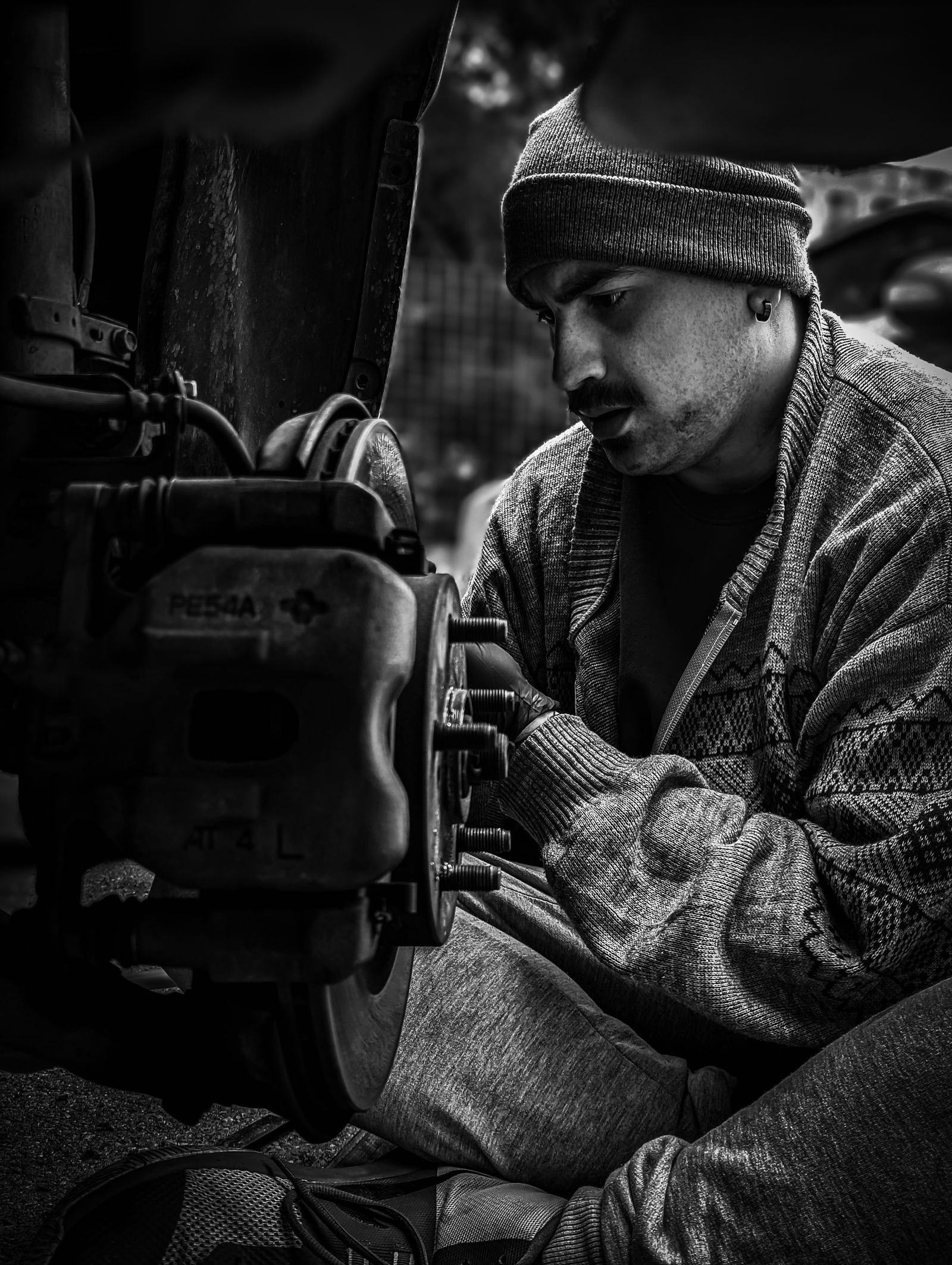
The job starts with the wheel off and the caliper inspected, so the mechanic can confirm the fault and check the pads, rotor, hose and slide pins on that corner. The brake hose is clamped or the fluid is caught, the caliper bolts come out, and the old caliper lifts off the disc. The bracket is checked for corrosion and wear, the slide pins are cleaned and greased or replaced, and the new caliper is fitted with new pads and hardware where needed. The brake hose is reconnected with new copper washers, the system is bled to push out air, and the fluid is topped up to the correct level.
Bleeding the brakes is the step that makes the pedal feel right again, and it is not a step to rush. Air in the lines makes the pedal soft and the stopping distance long, so the mechanic will bleed the caliper until clean fluid with no bubbles comes through, then check the pedal feel and the fluid level again. On cars with an electronic parking brake, the system is wound back with a scan tool before the work starts and reset after, which is one reason rear calipers on modern cars take longer. The wheel goes back on, the nuts are torqued to the factory setting, and the car gets a road test with several gentle stops to bed the new pads in.
Expect the job to take 1 to 2 hours per caliper at a professional shop, and a little longer if the rotor, hose or fluid flush is included. You can ask the shop to show you the old caliper and the new one side by side before they fit it, and to note the part number on the invoice. After the job, the pedal should feel firm, the car should stop straight, and there should be no pulling, no grinding and no smell of hot brakes after a normal drive. If anything feels wrong on the drive home, go straight back, because a brake job that does not feel right is a brake job that needs rechecking. And once the new caliper is on, a few simple habits will help it last as long as the old one did, or longer.
How Long a New Caliper Lasts and How to Make It Last
A new or quality remanufactured caliper should last as long as the original, and A Premium puts typical caliper life at 75,000 to 100,000 miles, or 7 to 10 years. The parts that decide whether it reaches that age are the seals, the boots and the slide pins, and all three suffer when brake fluid gets old or road salt sits on them through winter. Change the brake fluid on the schedule in your owner manual, usually every 2 to 3 years, because fresh fluid keeps moisture out of the caliper bore. Wash the wheels and arches after winter driving, so salt does not sit on the brakes for months.
Drive the car regularly, even if it is only a short run each week, because calipers that sit unused seize faster than calipers that work. Use the parking brake regularly too, so the rear caliper mechanism stays free, and do not leave the car parked for months with the parking brake on in damp weather. Have the brakes inspected at every service, with the wheels off, so a torn boot or a dry slide pin is caught while it is still a cheap fix. A five minute look at the pads and discs through the wheel spokes between services will also tell you a lot, because uneven wear on one side is the earliest sign that a caliper is starting to drag.
Keep the invoice and the warranty paperwork, and note the mileage and date of the replacement. If the same caliper fails inside the warranty period, that record is what gets it replaced without a second bill. A caliper is not a part you replace often, so the money you spend now should buy years of quiet braking, and the habits above are what turn a good repair into a long lasting one. But a few questions still come up on almost every caliper quote, so here are the straight answers.
Frequently asked questions
How much does brake caliper replacement cost?
Brake caliper replacement cost usually runs $250 to $600 per caliper at an independent shop, parts and labor included. RepairPal puts its national average at $898 to $968, because it prices new original equipment grade parts, while independent shops often fit a quality remanufactured caliper. The final bill depends on your car, the part type, and your local labor rate, so get the quote in writing with parts and labor listed separately.
Can I drive with a bad brake caliper?
Drive only as far as the nearest garage, and only if the pedal still feels firm and the car stops straight. Stop driving at once if the pedal sinks, the car pulls hard, one wheel smells of burning brakes, or you see smoke. A sticking caliper overheats the pads, the disc and the tire, and a leaking caliper can leave you with no brakes, so a tow is the safe choice when the pedal feels wrong.
Should I replace one brake caliper or both?
Replacing one caliper is normal when the other side is sound, because calipers are a per wheel part. Replace both on the same axle when both are the same age and one has seized, when both show corrosion, or when you want to avoid a second labor bill soon after. Always replace brake pads on both sides of an axle together, and check the rotors on both sides before you decide.
How long does it take to replace a brake caliper?
A professional shop usually needs 1 to 2 hours per caliper, including brake bleeding and a road test. The job takes longer if the rotor, brake hose or a fluid flush is included, and longer again on rear calipers with an electronic parking brake. Ask the shop for a time estimate in writing, and expect a firm pedal and straight braking on the drive home.