
The difference is simple. All wheel drive, or AWD, is an automatic system that runs all the time and sends power to whichever wheels have grip, with no input from the driver. Four wheel drive, or 4WD, is a stronger system the driver switches on when needed, usually with a choice of high and low range gearing, and it is built for serious off road work, deep mud, steep climbs and heavy towing. Most drivers who stay on paved roads are better served by AWD, while people who genuinely leave the road behind need 4WD.
How AWD works
An AWD car or crossover is driving all four wheels, but the split of power changes constantly. Sensors watch for a wheel starting to spin, and the system shifts torque to the wheels with grip, often before the driver notices anything happened. Some systems run mostly as front wheel drive and bring the rear wheels in when slip is detected. Others split power more evenly all the time. There are no levers to pull and no rules to remember. You just drive, in rain, on gravel or through light snow, and the system quietly helps. That ease is the whole point, and it is why AWD dominates family crossovers and cars sold in snowy regions.
How 4WD works
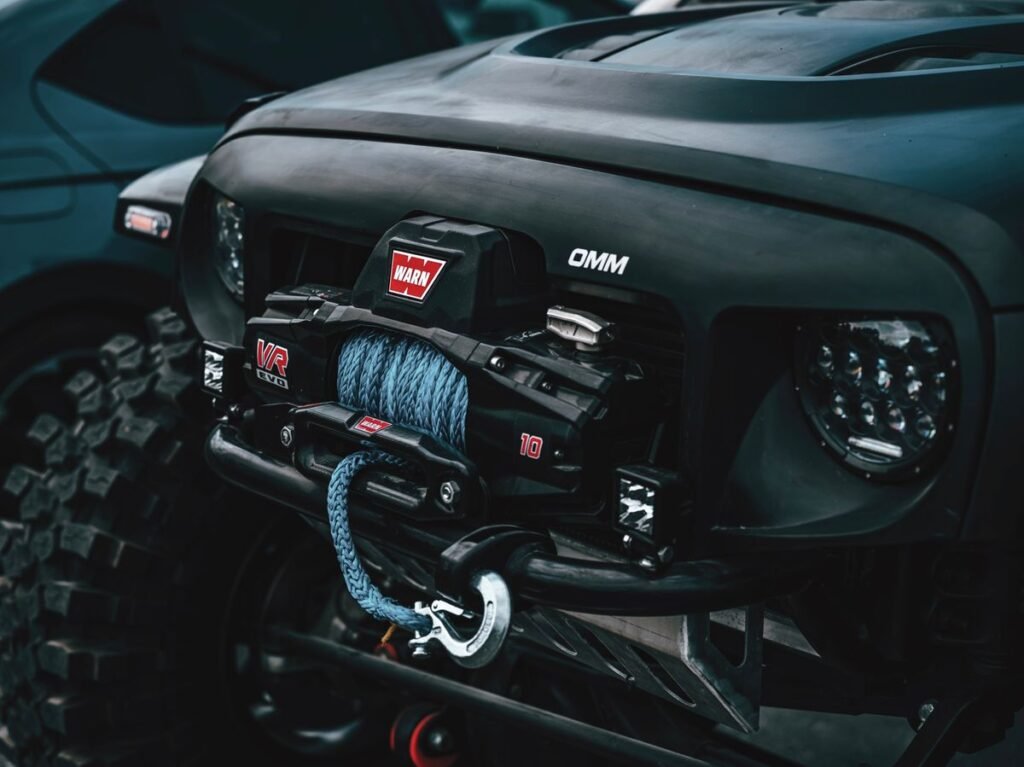
A traditional 4WD vehicle has a transfer case behind the gearbox that the driver controls with a lever, dial or buttons. In two wheel drive mode only the rear wheels are driven, for normal roads. Four high locks the front and rear axles together so both turn at the same speed, for mud, sand, snow and rough tracks at moderate speeds. Four low goes further, engaging low range gearing that multiplies torque and lets the truck crawl slowly over rocks and up steep slopes without cooking the clutch or stalling. Many proper off road vehicles add locking differentials, which force the left and right wheels on an axle to turn together even when one is in the air or on ice.
There is one rule that matters with part time 4WD. Because the front and rear axles are locked together with no give between them, it must not be used on dry paved roads. In a turn the front and rear wheels need to travel different distances, and on grippy tarmac that fight winds up the drivetrain and can damage it. AWD systems include a center differential or clutch that allows that difference, which is exactly why they can stay on all the time.
Side by side comparison
| Feature | AWD | 4WD |
|---|---|---|
| Driver involvement | None, fully automatic | Driver selects the mode |
| Runs on dry pavement | Yes, all the time | Part time systems, no |
| Low range gearing | Almost never | Usually yes |
| Typical vehicles | Crossovers, cars, many SUVs | Trucks and off road SUVs |
| Best at | Rain, snow covered roads, gravel, light trails | Deep mud, rocks, sand, steep ground, towing |
| Fuel use | Slightly higher than two wheel drive | Higher again, heavier hardware |
| Ground clearance | Usually modest | Usually generous |
The part nobody tells you: tires matter more
Neither system creates grip. Tires create grip, and the drivetrain only decides where engine power goes. An AWD crossover on worn summer tires will struggle and slide in snow where a front wheel drive car on proper winter tires drives with confidence. Braking is even more important. AWD and 4WD both help you get moving, and neither one helps you stop any sooner on ice. If you drive in real winter conditions, budget for winter tires first and treat the drive system as the second line of help. When choosing tires, it also pays to understand the markings on the sidewall, and our guide to tire speed ratings explains what those letters and numbers mean before you buy.
Running costs and ownership
AWD adds purchase price over a two wheel drive version of the same car, uses a little more fuel, and brings one strict ownership rule: all four tires must match in size and wear. Fitting one new tire alongside three worn ones can strain the system, so a single puncture sometimes becomes a full set. 4WD hardware is heavier and stronger, with more to service, including transfer case and differential oils, but it is built to take abuse that would break a crossover system. Electric cars change the picture again. With a motor at each end, an EV gives instant all wheel drive with no driveshaft at all, and if you are weighing up an electric purchase, our guide on how long EV batteries last answers the lifespan question most buyers ask first.
Which one do you actually need
- Choose AWD if your driving is commuting, school runs and trips on paved roads, with rain, slush or snowy winters in the mix. It helps every day without asking anything of you.
- Choose AWD if you use gravel roads, farm tracks or mild trails occasionally, and ground clearance, not the badge, will usually decide how far you get.
- Choose 4WD if you drive real trails, deep mud, beaches, rocky ground or steep unmade roads on a regular basis.
- Choose 4WD if you tow heavy trailers up slippery ramps or across fields, where low range gearing earns its keep.
- Choose neither, and save the money, if you live somewhere mild and drive only on tarmac. Good tires on a two wheel drive car cover that life perfectly well.
Be honest about the life the vehicle will actually live. Plenty of buyers pay for serious off road hardware that spends ten years in a shopping center car park, while others buy a soft crossover and then ask it to climb wet grass banks it was never built for. Match the system to your worst regular week, not to one imagined adventure.
Frequently asked questions
Is AWD better than 4WD in snow
On public roads, yes, for most people. AWD reacts instantly, works at any speed and needs no decisions on a dark snowy night. A 4WD truck in four high is also very capable, but its real advantages only appear off road or in very deep snow.
Can an AWD vehicle go off road
Light off road use, yes. Gravel tracks, grass, shallow mud and gentle trails are fine. Deep ruts, large rocks and steep climbs are not, mainly because of low ground clearance, road tires and the lack of low range gearing.
Does AWD use more fuel
A little. The extra hardware adds weight and friction, so an AWD version of a car usually uses slightly more fuel than its two wheel drive twin. Modern systems that mostly run in two wheel drive until slip appears have narrowed that gap a lot.