
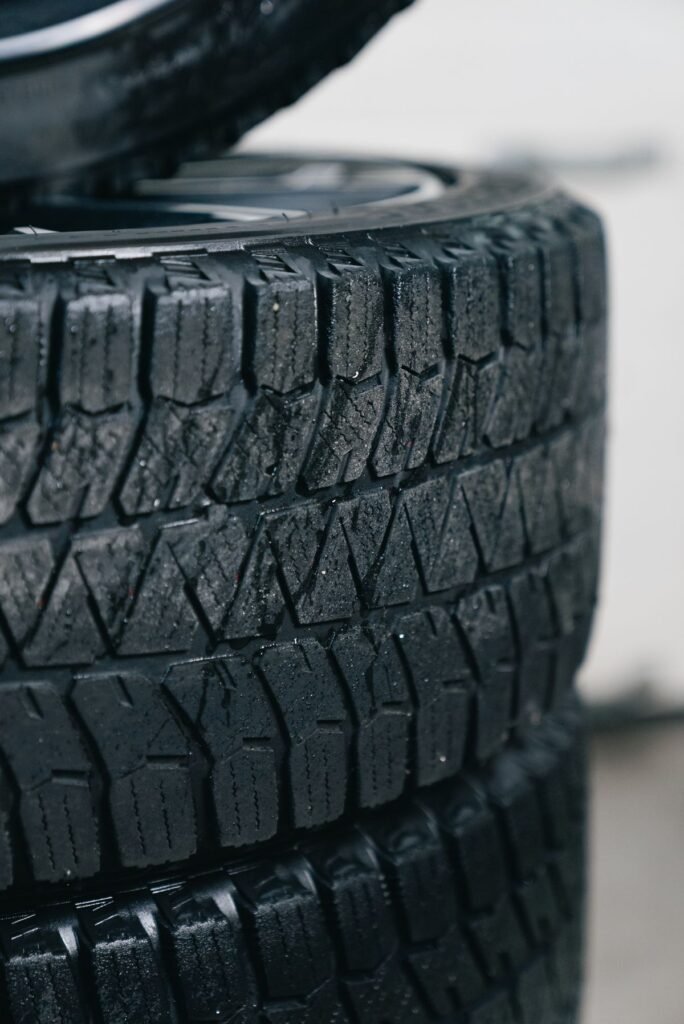
Tire speed ratings tell you the fastest speed a tire can safely handle over a sustained period when it is properly inflated and loaded. The rating is shown as a single letter on the tire sidewall, such as S, T, H, or V, and each letter stands for a maximum speed in miles and kilometers per hour. Fitting tires with the correct rating matters for safety, handling, and staying legal with your insurer.
The speed rating is part of the size code printed on every tire. A marking like 205/55 R16 91V breaks down into width, profile, construction, wheel size, load index (the 91), and finally the speed rating letter (the V). This guide explains what each letter means, where to find it, and how to choose the right one when you buy new tires.
Where to find the speed rating for tires
Look at the sidewall of any tire and find the long code that starts with the width in millimeters. The last character of that code is the speed rating. You can also find the required rating on the sticker inside the driver door frame, in the owner manual, and sometimes inside the fuel flap. The number just before the letter is the load index, which tells you how much weight each tire can carry. The two together, like 91V, are called the service description.
To make sense of the full code, including the width, aspect ratio, and rim size figures, see our guide to tire numbers explained, which walks through every figure on the sidewall in plain language.
Tire speed ratings chart
Here are the most common ratings you will see on passenger car tires. The speed shown is a laboratory tested maximum under controlled conditions, not a recommended driving speed.
| Rating letter | Maximum speed (mph) | Maximum speed (km/h) | Typical use |
|---|---|---|---|
| Q | 99 | 160 | Winter tires and some off road tires |
| S | 112 | 180 | Family sedans and minivans |
| T | 118 | 190 | Family cars and touring tires |
| H | 130 | 210 | Sedans, coupes, and crossovers |
| V | 149 | 240 | Sports sedans and performance cars |
| W | 168 | 270 | High performance cars |
| Y | 186 | 300 | Exotic and top end performance cars |
| (Y) | Over 186 | Over 300 | Supercars, case by case rating |
You may also see L, M, and N ratings on temporary spare tires and some truck tires, and R on light truck and winter tires rated to 106 mph. Most drivers will only ever meet the letters from Q to V in daily life.
Why the speed rating matters more than top speed
Very few drivers ever approach these speeds, so why does the rating matter? The letter also reflects how the tire is built. A higher rated tire has stronger internal belts, a stiffer sidewall, and rubber compounds that handle heat better. That means sharper steering response, shorter braking distances, and a tire that stays stable when a family car is fully loaded on a hot highway.
Heat is the real enemy. Driving fast, carrying heavy loads, or running underinflated tires all build heat inside the tire. A tire used beyond its rating can overheat, lose tread, and blow out. This is why the rating assumes correct pressure: even a V rated tire is unsafe if it is badly underinflated.
Can you fit tires with a different rating?
Going higher is fine
You can safely fit a higher rated tire than the car maker specifies, for example H instead of T. Many drivers do this for better handling. The tire will cost a little more and may ride slightly firmer, but there is no safety downside.
Going lower needs care
Fitting a lower rated tire than specified is risky and can affect your insurance if an accident happens. The one common exception is winter tires: many drivers fit Q or S rated winter tires in place of H or V summer tires, which is accepted practice, as long as you respect the lower limit and your local rules allow it. Never mix a much lower rated tire with higher rated ones on the same car.
Match all four tires
Ideally all four tires share the same rating, size, and similar tread depth. If ratings are mixed, the lower rated tires limit the whole car, and handling can become uneven in an emergency. Tire shops will usually refuse to fit a lower rated tire on the front axle for this reason.
How the rating affects price
Higher rated tires use stronger materials, so they cost more. A typical T rated touring tire might cost $110 to $160, while a similar sized V rated performance tire can cost $170 to $260. When you are budgeting for a set of four, our breakdown of the new tire cost guide shows what fitting, balancing, and disposal add to the bill, and notes that prices vary by car model and region.
Safety notes worth remembering
- The rating is void if the tire is damaged, repaired incorrectly, overloaded, or underinflated.
- Check pressures monthly, and always before a long trip with a full load.
- A tire older than six to ten years should be replaced regardless of tread, because the rubber hardens with age.
- Never exceed the rating of the lowest rated tire on the car, and always obey the legal speed limit first.
Frequently asked questions
What speed rating should I buy for a normal family car?
Match or exceed the rating on the door sticker or in the manual, which is usually S, T, or H for family cars. Going one step higher is fine and often improves steering feel. Going lower is only sensible for winter tires, and even then you must respect the lower top speed.
Does a higher speed rating mean the tire lasts longer?
Not necessarily. Performance tires with V, W, or Y ratings often use softer rubber that grips better but wears faster. A T or H rated touring tire will usually outlast a high performance tire driven the same way.
Can I mix H and V rated tires on the same car?
It is not recommended. Mixed ratings can make handling uneven, especially in wet weather or during hard braking. If one tire must be replaced, match the rating, size, and model of the tire on the opposite side of the same axle.
The speed rating letter looks like a small detail, but it summarises how your tire handles speed, heat, and load. Match it to the car maker specification, keep your pressures right, and your tires will do the job they were tested for.