
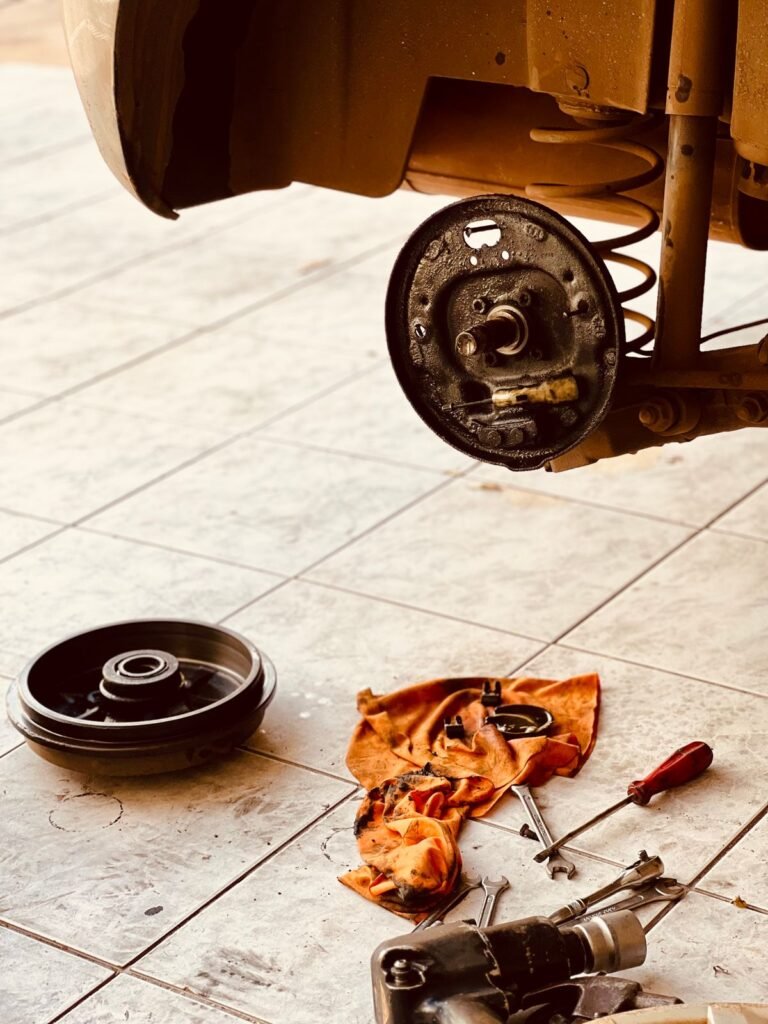
This bundle guide answers the three brake questions drivers ask most often: how to check brake fluid, what a grinding noise when braking means, and how long does it take to change brake pads. Each topic gets its own section below, with steps you can follow at home and honest guidance on when a workshop should take over. Brakes are the most important safety system on your car, so if anything in these checks worries you, get the car inspected before driving it hard or far.
How to check brake fluid
Learning how to check brake fluid takes five minutes and needs no tools. Open the hood and find the brake fluid reservoir, usually a small translucent container on the driver side, near the back of the engine bay, with a cap marked with brake warnings. The side of the reservoir carries minimum and maximum lines. The fluid level should sit between them, closer to maximum on a healthy system.
Next, look at the color. Fresh brake fluid is pale yellow and almost clear. As it ages it absorbs water from the air and turns amber, then dark brown. Dark fluid, or fluid below the minimum line, means the system needs attention. A falling level usually means the brake pads are wearing down, which is normal over time, but a sudden drop means a leak, which is not normal and not safe.
A few rules keep this job safe. Never open the reservoir longer than needed, because the fluid absorbs moisture quickly. Only top up with the exact fluid type printed on the cap, usually DOT 3 or DOT 4, and never reuse old fluid from an opened bottle. Brake fluid damages paint, so wipe spills at once. Finally, do not simply keep topping up a car that keeps losing fluid; find the leak instead.
Grinding noise when braking: causes and urgency
A grinding noise when braking is your car telling you the brake pads have worn through. Most pads carry a metal wear indicator that squeals first; grinding means that warning stage has passed and the metal backing plate is now cutting into the brake disc. At that point every stop is damaging the disc and braking power is reduced.
Worn pads are the usual cause, but not the only one. A small stone trapped between pad and disc can grind for a few stops and then clear. Rusty discs after the car sits in wet weather can sound rough for the first few braking applications of the day. A seized caliper can drag one pad against the disc constantly, grinding even between stops. Whatever the cause, grinding that continues needs same week attention. Our guide to brake rotors explains how discs wear, how to spot scoring and warping, and when they can be resurfaced instead of replaced.
Safety warning: if grinding comes with a soft pedal, longer stopping distances, or the car pulling to one side, treat it as urgent. Those signs point to serious brake wear or a hydraulic problem.
How long does it take to change brake pads?
For a professional technician with the car on a lift, changing brake pads on one axle takes about 30 to 60 minutes. Doing the job at home with a jack and basic tools, allow one to two hours for your first axle, and less once you have done it before. If the discs are replaced at the same time, add roughly 30 minutes per side. Rear brakes can take longer when the car has an electronic parking brake that must be retracted with a scan tool.
The parts themselves are straightforward: pads for one axle typically cost $30 to $100 depending on brand and material, and many drivers fit pads and discs together so the new pads bed in on a clean surface. If you would rather have a shop do it, our breakdown of brake pad replacement cost shows what parts and labor usually add up to, so you can judge any quote fairly.
Brake service costs at a glance
| Job | Typical cost range |
|---|---|
| Brake fluid change | $70 to $150 |
| Pads only, one axle, fitted | $150 to $300 |
| Pads and discs, one axle, fitted | $300 to $600 |
| Brake caliper replacement, one corner | $250 to $500 |
| Brake line leak repair | $150 to $400 |
Prices vary by car model and region, and larger vehicles and performance cars sit at the top of these ranges.
Simple brake checks to do every month
Two minutes a month keeps small brake issues small. Check the fluid level and color as described above, and glance at the pads through the wheel spokes where the design allows it; you are looking for a healthy thickness of friction material, roughly a quarter inch or more. Listen on a quiet street at low speed with the window down for squeaks, scrapes, or clicks. Notice how the pedal feels: firm and consistent is right, spongy or slowly sinking is not. After a gentle drive, a wheel that is much hotter than the others, or smells hot, can point to a dragging caliper. Write down anything that changes from month to month, because slow changes are easy to miss day to day but obvious in your notes.
Frequently asked questions
How often should brake fluid be changed?
Most makers recommend fresh fluid every two years, because the fluid absorbs water over time and its boiling point falls. Workshops can test moisture content and confirm whether yours is due.
Can I drive with grinding brakes if I am careful?
Only as far as the workshop, gently. Grinding means metal is damaging the disc and stopping power is already reduced. Every extra mile raises the repair bill and lowers your safety margin.
Do I need to change brake fluid when I change pads?
Not automatically, but pad replacement is a good moment to test the fluid. If it is dark or older than two years, changing it while the brakes are apart is efficient and cheap insurance.
Check the fluid monthly, respect any grinding noise, and budget an hour or so when pads come due, and your brakes will stay quiet, sharp, and trustworthy. Small checks done on time are what keep brake repairs small.