
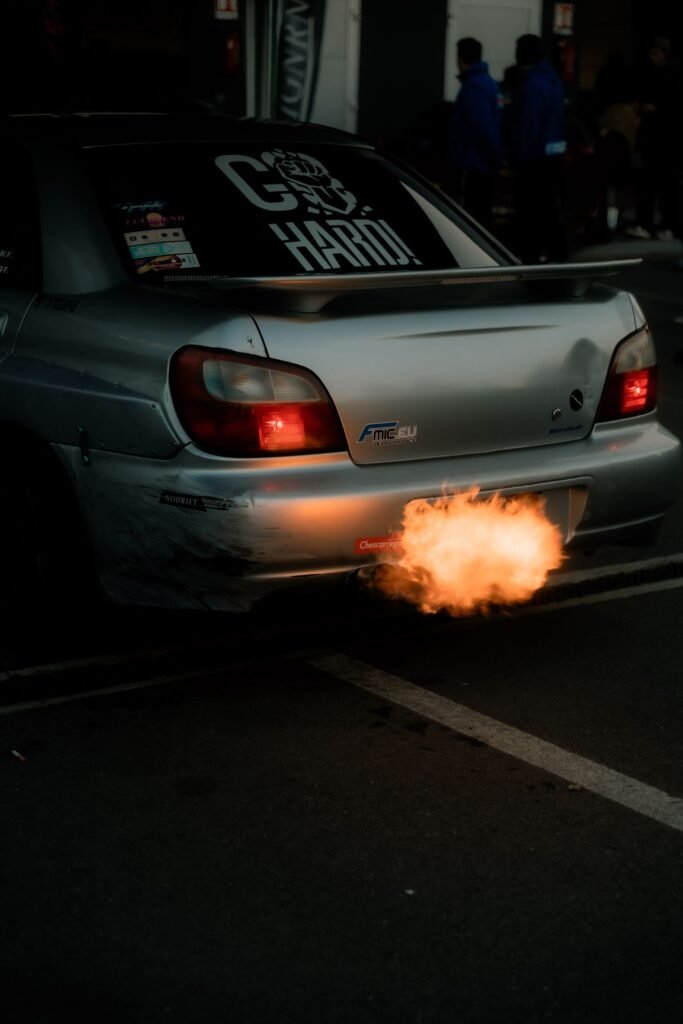
You press the accelerator, or you lift off it, and then a sharp bang cracks out of the back of your car like a firecracker going off in a quiet street. Heads turn, your heart jumps, and for a second you wonder if something under the hood just broke in a serious way. This guide will explain exactly what a car backfire is, why it happens, how much it costs to fix, and what to check first, so you can tell a small fault from a repair that cannot wait. But first, here is the question that decides everything else. Is the bang coming from the exhaust at the back, or from the engine at the front, because the answer points to a different fault?
The direct answer is that a car backfire is unburned fuel igniting in the wrong place, either in the exhaust system or in the intake manifold, instead of burning inside the engine cylinders where it belongs. When fuel reaches the hot exhaust and meets fresh air there, it explodes with a loud pop or bang, and when the ignition fires while an intake valve is still open, the flame can travel back through the intake and pop under the hood. A single quiet pop now and then is often a small fault, but repeated loud backfiring is a sign that fuel, air or spark is out of balance, and driving on with it can damage the exhaust, the catalytic converter and, in the worst cases, the engine itself.
If that bang made you flinch, that reaction makes complete sense, because a loud noise from a car always sounds expensive, and nobody wants to be the driver whose car sounds broken in front of a whole street. The good news is that many backfire causes are simple, a worn spark plug, a cracked vacuum hose or a tired sensor, and a code scan plus a short inspection usually finds the fault fast. The rest of this guide walks through the causes one by one, the checks you can do yourself, the repair costs for each fix, and the signs that mean stop driving and get the car towed, so read on and you will know exactly what to do next.
What a Car Backfire Is, and the Two Kinds You Can Hear
A car backfire is not one single fault, it is a symptom, and the first step is to work out where the bang is coming from. Most drivers mean an exhaust backfire, which mechanics sometimes call an afterfire. Fuel that did not burn in the cylinder travels into the hot exhaust, mixes with fresh air leaking in through a crack or a loose joint, and ignites with a pop or a bang from the tailpipe. The second kind is an intake backfire, where the flame travels back through the intake manifold and pops under the hood, and this kind is less common on modern cars but more serious, because the flame is moving through parts that were never meant to see fire.
You can often tell the two apart by sound and by timing. An exhaust backfire usually happens when you lift off the accelerator, when you change gear, or when you slow down, and it sounds like a sharp crack or a series of pops from the rear of the car. An intake backfire usually happens when you press the accelerator or try to start the engine, and it sounds like a cough or a pop from under the hood, sometimes with a brief puff of smoke from the air intake. Write down when the bang happens, whether the engine is hot or cold, and whether the check engine light is on, because those three details help a mechanic find the fault in minutes instead of hours.
One honest note about the photo at the top of this article is worth making here. It shows a race car spitting flames from its exhaust at a motorsport event, and on a tuned race car that flame is deliberate, the engine is set up to run rich and to pop on purpose. On a normal road car, the same flame is a fault, not a feature, so do not copy what a race car does and call it normal. If your daily driver is popping flames, something is wrong, and the causes below are where to look. Now that you know the two kinds, the next step is the list of causes, starting with the most common one of all.
Why a Car Backfires: The Seven Most Common Causes
Almost every car backfire comes back to one of three things going wrong, too much fuel, too little fuel, or a spark at the wrong moment. The seven causes below cover nearly all of them, and they are listed in the order a mechanic would check them, from the cheapest fix to the most expensive.
1. Worn spark plugs or a failing ignition coil
This is the most common cause, and also the cheapest to fix. A worn spark plug cannot make a strong spark, so some fuel leaves the cylinder unburned and ignites later in the exhaust. A failing ignition coil does the same thing, it sends a weak spark or no spark at all to one cylinder, and that cylinder misfires and passes raw fuel into the exhaust. You will often feel a rough idle or a stumble when you accelerate, and the check engine light may flash or stay on. Your action: if the plugs are past their service interval, or if the misfire follows one cylinder, replace the plugs first and test the coils, because this fix solves many backfire complaints on its own. Read our spark plug replacement cost guide to see what the job should cost before you approve it, and if the engine is also shaking or losing power, read our engine knocking guide as well, because knocking and backfiring often share the same root cause.
2. A fuel mixture that runs too rich
A rich mixture means too much fuel for the amount of air entering the engine, so not all of it can burn in the cylinder and the leftover fuel ignites in the exhaust. Common causes are a leaking fuel injector, a faulty fuel pressure regulator, a dirty air filter choking the air supply, or a bad oxygen sensor telling the computer to add more fuel than the engine needs. The signs are black smoke from the exhaust, a strong smell of fuel, poor fuel economy, and black soot on the spark plugs. Your action: check the air filter first, because a clogged filter is a five minute job to inspect, then get the fuel system and the oxygen sensor tested, because guessing at injectors or regulators wastes money. A rich mixture that is left alone will overheat and damage the catalytic converter, which is one of the most expensive parts in the exhaust, so do not drive for weeks with a fuel smell and a popping exhaust.
3. A fuel mixture that runs too lean
A lean mixture is the opposite problem, too much air for the fuel, and it usually causes an intake backfire rather than an exhaust pop. The flame burns slowly in a lean cylinder, it is still burning when the intake valve opens for the next cycle, and the flame flashes back into the intake manifold. The usual causes are a vacuum leak from a cracked hose or a loose intake gasket, a weak fuel pump, a clogged fuel filter, or a dirty mass airflow sensor reading the air wrong. The signs are a rough idle, hesitation when you accelerate, stalling, and a popping sound from under the hood. Your action: listen for a hissing sound around the intake with the engine running, and look for cracked or loose vacuum hoses, because a ten dollar hose is a common culprit. If the hoses look fine, get the fuel pressure and the mass airflow sensor tested before replacing parts.
4. Ignition timing that is off
The spark plug must fire at exactly the right moment, just before the piston reaches the top of its stroke. If the spark fires too late, burning fuel can still be in the cylinder when the exhaust valve opens, and it ignites in the exhaust. If it fires too early, the flame can push back through the intake. On modern cars the computer controls timing, so a timing fault usually means a bad crankshaft or camshaft position sensor, a worn timing chain that has stretched, or a fault in the engine computer itself. Your action: if the backfire started after a timing chain job, a sensor replacement, or a jump start with a flat battery, tell the mechanic, because the timing may need to be checked and reset. A stretched chain that has jumped a tooth is a serious repair, so do not keep driving a car that backfires through the intake and runs rough at the same time.
5. An exhaust leak before the oxygen sensor
A crack in the exhaust manifold or a loose joint lets fresh air into the exhaust, and that air mixes with unburned fuel and ignites with a pop. This is a common cause of a backfire that happens on deceleration, when you lift off the accelerator and the exhaust pressure drops. The signs are a ticking or puffing sound from under the car when the engine is cold, a smell of exhaust inside the car, and a check engine light for a lean mixture, because the oxygen sensor reads the extra air and the computer adds fuel to compensate. Your action: look for black soot marks around the exhaust manifold and the joints, and listen for a tick that fades as the engine warms up and the metal expands. An exhaust leak is also a safety issue, because exhaust gas can enter the cabin, so get it inspected soon even if the pop sounds harmless.
6. A faulty sensor feeding the computer bad data
The engine computer decides how much fuel to inject based on what the sensors tell it, so a bad sensor can make it inject the wrong amount. The mass airflow sensor, the oxygen sensor, the throttle position sensor and the coolant temperature sensor can all cause a backfire when they fail. A faulty coolant temperature sensor is a sneaky one, because if it tells the computer the engine is cold when it is actually warm, the computer keeps adding extra fuel as if the engine were still warming up. Your action: get the fault codes read, because a sensor fault usually leaves a code that points straight at the sensor, and replacing a sensor on a guess is one of the most common ways drivers waste money on this fault.
7. A blocked or failing catalytic converter
The catalytic converter cleans the exhaust, and when it is blocked or failing it traps heat and unburned fuel inside the exhaust system, which can cause popping and banging. A failing converter is often the result of another fault, not the first cause, because months of misfires or a rich mixture will overheat and melt the material inside it. The signs are a loss of power, a rattling sound from under the car, a smell like rotten eggs, and a check engine light for converter efficiency. Your action: if a mechanic says the converter is bad, ask what killed it, because replacing the converter without fixing the misfire or the rich mixture will kill the new one too. Read our guide on the signs of a bad catalytic converter to check the symptoms against your own car before you approve the repair. That covers the causes, so the next question is how serious your own backfire is, and that is decided by a short list of warning signs.
How to Tell How Serious a Backfire Is
Not every backfire is an emergency, but some are, and the difference is in the symptoms that come with the bang. Use this list as a quick check the next time it happens, and be honest with yourself about what you feel and hear.
Stop driving and get the car towed if the backfire comes with a flashing check engine light, a strong smell of fuel, smoke from under the hood, a sudden loss of power, or a loud bang followed by the engine stalling. A flashing light means an active misfire that is sending raw fuel into the exhaust, and that fuel can overheat and destroy the catalytic converter in minutes, while a fuel smell can mean a leak that could catch fire. Pull over in a safe place, switch the engine off, and call for help rather than driving on and hoping it clears.
Book a mechanic within a few days if the backfire is repeated but the car still drives normally, the check engine light is on steady, or the exhaust pops every time you lift off the accelerator. The car is telling you that fuel, air or spark is out of balance, and the fault will not fix itself. Driving gently for a few days while you wait for an appointment is usually fine, but avoid hard acceleration and long high speed trips, because both make the fault worse and raise the risk to the converter.
A single quiet pop on a cold morning, with no warning light and no change in how the car drives, is the least worrying case, and it can be caused by condensation in the exhaust or a brief rich mixture while the engine warms up. Note when it happened and watch for it to repeat. If it happens once and never again, you can mention it at the next service and move on. If it repeats, work through the checks in the next section, because a pattern is always worth investigating, even when the car still feels fine.
What to Check First, in Order
You do not need to be a mechanic to narrow a backfire down, and doing these checks before you visit a shop means you can describe the fault clearly and avoid paying for guesswork. Work through them in order, and stop at the first one that finds something wrong.
First, read the fault codes. A basic code reader costs less than a single hour of shop labor, and many auto parts stores will scan your car for free. Write down every code, not just the first one, because a misfire code plus an oxygen sensor code together point to a different fault than either one alone. A code that names a cylinder, for example a misfire on cylinder two, tells the mechanic exactly where to start.
Second, look at the spark plugs if you can reach them safely, or ask the mechanic to show you the old ones when they come out. A plug covered in black soot points to a rich mixture, a plug that looks white or blistered points to a lean mixture, and a plug wet with fuel points to a coil or injector fault on that cylinder. The plugs are the cheapest window into what is happening inside the engine, and a good mechanic reads them like a report card.
Third, check the air filter and look for vacuum leaks. A dirty air filter is a five minute check, hold it up to the light, and if you cannot see light through it, replace it. For vacuum leaks, listen for a hiss around the intake with the engine running, and look for hoses that are cracked, loose or disconnected. A smoke test at a shop finds leaks you cannot see, and it is cheap compared to replacing parts on a guess.
Fourth, look under the car at the exhaust. With the engine cold, look for black soot marks around the manifold and the joints, and listen for a ticking sound when the engine starts cold. Do not touch the exhaust when it is hot, and do not get under a car that is only held up by a jack. If you see soot or hear a tick that fades as the engine warms, you have found a likely exhaust leak.
Fifth, note the pattern and take it to the shop. Tell the mechanic when the bang happens, whether the engine is hot or cold, whether it happens on acceleration or on deceleration, and whether any warning light is on. That pattern is worth more than a vague report of a loud noise, and it can save an hour of diagnostic time. Once the cause is found, the next question is what it costs, and the table below gives the honest ranges for the common fixes.
How Much Does It Cost to Fix a Backfiring Car
Backfire repair costs vary widely because the fix depends on the cause, and a ten dollar hose and a two thousand dollar timing chain can produce the same bang. The table below uses national average ranges from RepairPal and Carfax cost guides checked during this run, and every figure is a typical total including parts and labor for a mainstream car. Your own quote will vary with your car, your engine and your local labor rate, so use these numbers to judge a quote, not to replace one.
| Repair | Typical total | When it is the fix |
|---|---|---|
| Spark plug replacement | 120 to 260 dollars | Easy four cylinder engine, worn plugs causing a misfire |
| Spark plug replacement, hard access V6 | 350 to 650 dollars | Transverse V6 where the rear plugs sit behind the intake |
| Ignition coil replacement | 236 to 319 dollars | One coil failing, national average from RepairPal |
| Vacuum hose replacement | 50 to 100 dollars | Cracked or loose hose causing a lean mixture |
| Mass airflow sensor replacement | 450 to 525 dollars | Dirty or faulty sensor feeding the computer bad air readings |
| Oxygen sensor replacement | 150 to 600 dollars | Faulty sensor making the mixture run rich or lean |
| Catalytic converter replacement | 1,000 to 3,000 dollars | Converter blocked or melted after months of misfires |
| Timing chain replacement | 1,600 to 2,700 dollars | Stretched chain that has jumped timing |
Use the table as a guide when a shop quotes you. A spark plug job quoted at 600 dollars on an easy four cylinder engine deserves a question, and a converter job quoted at 500 dollars deserves a question too, because a price far below the range can mean a low quality part or a quote that leaves out labor. Always ask for a written quote that separates parts and labor, and ask whether the quote includes a diagnostic fee, because some shops charge for the scan and some apply it to the repair. And here is the real example that shows how one worn part can cause the whole problem. RepairPal lists backfiring through the exhaust or the intake as a symptom of a failed camshaft, and a camshaft failure also brings misfire codes, rough running and vibration, so a car that backfires and shakes at the same time may be showing the early signs of a much bigger engine fault, not just a tired spark plug.
Can You Drive With a Car That Backfires
The honest answer is that it depends on how bad it is, and the symptoms listed above are your guide. A single quiet pop with no warning light and no change in performance is usually safe to drive while you book an appointment, and a steady check engine light with normal performance means you can drive gently for a few days, avoiding hard acceleration and long trips, until the shop can see the car.
Do not drive on if the backfire is loud and repeated, the check engine light is flashing, the car has lost power, or you can smell fuel. A flashing light means raw fuel is reaching the exhaust right now, and that can melt the catalytic converter in a short drive, turning a spark plug job into a converter job as well. A fuel smell means fuel is escaping somewhere it should not be, and that is a fire risk. In both cases, pull over, switch off, and call for a tow, because the cost of a tow is small next to the cost of a converter or an engine fire.
If you must drive a backfiring car a short distance to a shop, keep the speed low, accelerate gently, and avoid sudden throttle changes, because the bang is worst when the throttle moves quickly. Turn the radio off and listen to the engine, watch the temperature gauge, and stop at once if the car stalls, loses power, or the light starts flashing. That careful drive is a sensible middle ground, and it is far better than ignoring the problem for weeks and hoping it goes away, which brings us to prevention.
How to Stop a Backfire Happening Again
Most backfires are preventable, and the habits that prevent them are the same habits that keep any engine healthy. Change the spark plugs on schedule, and do not stretch the interval, because a plug with a worn gap makes the coil work harder and eventually causes a misfire. Iridium and platinum plugs are rated for 60,000 to 100,000 miles on most cars, while older copper plugs need replacement closer to 30,000 miles, so check your car handbook for the interval your engine uses.
Change the air filter on schedule and fix small vacuum leaks early, because both keep the fuel mixture right. A dirty air filter makes the mixture run rich, and a cracked vacuum hose makes it run lean, and both will eventually cause a backfire if they are left alone. Use good quality fuel from a busy station, because stale or contaminated fuel can cause misfires, and never ignore a check engine light, because the light is the early warning that saves you from the expensive repair later.
Finally, do not fit an aftermarket exhaust or a performance tune and expect the car to behave like stock. Some tunes deliberately run rich and pop on purpose, and that is fine on a track car, but on a daily driver it will wear the converter and the exhaust over time. If you want the sound, accept the cost that comes with it, and check the exhaust and the converter more often than the standard service schedule. Prevention is cheaper than repair, and a car that is serviced on time rarely backfires at all.
Frequently asked questions
What causes a car to backfire?
A car backfires when unburned fuel ignites in the exhaust or in the intake instead of burning in the cylinder. The most common causes are worn spark plugs, a failing ignition coil, a fuel mixture that is too rich or too lean, an exhaust leak, a faulty sensor, or ignition timing that is off. A code scan and a short inspection usually find the cause fast.
Is a car backfire dangerous?
It can be. A single quiet pop is rarely dangerous, but repeated loud backfiring can damage the catalytic converter and the exhaust, and a backfire with a flashing check engine light, a fuel smell, or smoke from under the hood means you should stop driving and get the car towed. Never ignore a backfire that comes with a loss of power or a fuel smell.
How much does it cost to fix a car backfire?
It depends on the cause. A spark plug job typically costs 120 to 260 dollars on an easy four cylinder engine, a single ignition coil typically costs 236 to 319 dollars, an oxygen sensor typically costs 150 to 600 dollars, and a catalytic converter typically costs 1,000 to 3,000 dollars. A timing chain job, the most expensive common cause, typically costs 1,600 to 2,700 dollars. Always get a written quote that separates parts and labor.
Can a bad catalytic converter cause a backfire?
Yes, a blocked or failing catalytic converter can trap heat and unburned fuel in the exhaust, which can cause popping and banging. A failing converter is often the result of another fault, not the first cause, because months of misfires or a rich mixture will overheat and damage it. Ask the mechanic what killed the converter before you approve a replacement, or the new one may fail the same way.