
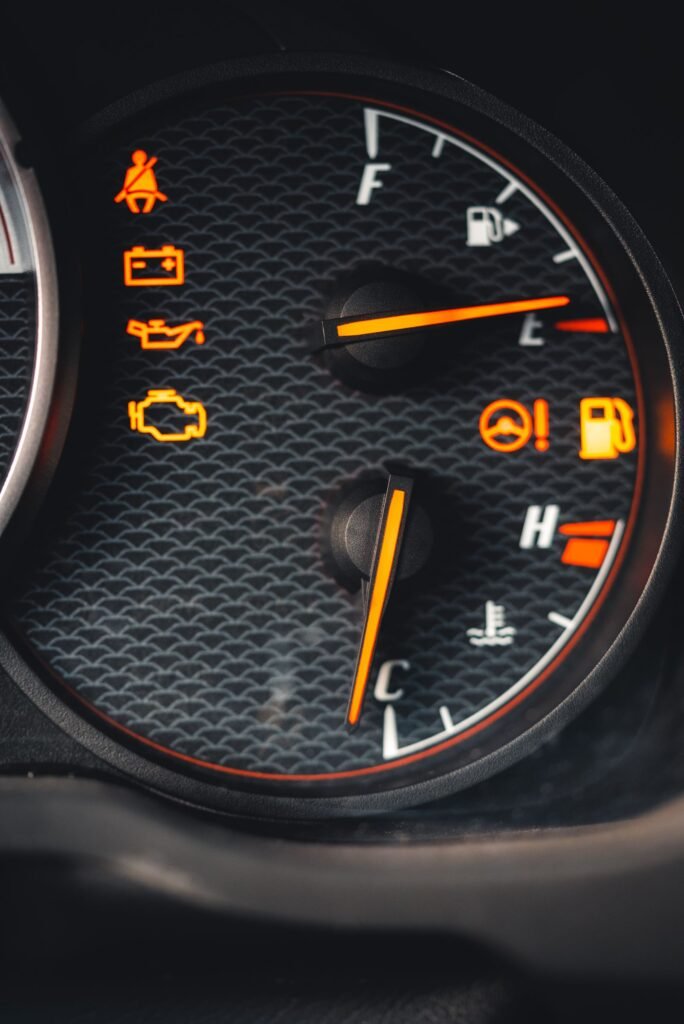
You start the car, the engine sounds normal, the car pulls away smoothly, and then you notice it, the little engine shaped light glowing amber on your dashboard. Nothing feels wrong, no shaking, no strange noise, no loss of power, yet that light is telling you something is wrong, and you are left wondering whether to panic, to keep driving, or to book a mechanic right now. This guide will explain why your check engine light can be on while your car runs fine, the most common causes, when it is safe to keep driving, and what a code scan costs, so you can make a calm decision instead of guessing. But first, here is the one detail that changes everything. Is the light steady, or is it flashing, because that single difference decides whether you drive on or pull over?
The direct answer is that a steady check engine light with a car that runs fine usually means the engine computer has found a fault that affects emissions, fuel economy or a sensor, but has not yet affected how the car drives. The light comes on when a sensor reading falls outside its normal range, and many of those faults, a loose gas cap, a tired oxygen sensor, a small vapor leak, do not change how the engine feels at first. The car can feel perfectly fine because the computer is compensating for the fault, adjusting the fuel mixture or the timing to keep the engine running smoothly while the fault is still small. That compensation is why the light matters even when the car feels fine, because the fault is real, it is stored as a code, and it will get worse if you ignore it.
If that glowing light made your stomach drop, that worry is completely normal, because every driver knows the check engine light can mean anything from a loose cap to a repair that costs thousands, and not knowing which one it is feels worse than the fault itself. The good news is that a car that runs fine with a steady light is usually a cheap fix, and the most common cause costs nothing at all. The sections below walk through the difference between a steady and a flashing light, why the car can feel fine, the most common causes with real repair costs, the five minute checks you can do yourself, and the signs that mean stop driving at once, so read on and you will know exactly what to do next.
Solid Light or Flashing Light: The First Thing to Check
Before you do anything else, look at how the light behaves, because that one detail tells you how urgent the problem is. A steady light that stays on without blinking means the computer has stored a fault code and wants you to get the car checked soon, but it does not mean you are in immediate danger. A flashing or blinking light means an active misfire is happening right now, and unburned fuel is reaching the exhaust where it can overheat and destroy the catalytic converter in minutes.
If the light is flashing, slow down, avoid hard acceleration, and pull over in a safe place as soon as you can. Switch the engine off and call for help rather than driving on, because continuing to drive with a flashing light can turn a spark plug job into a catalytic converter job that costs 1,000 to 3,000 dollars. If the car is also shaking, stalling or losing power with a flashing light, do not try to drive it to a shop, get it towed.
If the light is steady and the car drives normally, you can usually finish your trip and book a diagnostic appointment within a few days. Drive gently, avoid hard acceleration and high speeds, and keep an ear out for any change, a new noise, a shake, or a loss of power means the situation has changed and you should pull over. That steady light is a warning, not an emergency, but it is still a warning, and the next section explains why the car can feel fine while it is on. But how can the car feel fine when the computer says something is wrong?
Why Your Car Can Feel Fine With the Light On
Your car feels fine because the engine computer is very good at hiding small faults. Modern engines constantly adjust the fuel mixture, the ignition timing and the idle speed to keep the engine running smoothly, and when a sensor starts to fail, the computer compensates by using a backup value or by adjusting another part of the system. The engine keeps running well, but it is running less efficiently, using more fuel, producing more emissions, or wearing a part faster than it should.
Many check engine faults are about emissions, not performance. A loose gas cap, a small vapor leak, or a converter that is working less efficiently than it should will all turn the light on, and none of them will change how the car accelerates or idles at first. The light is the computer telling you that something has drifted outside the limits it was designed for, even though the car still drives well enough that you would never notice without the light.
The other reason is that some faults only show up under conditions you have not hit yet. A sensor that fails when the engine is fully warm, a misfire that only happens under heavy load, or a vapor leak that only appears when the fuel tank is nearly empty can all leave the car feeling fine on a short gentle drive, then show up on a long trip or a hot day. That is why a steady light deserves a code scan even when the car feels perfect, because the code tells you what is actually wrong, and the next section lists the faults it usually names.
The Most Common Causes When the Car Runs Fine
When a car runs fine with the light on, the cause is almost always one of the faults below, and most of them are cheap compared to the repairs drivers fear. They are listed from the cheapest fix to the most expensive, and the cost ranges come from the Carfax check engine light guide checked during this run.
1. A loose or faulty gas cap
This is the most common cause of all, and it costs nothing to fix. The fuel system is sealed, and the computer tests that seal by checking the pressure in the tank. A cap that was not tightened properly after fueling, or a cap with a worn seal, lets vapor escape, and the computer stores code P0457 and turns the light on. Your action: tighten the cap until it clicks, then drive normally for a few days, because the light should go off on its own after several starts once the system passes its pressure test again. If the light stays on, the cap itself may be worn and need replacing, which is a cheap part. Here is the real example that shows how simple this can be. Carfax lists a loose or worn gas cap as a common check engine cause with a repair cost of zero dollars, because tightening the cap is the whole repair, and that is the first thing to check before you spend money on anything else.
2. A failing oxygen sensor
The oxygen sensor measures how much unburned oxygen is in the exhaust, and the computer uses that reading to set the fuel mixture. When the sensor fails, the mixture goes wrong, fuel economy drops, and the light comes on, often with no change in how the car drives. Your action: get the code read, because an oxygen sensor fault leaves a code in the P0130 to P0167 range, and replacing the sensor is a straightforward job. Typical cost is 150 to 600 dollars including parts and labor, and leaving it can cost more in wasted fuel and in damage to the catalytic converter over time.
3. A dirty or faulty mass airflow sensor
The mass airflow sensor measures how much air is entering the engine, and a dirty sensor reads low, which makes the computer inject too little fuel. The car may hesitate slightly or idle roughly, but many drivers notice nothing at all except the light and a small drop in fuel economy. Your action: a mechanic can often clean the sensor with a proper cleaner for a small fee, and if cleaning does not work, replacement typically costs 450 to 525 dollars. We have a full guide on the P0101 code, which is the code a mass airflow sensor fault usually stores, so read that if your scan shows P0101.
4. An EVAP system leak
The EVAP system traps fuel vapor from the tank and burns it in the engine instead of letting it escape into the air, and a leak anywhere in that system turns the light on. The leak can be a cracked hose, a faulty purge valve, or a loose connection, and the car will usually drive perfectly normally, because the leak is in the vapor system, not in the engine itself. Your action: check the gas cap first, then get a smoke test at a shop, because a smoke test finds small leaks that you cannot see. A purge valve or a hose is usually a modest repair, while a larger leak can cost more to trace, so ask the shop to show you where the leak is before you approve the work.
5. Worn spark plugs or a weak ignition coil
Worn plugs can cause a small misfire that you barely feel, and the computer will store a misfire code and turn the light on. You may notice a slight rough idle or a small hesitation when you accelerate, but many drivers notice nothing until the light appears. Your action: if the plugs are past their service interval, replace them, because a single spark plug typically costs 16 to 100 dollars and a full set is one of the cheapest engine jobs there is. If the misfire follows one cylinder, the coil on that cylinder may be failing instead. Read our rough idle guide if the engine shakes at idle as well, because a rough idle and a check engine light together usually point to the same ignition fault.
6. A vacuum hose leak
Vacuum hoses carry air and pressure signals around the engine, and a cracked or loose hose lets extra air in, which makes the mixture run lean and turns the light on. The car may idle slightly high or hesitate, but it often drives normally, and the fault can be hard to find because the hoses are small and hidden. Your action: listen for a hissing sound with the engine running, and look for hoses that are cracked, loose or disconnected. Typical cost is 50 to 100 dollars, and it is one of the cheapest fixes on this list, so do not let a shop sell you a sensor before the hoses have been checked.
7. A catalytic converter losing efficiency
The converter cleans the exhaust, and when it starts to wear out, the computer notices that the exhaust leaving the converter is not as clean as it should be, and it stores code P0420. The car will usually drive normally, because the converter is still working, just not as well as it should, and this is the most expensive cause on this list, typically 1,000 to 3,000 dollars. Your action: do not replace the converter on the strength of one code alone, because a faulty oxygen sensor can trigger the same code, and a good mechanic will check the sensors first. If the converter really is failing, ask what killed it, because months of misfires or a rich mixture will kill a new converter too. And if the battery is also showing signs of age, read our car battery problem signs guide, because a weak battery can cause odd sensor readings and warning lights of its own. That covers the causes, so now let us look at the checks you can do yourself in five minutes, before you pay for a scan.
Five Minute Checks You Can Do Yourself
Before you book a diagnostic appointment, spend five minutes on these checks, because the most common cause costs nothing and the checks below can find it. You need no tools, and you do not need to open anything under the hood beyond the checks described here.
First, check the gas cap. Open the fuel door, take the cap off, put it back on, and tighten it until it clicks at least once, or three times if your cap clicks that way. If the cap feels loose, cracked, or does not click at all, it may need replacing. Then drive the car normally for a few days, because the light should go off on its own after several starts if the cap was the cause. If the light is still on after a week of normal driving, the cap was not the cause, and you need a code scan.
Second, check the oil level and the coolant level, with the engine cold and the car on level ground. Low oil or low coolant can trigger warning lights and cause real damage, and both are quick to check with the dipstick and the coolant reservoir. If either is low, top it up to the correct mark and look for a leak underneath the car, because a level that keeps dropping means something is leaking.
Third, look and listen. Open the hood with the engine running and listen for a hissing sound, which can mean a vacuum leak, or a ticking sound, which can mean an exhaust leak. Look for any hose that has come loose or any wire that looks damaged. Smell for fuel or for a sweet smell, which can mean a coolant leak. If you see smoke, smell fuel strongly, or hear a loud knocking, switch the engine off and call for help rather than continuing the checks.
Fourth, note the details. Write down when the light came on, whether it is steady or flashing, whether the car was hot or cold, and whether anything changed in how it drives. That note is worth more than a vague report at the shop, and it can save diagnostic time. If the five minute checks find nothing, the next step is a code scan, and that is simpler and cheaper than most drivers expect.
How to Find the Exact Cause: The Code Scan
The check engine light on its own tells you almost nothing, because the same light can mean a loose gas cap or a failing converter. The fault code behind the light is what tells you the cause, and reading that code is quick and cheap. Every car built since 1996 has an OBD2 port, usually under the dashboard on the driver side, and a code reader plugs into it and reads the stored codes in under a minute.
Many auto parts stores will scan your car for free, and a basic code reader of your own costs less than a single hour of shop labor. A free scan gives you the code number, for example P0457 for a loose gas cap, P0101 for a mass airflow sensor, or P0420 for converter efficiency, and that number narrows the fault to one system. Write the code down exactly, including the letter and the numbers, because the code is the key to the whole diagnosis.
A code is a starting point, not a final answer. A code that names a sensor does not always mean the sensor is bad, it can mean the wiring to the sensor is damaged, or another part is making the sensor read wrong. A good mechanic uses the code as a starting point, then tests the part before replacing it. A shop diagnostic typically costs 120 to 200 dollars, and many shops apply that fee to the repair if you approve the work, so ask before you agree. If a shop wants to replace a part based on the code alone, without testing it, ask what test they did, because guessing at parts is the fastest way to a big bill.
Do not clear the code and hope the light stays off. Clearing the code erases the evidence, and the light will come back as soon as the computer runs its next test, usually within a few days. Clearing the code also erases the data a mechanic needs to find the fault, and it can cause your car to fail an emissions test, because the computer needs time to run its tests again after a reset. The right move is to read the code, write it down, and fix the cause, not the light.
When to Stop Driving Right Away
A steady light with a car that runs fine is a warning to book a mechanic soon, but some signs mean stop driving now, even if the car still feels okay. Learn this list, because it is the line between a cheap fix and a very expensive one.
Stop driving and get the car towed if the light is flashing, the car is shaking or stalling, you have lost power, you can smell fuel, you can see smoke, or the temperature gauge is climbing into the red. A flashing light means an active misfire that is sending raw fuel into the exhaust, and that can destroy the catalytic converter in minutes. A fuel smell can mean a leak, and a rising temperature gauge can mean the engine is overheating, which can warp the cylinder head and turn a small repair into an engine rebuild.
Stop soon, within the hour, if the oil pressure warning light comes on with the check engine light, if the battery warning light comes on, or if the car starts making a new loud noise. Oil pressure and charging faults can cause serious damage fast, and driving on with either one is a gamble. Pull over in a safe place, switch the engine off, and call for help.
Keep driving gently to a nearby shop if the light is steady, the car drives normally, the temperature gauge is normal, and there is no new noise, no smell and no smoke. That is the situation this article is about, and it is safe to drive carefully for a few days while you wait for an appointment. The danger is not the light itself, it is ignoring it for weeks, and the next section explains what that delay can cost.
What Happens If You Ignore the Light
Ignoring a steady check engine light is tempting when the car runs fine, but the fault behind it does not stay small. A failing oxygen sensor makes the engine run rich, and months of running rich will overheat and damage the catalytic converter, turning a 150 to 600 dollar sensor job into a 1,000 to 3,000 dollar converter job. A small misfire that you barely feel will wear the converter the same way, and a vapor leak that costs little to fix can become a failed emissions test that keeps your car off the road.
There are practical costs too. A car with the check engine light on will fail an emissions inspection in most states, because the test reads the same computer that turned the light on, and a lit check engine light is an automatic failure. Fuel economy drops as well, because the computer is compensating for a fault, and a drop of even a few miles per gallon adds up to real money over months of driving. And a fault that is cheap today can leave you stranded tomorrow, because a sensor that fails slowly will eventually fail completely, often at the worst possible moment.
The cheapest time to fix a check engine light is the day it comes on, when the code is fresh and the fault is small. A free code scan at a parts store, a tightened gas cap, or a single sensor replacement is a small job, and it is far cheaper than the converter, the failed inspection, or the tow truck that follows months of ignoring the light. That is the real message of the light. It is not telling you the car is broken, it is telling you to fix a small fault before it becomes a big one.
| Common cause | Code | Typical repair cost |
|---|---|---|
| Loose or worn gas cap | P0457 | 0 dollars, tighten the cap |
| Oxygen sensor | P0130 to P0167 | 150 to 600 dollars |
| Mass airflow sensor | P0101 | 450 to 525 dollars |
| Spark plug | P0300 to P0312 | 16 to 100 dollars each |
| Vacuum hose leak | P0171, P0174 | 50 to 100 dollars |
| EGR system fault | P0400 to P0409 | 250 to 1,000 dollars |
| Fuel injector fault | P0201 to P0212 | 300 to 4,000 dollars |
| Catalytic converter efficiency | P0420 | 1,000 to 3,000 dollars |
| Diagnostic scan at a shop | Any code | 120 to 200 dollars |
Use this table to judge what a shop tells you. If your scan shows P0457 and the shop quotes you a sensor, ask why, because the code points to the gas cap and the vapor system, not a sensor. If the scan shows P0101, the mass airflow sensor is the likely cause, and cleaning it is worth trying before replacement. And if the scan shows P0420, ask the mechanic to test the oxygen sensors before replacing the converter, because a sensor fault can trigger the same code for a fraction of the price.
Frequently asked questions
Can I drive with the check engine light on if my car runs fine?
Yes, usually, if the light is steady and the car drives normally, with no shaking, no loss of power, no strange noise and no smell. Drive gently and book a diagnostic appointment within a few days. Do not drive on if the light is flashing, the car is shaking or stalling, you smell fuel, or the temperature gauge is climbing, because those signs mean stop and get the car towed.
What is the most common cause of a check engine light when the car runs fine?
A loose or faulty gas cap is the most common cause, and it costs nothing to fix. Tighten the cap until it clicks, then drive normally for a few days, and the light should go off on its own after several starts. If it stays on, the next most common causes are a failing oxygen sensor, a dirty mass airflow sensor, or a small vapor leak in the EVAP system.
How much does a check engine light diagnosis cost?
Many auto parts stores will scan your car for free and give you the fault code. A full diagnostic at a shop typically costs 120 to 200 dollars, and many shops apply that fee to the repair if you approve the work. The repair itself depends on the cause, from zero dollars for a loose gas cap to 1,000 to 3,000 dollars for a catalytic converter.
Will the check engine light go off on its own?
Sometimes. If the cause was a loose gas cap, the light usually goes off after several starts once the system passes its pressure test again. For most other faults, the light stays on until the cause is fixed, because the computer runs its test again and finds the same fault. Clearing the code without fixing the cause only turns the light off briefly, and it will come back.