
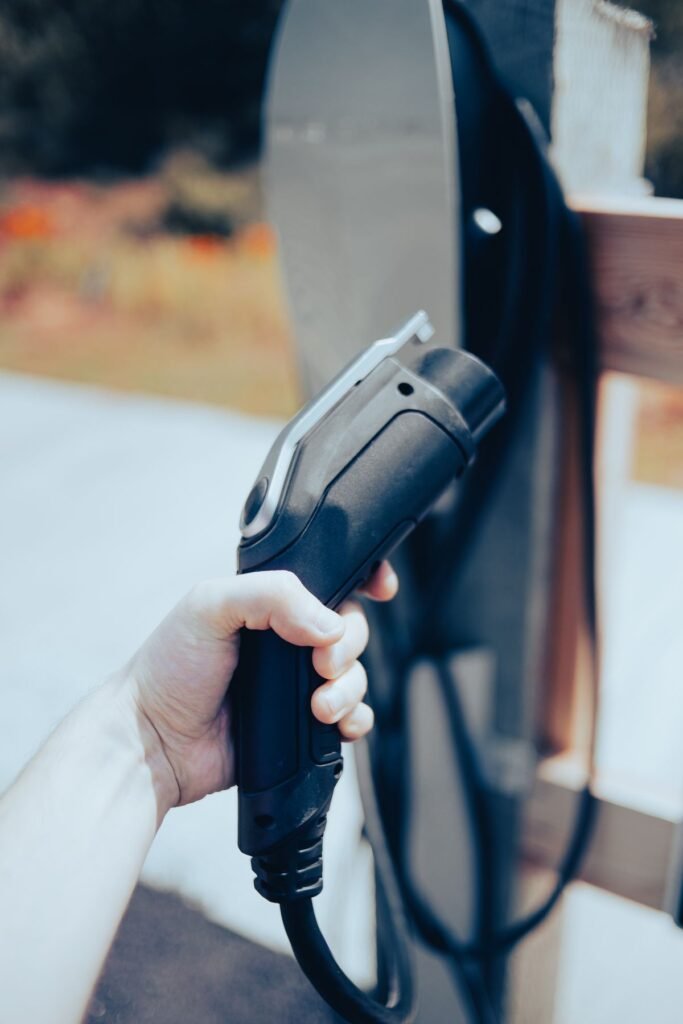
A dc fast charger is the quickest way to recharge an electric car on a trip, adding roughly 100 to 300 miles of range in about 20 to 40 minutes depending on the car and the charger. Unlike the charger you use at home, a dc fast charger feeds direct current straight to the battery at high power, which is why it can fill most of the battery in the time it takes to have a coffee. This guide explains how it works, what it costs and how to use one well.
How dc fast charging works
Every electric car battery stores energy as direct current, or DC. The power grid supplies alternating current, or AC, so somewhere between the wall and the battery the power must be converted. With home charging, a small converter inside the car does that job, and its size limits charging to modest speeds. A dc fast charger moves the converter into the charging station itself, where it can be far bigger. The station converts grid power to DC and sends it directly to the battery, bypassing the car onboard converter.
That is the whole trick, and it explains both the speed and the size of the cabinets you see at highway charging sites. If you are still getting oriented with electric drivetrains in general, our explainer on what a hybrid car is is a helpful starting point, because hybrids sit halfway between a petrol car and a full electric car like the ones using these chargers.
Charging speeds and what the numbers mean
Fast chargers are rated in kilowatts, written as kW. Higher numbers mean faster charging, but your car also has a maximum rate it can accept, and the slower of the two wins.
| Charger power | Typical range added in 30 minutes | Common use |
|---|---|---|
| 50 kW | About 90 to 120 miles | Older sites, small towns |
| 150 kW | About 170 to 220 miles | Most modern highway sites |
| 250 to 350 kW | About 220 to 300 miles | Newest cars and flagship sites |
Actual speed also depends on the battery level when you arrive. Batteries charge fastest when they are low, then slow down as they fill to protect the cells. Most cars charge briskly up to about 80 percent and then crawl. On a long trip, charging from 10 to 80 percent twice is usually quicker than one long session to 100 percent.
The main connector types
- CCS. The Combined Charging System connector is the standard on most non Tesla cars in North America and across Europe. It adds two large DC pins below the normal AC plug.
- NACS. The North American Charging Standard, developed by Tesla, is now being adopted by many other brands in North America. Adapters exist in both directions, so check what your car needs before a trip.
- CHAdeMO. An older Japanese standard found on the Nissan Leaf and a few other models. New sites rarely add it now, so Leaf drivers should plan stops with more care.
Before any long drive, confirm your car connector type and download the apps for the networks along your route. Most chargers are started from an app or a contactless card rather than cash.
What dc fast charging costs
Prices vary by network, state and time of day, but public fast charging is the most expensive way to fill an electric car. Many networks charge per kilowatt hour, commonly in the range of 0.35 to 0.60 dollars, while some charge per minute, which punishes slow charging cars. A typical session adding 40 kilowatt hours might cost roughly 14 to 24 dollars. Home charging the same amount often costs a third of that, which is why most owners fast charge only on trips.
There are ways to pay less. Some networks offer monthly plans with lower rates for frequent users, and genuinely cheap stops exist if you look for them, including promotional and municipal sites that qualify as near free car charging stations during off peak hours. Idle fees are another cost to watch: once charging finishes, many networks charge per minute until you move the car, so set a phone reminder.
Does fast charging harm the battery
This is the question every new owner asks. Heat and high charge rates do add stress, and a car fast charged every single day will usually lose capacity a little faster than one charged slowly at home. For normal use, though, the effect is modest. Modern cars manage temperature and taper the charge rate to protect the pack, and real world studies of high mileage cars show most packs holding up well. Treat fast charging as your road trip tool rather than your daily habit, and follow the same general battery care ideas that apply to any car battery, which we cover in our guide to how long car batteries last.
Safety warning: only use public chargers with cables and connectors in good condition. If a connector is cracked, a cable is frayed or the unit is damaged, do not plug in. Report it to the network and use another unit. Never use a damaged adapter to force a fit between connector types.
Tips for a smooth fast charging stop
- Arrive with a low battery, ideally between 10 and 30 percent, to get the fastest part of the charging curve.
- If your car offers battery preconditioning, set the charger as your navigation destination so the pack warms to the ideal temperature on the way.
- Leave at around 80 percent on road trips unless you truly need the range for the next leg.
- Have a backup network app installed. A single broken site should not end your trip.
- In cold weather expect slower speeds and plan a little extra time.
Frequently asked questions
Can every electric car use a dc fast charger?
Almost all modern battery electric cars can, but a few small city cars and most plug in hybrids cannot, because their batteries and cooling systems are not built for high power charging. Check your manual for your car maximum DC rate and connector type.
How long does a fast charge take from empty?
Most cars reach 80 percent in about 20 to 40 minutes on a suitable charger. The last 20 percent can take as long again, because the car slows charging sharply to protect the battery, so few drivers wait for a full charge on the road.
Why did my car charge slower than the charger rating?
The car, not the charger, sets the limit. A cold battery, a high starting charge level or an older model with a low maximum rate will all slow things down. Sharing a cabinet with another car at some sites also splits the available power.
A dc fast charger turns an electric car from a local runabout into a genuine long distance machine. Learn your connector, arrive low, leave at 80 percent, and those charging stops become the easiest part of the trip.