
If your oil pressure light comes on while driving, treat it as an emergency, not a reminder. This light means the engine is not getting enough oil pressure to protect its moving parts, and driving even a short distance in that state can destroy the engine. The safe answer is always the same: slow down, stop the car in a safe place, and switch the engine off as soon as you can.
What the oil pressure light actually means
The oil pressure light is the red or amber oil can symbol on your dashboard. Unlike a service reminder, it is a warning that pressure in the oil system has dropped below a safe level. Oil does far more than reduce friction. It cools hot engine parts, carries away tiny metal particles, and keeps bearings and camshafts separated by a thin protective film. When pressure falls, that film can break down in seconds.
On many cars the light also comes on at startup for a few seconds during the bulb check, which is normal. It should go out quickly once the engine is running. If it stays on, flickers at idle, or comes on in corners, something is wrong. If you are not sure what this symbol or the ones near it mean, our guide to car dashboard symbols and their meanings explains each one in plain language.
What to do the moment the oil pressure light comes on
Safety warning: stop the engine as soon as it is safe to do so and do not keep driving. An engine running without proper oil pressure can seize, and a seized engine usually means a repair bill in the thousands or a replacement engine. Follow these steps:
- Take your foot off the accelerator and coast to a safe place to stop, such as a parking lot or a wide shoulder.
- Switch the engine off. Do not restart it just to check whether the light has gone away.
- Turn on your hazard lights if you are stopped near traffic.
- Wait several minutes, then check the oil level with the dipstick, following the method below.
- If the oil level is very low, topping it up may help, but only drive again if the light stays off and the engine sounds normal.
- If the light comes back, call a tow truck. A tow is cheap compared with an engine.
How to check the oil level safely
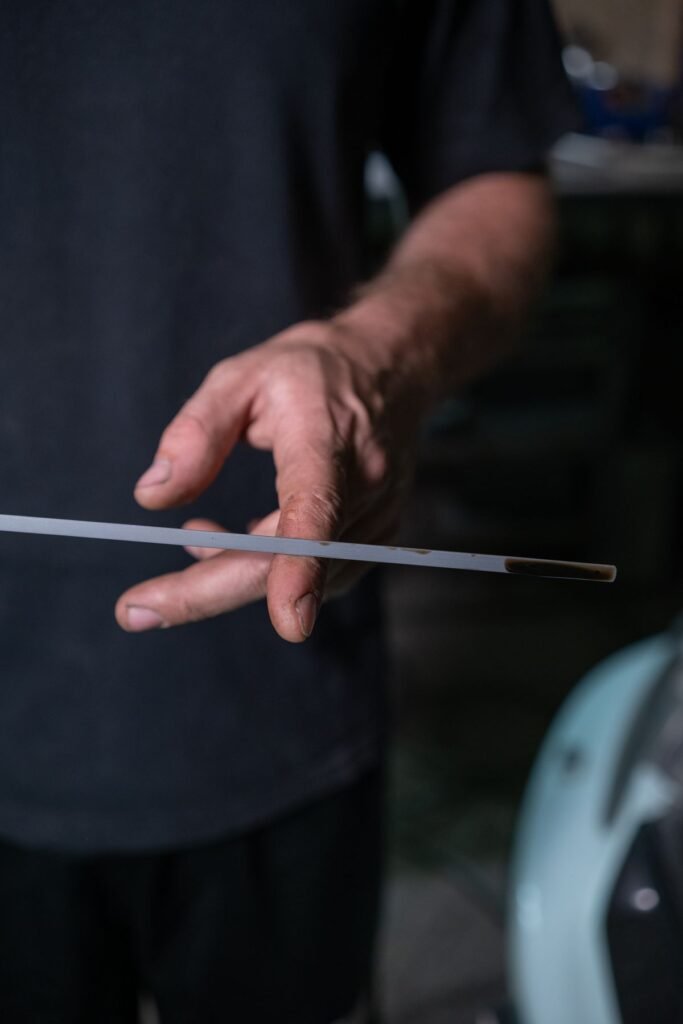
Park on level ground and wait at least five minutes so the oil drains back into the pan. Pull the dipstick out, wipe it clean, push it fully back in, then pull it out again and read the level. The oil should sit between the minimum and maximum marks. If it is below the minimum mark, add the correct grade of oil a little at a time and check again. Dark oil is not automatically a problem, but gritty oil, oil that smells strongly of fuel, or shiny metal flakes on the dipstick are all serious signs that need a mechanic, not just a top up.
Common causes of low oil pressure
Several problems can trigger the light, and they range from cheap to very expensive:
- Low oil level. The most common cause. Oil may be low because of a leak, because the engine burns oil, or simply because a change is overdue. If you suspect a leak, read our guide to car oil leak causes and fixes to find where leaks usually start.
- Wrong or worn out oil. Oil that is too thin for the engine, or oil that has broken down after too many miles, may not hold pressure, especially when hot.
- A failing oil pump. The pump creates the pressure. Wear or a blocked pickup screen starves the engine even when the level looks fine.
- Worn engine bearings. On high mileage engines, worn bearings let oil escape too easily, so pressure drops, most often at hot idle.
- A faulty oil pressure sensor. Sometimes pressure is fine and the sensor or its wiring is lying. This is the happiest outcome, but it must be proven with a manual pressure gauge, never assumed.
- A clogged oil filter. A neglected filter can restrict flow and drop pressure.
What repairs usually cost
A mechanic will usually start by checking the level, then fitting a manual gauge to measure real pressure. Typical costs in the United States look like this:
| Problem | Typical cost range |
|---|---|
| Oil and filter change with correct oil | $50 to $150 |
| Oil pressure sensor replacement | $100 to $300 |
| Fixing an external oil leak, gasket or seal | $150 to $600 |
| Oil pump replacement | $500 to $1,500 |
| Engine rebuild or replacement for worn bearings | $2,500 to $6,000 or more |
Prices vary by car model and region, and labor rates differ a lot between a small sedan and a large truck or European car.
How to prevent oil pressure problems
Most oil pressure failures grow out of neglect, so simple habits prevent them. Change the oil and filter on the schedule in your owner manual, or sooner if you make many short trips. Check the dipstick once a month and before long journeys; it takes two minutes. Fix small leaks early, because a slow drip becomes an empty sump over a few weeks. Use the exact oil grade printed in the manual, since modern engines are built around thin oils and tight clearances. Finally, treat any flicker of the light at idle as an early warning and book a check, rather than waiting for it to stay on.
Frequently asked questions
Can I drive a short distance with the oil pressure light on?
No. Even a mile can cause serious damage if pressure is truly low. Stop the engine, check the level, and arrange a tow if the light returns after topping up.
Why does my oil pressure light flicker only at idle?
Pressure is lowest at idle, so a worn pump, thin oil, or worn bearings often show up there first. A faulty sensor can do it too. Get the pressure measured with a gauge before driving normally again.
Will adding oil always fix the problem?
Only if the cause was a low level and no damage has been done. If the light stays on with the correct level, the fault is inside the engine or the sensor, and adding more oil will not help.
The oil pressure light is the one dashboard warning you should never gamble with. Stopping early turns most of these problems into a moderate repair instead of a dead engine, so make stopping your automatic reaction every time it appears.