
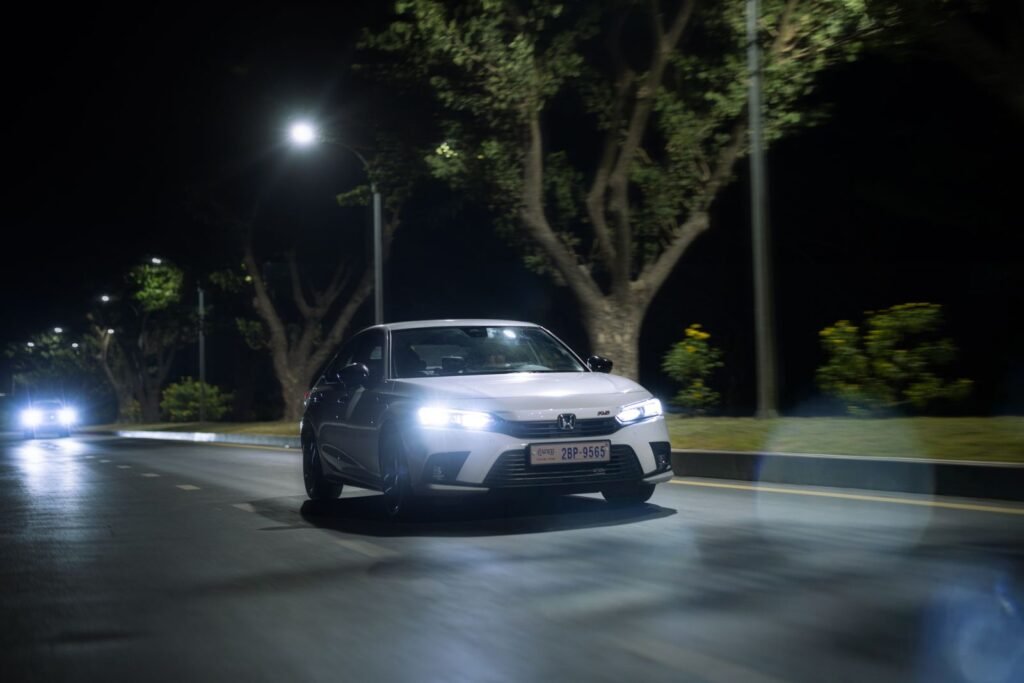
The Honda Civic is the car that proves a compact car can be fun, frugal and dependable all at once, and it has done it for over fifty years. On sale since 1972 and through eleven generations, it is one of the best selling cars in history, and that popularity is your advantage as a used buyer, because parts are everywhere, every garage knows the engines, and every fault is documented.
So who does it suit? Commuters who want strong fuel economy and strong resale value. Young drivers who want a car that is fun to drive without punishing running costs. Used buyers who want the biggest pool of quality second hand stock in the compact class, from cheap early cars to the latest hybrid. People cross shop the Civic against the Toyota Corolla, Mazda 3, Volkswagen Golf and Hyundai Elantra, and the Civic usually wins on driving feel and resale, even when rivals feel plusher inside.
One thing to know before you read on: the generations matter more than the badge. A 2001 car can fail its transmission, a 2006 to 2008 car can crack its engine block, and a 2016 to 2018 turbo car can dilute its oil, while the cars either side of those years are superb. This page covers the generations, the engines worth having, the problems owners actually report, the years to buy, and what the car costs to run.
Honda Civic at a glance
The quick facts first. The Civic has been a compact car at heart for its whole life, with sedan, hatchback, coupe and, in some generations, wagon bodies, and it has never offered all wheel drive.
| Item | Details |
|---|---|
| Generation count and years sold | Eleven generations, on sale since 1972 and still in production today |
| Body styles | 4 door sedan, 5 door hatchback, 2 door coupe in earlier generations, plus Si and Type R performance versions |
| Main engines | 1.5, 1.6, 1.8 and 2.0 litre petrols, 1.5 litre turbo, 2.0 litre turbo in the Type R, plus hybrid versions in several generations |
| Gearboxes | Manuals on most generations, automatics, and CVT on tenth and eleventh generation cars |
| Drive | Front wheel drive on every generation |
| Seats | 5 |
| Boot and cargo space range | About 25 to 27 cubic feet behind the rear seats in hatchback versions, with more seats down |
Generations explained
Eleven generations cover the Civic, and the faults move with these splits, so knowing which generation a car falls in is half the buying decision.
| Generation | Years | What changed |
|---|---|---|
| Seventh | 2001 to 2005 | First Civic hybrid, spacious interior. Avoid the 2001 transmission failure cars and the early hybrid battery cars. |
| Eighth | 2006 to 2011 | Better economy and refinement. The 2006 to 2008 cars are the cracked engine block years to avoid. |
| Ninth | 2012 to 2015 | Refined and durable after a weak 2012 launch. The 2013 to 2015 cars are excellent used buys. |
| Tenth | 2016 to 2021 | Turbo power, bold design, first US Type R. The 2016 to 2018 turbo cars are the oil dilution years to check carefully. |
| Eleventh | 2022 to present | Mature styling, standard Honda Sensing, hybrid versions from 2025 in the US. The sweet spot for most buyers today. |
The eleventh generation car, sold from 2022 to present, is the used buy most people will meet first and it is a genuinely strong one. It offers a 2.0 litre petrol with 158 hp, a 1.5 litre turbo with 180 hp in hatchback versions, a Si with 200 hp, a Type R with 315 hp, and from 2025 a hybrid with about 200 hp combined and over 50 mpg in some configurations. The tenth generation car from 2016 to 2021 is the value pick: a 2.0 litre petrol with 158 hp or a 1.5 litre turbo with 174 to 180 hp, with the same Honda driving feel at a much lower price, provided you avoid the early oil dilution cars.
The ninth generation car from 2013 to 2015 is the hidden gem for budget buyers: naturally aspirated engines that are exceptionally durable, refined suspension and few systemic faults. The eighth generation car is worth buying only from 2009 to 2011, after the cracked block years, and the seventh generation car should be bought only with a perfect transmission history.
Generations in detail
Engines and specs that matter
The 2.0 litre petrol is the heart of the modern Civic story, and it is the safest place to start. In the tenth and eleventh generations it makes 158 hp with a CVT, with smooth, linear response and about 33 mpg combined in the eleventh generation sedan. For most buyers, a 2.0 litre Civic is the default right answer, and it is the car to buy if you want the lowest risk ownership.
The 1.5 litre turbo is the fun middle ground. In the tenth generation it makes 174 to 180 hp depending on trim, and in the eleventh generation hatchback it makes 180 hp with 177 lb ft of torque, with strong mid range punch and about 32 mpg combined. It feels much quicker than the 2.0 litre in everyday driving, because peak torque arrives early. Buy the turbo if you enjoy driving and do mixed miles, but check the oil dilution history on 2016 to 2018 cars, and change the oil on time without exception.
The hybrid is the smart buy for most drivers today. The eleventh generation hybrid pairs a 2.0 litre Atkinson cycle engine with electric motors for about 200 hp combined, with over 50 mpg combined in some configurations and a quiet, smooth town driving experience. Buy the hybrid if you do town or mixed driving, because the fuel saving pays back quickly and the hybrid is now the volume Civic in many markets. The Si with 200 hp and the Type R with 315 hp are the heroes: the Si is a superb everyday performance car, and the Type R is track capable, but both ask for premium fuel, pricier insurance and strict maintenance.
Gearboxes are simple on modern cars. The tenth and eleventh generation cars use a CVT on most versions, a 6 speed manual on the Si and Type R, and an eCVT on hybrids. The CVT is smooth and economical when maintained, but it needs its fluid changed on schedule, and a car with neglected CVT fluid is a negotiating point. Our guide to transmission problems and their symptoms explains what shudder, hesitation and flare are telling you on any automatic.
Which engine suits you? Want the safest used buy, take an eleventh generation 2.0 litre petrol or hybrid. Want fun on a budget, a 2019 to 2021 tenth generation 1.5 litre turbo with full history is superb, because Honda refined the engine by 2019. Want the lowest fuel bills in town, the hybrid is the answer. Want a performance car, the Si is the sweet spot and the Type R is the hero, but only with full history. On any turbo car, pull the dipstick and smell the oil: a strong fuel smell points at dilution.
Common problems by generation
The Civic problems are well documented because so many are sold, and they are specific enough that you can check for every one of them. These are the issues that come up again and again in owner reports, technical bulletins and buying guides.
Seventh generation, 2001 to 2005
Transmission failure is the headline risk on the 2001 car, the most recalled Civic in the car’s history, with transmission failure, exhaust collapse and structural defects pushing average powertrain repair costs to about 2,300 dollars. The 2003 to 2005 hybrid versions suffered battery degradation that could cost over 3,000 dollars to fix after a decade. Buy a seventh generation car only with a perfect transmission history and, on a hybrid, a recent battery health check.
Eighth generation, 2006 to 2011
Cracked engine blocks are the famous fault here. Some 2006 to 2008 cars with the 1.8 litre engine developed cracked blocks that leak coolant, overheat and can require a complete engine replacement, with repairs averaging 2,600 to 2,900 dollars. Honda extended the warranty on affected blocks to 10 years with unlimited mileage, but many cars are now outside that cover. The same generation suffers paint peeling, cracked sun visors and premature tyre wear from rear suspension alignment issues on 2006 to 2009 cars. On any eighth generation car, check the coolant level, ask whether the block was replaced, and inspect the paint and tyres carefully.
Ninth generation, 2012 to 2015
The ninth generation is largely clean after a disappointing 2012 launch, with the 2013 refresh transforming it into a highly reliable car. The naturally aspirated engines are exceptionally durable, and the main checks are cosmetic: paint peeling on white and silver cars, and interior trim wear. Buy a 2013 to 2015 car with confidence, provided the service history is complete.
Tenth generation, 2016 to 2021
Oil dilution is the headline fault here. Early 1.5 litre turbo engines from 2016 to 2018 can let fuel mix into the engine oil, especially in cold climates and on short trips, which thins the oil and reduces lubrication. Honda addressed it with software updates and revised maintenance, and by 2019 the engine was refined into a very reliable platform. The 2016 car also suffers air conditioning compressor failures, the second most common repair in one large owner survey, so test the air conditioning on any used Civic, even in cool weather. On a tenth generation turbo car, check the oil level and smell, confirm software updates are applied, and test the air conditioning properly. Our guide on a flashing check engine light explains when a warning light means stop driving and get the car checked.
Eleventh generation, 2022 to present
The eleventh generation is too new for a long term verdict, but early reports are strong, with mature chassis tuning, standard Honda Sensing and no systemic engine fault yet reported. The main checks are the same as any new car: confirm all software updates, test every driver assistance system, and on a hybrid confirm battery health and service history. Buy an eleventh generation car with confidence, and prefer a hybrid or 2.0 litre car if you want the simplest ownership.
Which Honda Civic should you buy
On a tight budget, look at a 2013 to 2015 ninth generation car with the naturally aspirated engine and full history. The guides call these cars exceptionally durable and excellent used targets, with few systemic faults.
In the middle ground, a 2019 to 2021 tenth generation car with the 1.5 litre turbo or 2.0 litre petrol is the smart modern buy, once you have verified the oil dilution fixes on a turbo car. Drivers who want the latest car should look at an eleventh generation hybrid, which is now the volume Civic in many markets.
Years to be careful with are 2001 for transmission failure, 2003 to 2005 for hybrid battery degradation, 2006 to 2008 for cracked engine blocks, and 2016 to 2018 for turbo oil dilution. The late cars of each generation are always the safer buy.
Whatever the generation, run through this checklist before you hand over money:
- On a turbo car, pull the dipstick and smell the oil for fuel, and check the oil level.
- On a 2006 to 2008 car, check the coolant level and ask whether the engine block was replaced.
- On a 2001 car, test every gear and walk away from slipping or flaring shifts.
- Test the air conditioning properly, even in cool weather, on any tenth generation car.
- Check the paint, especially on white and silver cars, and the tyres for uneven wear.
- On a hybrid, check battery health and service history.
- On a Si or Type R, check for modified software, track use and oil consumption.
- Look at suspension and wheel bearings, the most common Civic repairs in owner surveys.
Running and repair costs
The Civic is one of the cheapest compact cars to run in its class. Parts are everywhere, every independent garage knows the engines, and the hybrid adds little to routine servicing. Our full breakdown of brake pad replacement cost shows what one of the most common jobs involves. Typical US prices for the common jobs look like this:
| Job | Typical cost in US dollars |
|---|---|
| Front brake pads, fitted | 150 to 300 |
| 12 volt battery, fitted | 150 to 250 |
| Four tyres, fitted | 400 to 800 |
| Major service at an independent garage | 300 to 600 |
| Air conditioning compressor, tenth generation | Often a four figure job, test before you buy |
The engine rows are missing from this table for a reason: a cracked block or a failed transmission on an old Civic can cost more than the car is worth, which is exactly why the buying advice keeps steering you toward the late cars of each generation. The good Civic years are cheap and predictable to run.
Questions and answers
Is the Honda Civic reliable?
Yes, and it ranks third among 36 compact cars with a reliability rating of 4.5 out of 5.0. The weak spots are specific and avoidable: the 2001 transmission, the 2006 to 2008 cracked blocks, and the 2016 to 2018 turbo oil dilution. Buy a late car in any generation with records and it is superb.
Which is the best Civic year to buy used?
The consensus pick is a 2019 to 2021 tenth generation car with the refined 1.5 litre turbo or 2.0 litre petrol, or an eleventh generation hybrid if your budget stretches. On a budget, a 2013 to 2015 ninth generation car is excellent value.
Should I buy the Civic hybrid or the petrol?
Buy the hybrid if you do town or mixed driving, because it is quieter, smoother and much more economical in town, with about 200 hp combined. Buy the petrol if you do mostly motorway miles and want the simplest, cheapest car to buy, because the 2.0 litre petrol is still superb on long runs.
What is Civic oil dilution?
It is a widely reported fault on 2016 to 2018 cars with the 1.5 litre turbo, where unburned fuel mixes into the engine oil, especially in cold climates and on short trips, thinning the oil and reducing lubrication. Honda addressed it with software updates and revised maintenance. Check the oil level and smell on any early turbo car, and buy only with updates applied.