
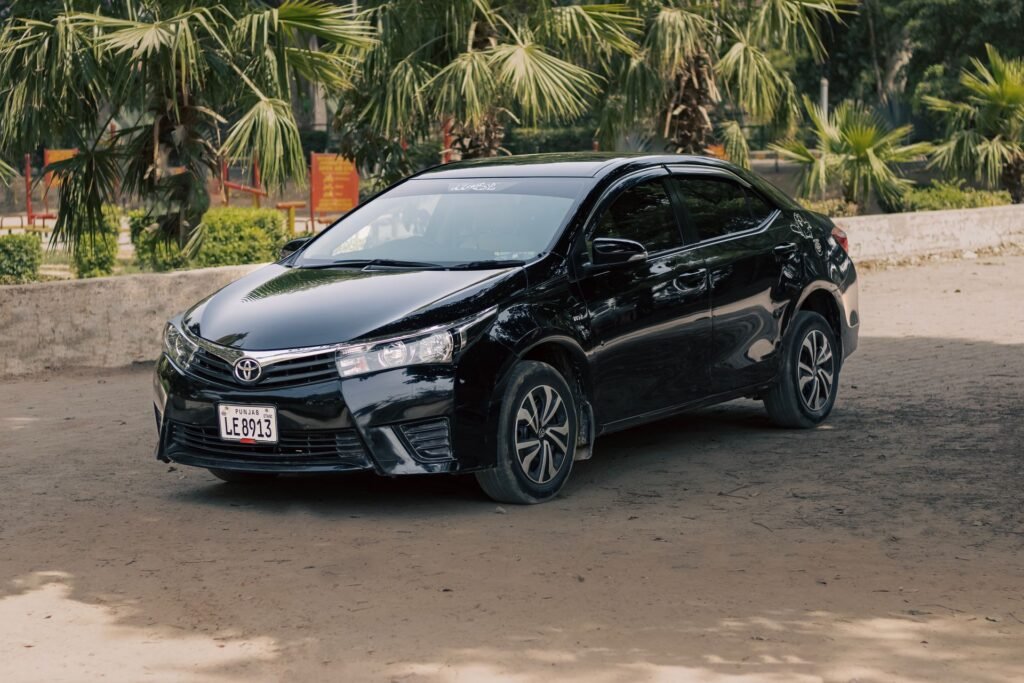
The eleventh generation Corolla is the used car world’s quiet champion. Launched in the US in June 2013 as a 2014 model and sold through the 2019 model year, the E170 is a sedan only car in North America, and it built its reputation the old fashioned way: simple engines, proven gearboxes and running costs so low they barely register.
So who does it suit? Budget used buyers who want the maximum car for minimum money. New drivers who need something safe, cheap to insure and hard to break. High mileage commuters who will punish a car and need it to take it. Our Toyota Corolla model guide compares every generation in one place.
This page covers the E170 from 2013 to 2019: the engines and gearboxes, the 2017 facelift that brought standard active safety, the documented faults and recalls, which years to buy, and what the car costs to run.
Toyota Corolla 2013 to 2019 at a glance
| Item | Details |
|---|---|
| Generation and years sold | E170, the eleventh generation. US model years 2014 to 2019, launched June 2013 and replaced by the E210 for 2020. |
| Body styles | 4 door sedan only in North America. |
| Main engines | 1.8 litre petrol with 132 hp and 128 pound feet of torque on most trims. 1.8 Valvematic with 140 hp on the LE Eco. |
| Gearboxes | Toyota CVT on most cars, a six speed manual on S and SE models, and a simple four speed automatic on the base L. |
| Drive | Front wheel drive only. |
| Seats | 5 |
| Trims | L, LE, LE Eco, S, XLE, plus SE, XSE and a limited 50th Anniversary SE from the 2017 facelift. |
| Safety | Five star NHTSA overall rating and IIHS Top Safety Pick. The 2017 facelift made Toyota Safety Sense P standard on every trim. |
| Fuel economy highlights | LE Eco rated 34 mpg combined with up to 40 on the highway. Most CVT cars around 32 mpg combined. |
Engines and specs that matter
The standard 1.8 litre engine is the heart of this car’s appeal. With 132 hp it is not quick, but it is simple port injected technology with a timing chain, and it has one of the best durability records of any engine in the class. It pairs with the CVT on most trims, a six speed manual on the sportier S and later SE models, and an old school four speed automatic on the base L. The four speed is basic and a little noisy on the highway, but it is almost unbreakable.
The LE Eco is the clever buy for economy chasers. Its Valvematic version of the 1.8 makes 140 hp with slightly less torque, and with aerodynamic tweaks it is rated 34 mpg combined and up to 40 on the highway. If you do big highway miles on a tight budget, the Eco is the trim to hunt for.
The 2017 facelift is the dividing line that matters most to used buyers. Toyota refreshed the styling, made LED headlights and a reversing camera standard, and, most importantly, made Toyota Safety Sense P standard on every single trim, including the base L. That suite bundles pre collision with pedestrian detection, lane departure alert with steering assist, adaptive cruise control and automatic high beams. A 2017 or newer car therefore gives you modern active safety for old car money, which is a rare combination.
The CVT deserves a note because used buyers worry about it. This generation’s Toyota CVT is a conventional belt design, generally durable, but Toyota calls the fluid a lifetime fill. It is not. Our guide on how often to change transmission fluid explains why a fluid service every 50,000 to 60,000 miles keeps these gearboxes smooth, and a car with that service in its records is worth more than one without.
Which one suits you? Commuting in traffic, take any CVT car with records. Want control on a budget, the six speed manual SE is rare but rewarding. Chasing maximum mpg, find an LE Eco. On the smallest budget, even a base L with the four speed automatic is honest transport, just expect more noise at highway speed.
Common problems of this generation
This is a genuinely reliable car, but wear items and a few documented faults shape what you should check. None of them are deal breakers if you know about them in advance.
Oil consumption and oil leaks
Oil is the theme to watch on this generation. Toyota ran a warranty enhancement program for excessive engine oil consumption complaints on some of these cars, and a technical bulletin covers an oil leak between the engine block and transaxle on 2009 to 2017 models. At higher mileages, valve cover gasket seepage is also reported. None of this is unusual for a hard worked compact, but it means you must check the oil level on the dipstick yourself and look underneath for fresh leaks. If you spot seepage, our guide to car oil leak causes and fixes explains what is serious and what is just a weep worth monitoring.
CVT shudder and check engine lights
Some owners report a shudder or hesitation from the CVT at low speeds, and a Toyota technical bulletin covers a check engine light with a specific fault code on 2012 to 2014 cars with the 1.8 engine. On your test drive, accelerate gently from a standstill several times and feel for any shudder or flare. A smooth CVT with fresh fluid is a good one; a shuddering one on a car with no service history is a car to walk away from.
Recalls to verify by VIN
The big recall is the airbag control unit campaign (NHTSA 20V024), which covers 2011 to 2019 Corollas including every E170. The ECU can malfunction in certain crashes and disable airbag or pretensioner deployment; the dealer fix is a noise filter, fitted free. Some 2014 cars were also recalled for faulty windshield wipers. Run the VIN through the Toyota recall checker and confirm everything is closed before you buy.
Cabin niggles and trim wear
The smaller complaints are about trim, not mechanics. Owners report rattling dashboards, occasional seat heater failure, and engine mount wear that shows up as vibration at idle on high mileage cars. The infotainment is dated, with no Apple CarPlay or Android Auto on any trim. Also note that most trims have rear drum brakes, with rear discs only on the sportier models, so check the drums are not grabbing or worn.
Should you buy this generation
This Corolla suits buyers who rank reliability and low costs above everything else. It is ideal as a first car, a student car or a high mileage workhorse. Parts are cheap, every garage knows the car, and insurance is low. If you simply need dependable transport for the least money, this generation is very hard to beat.
Who should skip it? Tech lovers will find the infotainment primitive, with no smartphone mirroring at all. Driving enthusiasts will find the steering numb and the performance leisurely. And if you want the active safety kit, restrict your search to 2017 and newer cars, because earlier cars do not have it.
The good buys are the 2017 to 2019 facelift cars: standard Safety Sense P, LED headlights, reversing camera, fresher interior and lower mileage. An LE or LE Eco from these years with full records is the sweet spot. Years to be careful with are 2014 and 2015, the first model years, which carry the most owner complaints and the earliest build quirks.
Whatever the year, run through this checklist before you hand over money:
- Check the engine oil level yourself and ask the seller directly if the car uses oil between services.
- Look underneath for fresh oil leaks between the engine and gearbox.
- Feel for CVT shudder on gentle takeoffs, and ask for proof of CVT fluid services.
- Run the VIN through the Toyota recall checker and confirm the airbag ECU recall is closed.
- Sit at idle and feel for excess vibration, a sign of worn engine mounts.
- Test every electrical item: seat heaters, all windows, the touchscreen and the air conditioning.
- Check the rear brakes, drums on most trims, for grabbing or heavy wear.
- Insist on service records; on a car this cheap, history is the whole value.
Running and repair costs
This is one of the cheapest cars in America to keep on the road. Parts cost little, labor is simple, and nothing on the car is exotic. Typical US prices for the common jobs look like this:
| Job | Typical cost in US dollars |
|---|---|
| Front brake pads, fitted | 120 to 280 |
| Four tyres, fitted | 350 to 700 |
| 12 volt battery, fitted | 120 to 220 |
| Major service at an independent garage | 250 to 500 |
| Valve cover gasket, fitted | 200 to 400 |
There is no expensive hybrid battery to worry about, no turbo to fail, no complex gearbox. Keep the oil topped up, service the CVT, and this Corolla will run to very high mileages for pennies per mile.
Questions and answers
Is the 2013 to 2019 Toyota Corolla reliable?
Yes, it is one of the most reliable used cars you can buy. The 1.8 engine and the CVT have strong long term records, and the car earned top safety scores in its day. The faults are known and checkable: oil consumption and minor oil leaks, occasional CVT shudder, and trim niggles. Buy a 2017 or newer car with service records and it is superb value.
Does the Corolla E170 burn oil?
Some do, which is why you must check. Toyota ran a warranty enhancement program for excessive oil consumption complaints, and high mileage cars can seep from the valve cover gasket or between the engine and transaxle. Check the dipstick yourself before buying, look for leaks underneath, and ask the seller directly about oil use between services. A car that holds its oil level is the one to buy.
Should I get the CVT or the manual?
Get the CVT if you commute in traffic or just want the easiest ownership; it is smooth and durable when serviced, so ask for fluid change records. Get the six speed manual if you enjoy driving and find an S or SE so equipped, but they are rare. Avoid the base L four speed automatic if you do a lot of highway miles, as it is noisy at speed.
Which is the best Corolla E170 year to buy used?
A 2017 to 2019 facelift car is the clear pick: standard Toyota Safety Sense P active safety, LED headlights, reversing camera, a fresher interior and lower average mileage. The LE Eco is the economy champion and the SE or XSE adds sporty looks. Be careful with 2014 and 2015 cars, the first model years with the most complaints, and always verify the airbag recall is closed.