
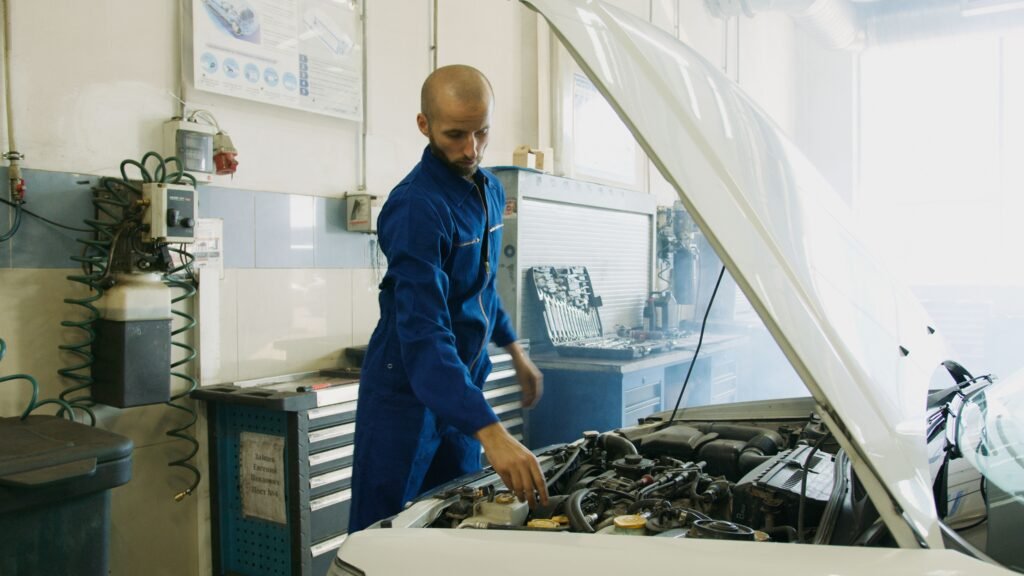
How often should a car be serviced? For most cars, the direct answer is once a year or at the mileage interval in your owner’s manual, whichever comes first, with shorter intervals if you drive in severe conditions. That single sentence answers the question for a typical driver, but it is not enough on its own, because your mileage, your trips, your car’s age, and your warranty can all change the right interval for you. This guide gives you a clear answer by mileage, age, and driving style, explains how often does a car need a service in real driving, and helps you decide whether you need a service now, soon, or at the next scheduled date.
Decision first: find your interval in two minutes
Do not start with a generic number from the internet. Start with your own car. Your action is to open your owner’s manual or service booklet and find three facts: the routine service interval in miles or kilometres, the time interval in months, and any severe service interval listed separately. Write those three facts down. Then check your current mileage and the mileage and date of your last service. If either the mileage interval or the time interval has passed, you are due. If neither has passed, you are not due yet, unless a warning light, a new symptom, or a safety check says otherwise. That two minute check beats any article, including this one, because it is specific to your model and year. Use this article to understand the result and to decide what to do next, not to replace the manual.
How often a car should be serviced: the normal pattern
For a modern gas or hybrid car used in normal driving, routine services often fall into a clear pattern: a minor service at a shorter interval, and a larger service at a longer interval, repeating over the life of the car. Older cars, and cars built before longer life oils and filters became common, often had shorter intervals. Your action is to ask your garage which level of service you are due, minor or major, rather than accepting a package name with no list. Ask for the list in writing, compare it with your manual, and approve the manual items first. If the garage recommends extra work, ask for a separate price and reason for each extra item, so you can decide on each one rather than approving a bundle you do not understand.
| Driving pattern | Typical service rhythm | Your decision |
|---|---|---|
| Normal mixed driving, regular longer trips | Manual interval, often once a year or at the set mileage | Book at the interval, and keep the record complete |
| Low mileage, mostly short trips | Time interval matters more than mileage | Do not skip a yearly service just because mileage is low, because oil, fluids, and rubber parts age with time |
| High mileage, motorway and long distance | Mileage interval will arrive first | Book by mileage, and check tyres and brakes more often between services |
| Severe conditions, see below | Shorter interval in your manual | Use the severe interval, not the normal interval, and tell the garage about your conditions |
Do you need to service your car every year? The low mileage trap
Do you need to service your car every year if you drive very little? In most cases, yes, and this is where many owners make a costly mistake. A car that sits, or that only does short trips, still ages. Engine oil collects moisture and contaminants. Brake fluid absorbs moisture over time. Tyres age and can develop flat spots or cracks. Batteries lose charge. Rubber hoses and seals harden. A yearly check catches those time based problems before they become failures. Your action, if you drive low mileage, is to book a service at least once a year, even if the mileage is low, and to ask the garage to check battery health, tyre age and condition, fluid condition, and brakes, not just oil. If your manual gives a longer time interval for your exact model, follow the manual, but do not stretch a yearly car to two years simply because the mileage looks low. Time is a service trigger, not just a suggestion.
Short trips, towing, and severe driving: when to service sooner
How often should i service my car if my driving is not normal? The answer is sooner than the headline interval, if your manual lists a severe service schedule. Short trips are hard on a car because the engine may not fully warm up, so moisture and fuel can build up in the oil. Stop and start city traffic, dusty roads, very hot or very cold weather, towing, carrying heavy loads, and frequent mountain driving can all count as severe conditions in many manuals. Your action is to read the severe conditions list in your manual and tick every condition that matches your driving. If even one or two match regularly, ask the garage whether the severe interval applies to you, and get that advice written on the invoice. Do not guess. A driver who tows a trailer every weekend and a driver who does one long motorway trip a month do not need the same interval, even if they own the same model.
| Severe condition | Why it shortens the interval | Your action |
|---|---|---|
| Mostly short trips under a few miles | Engine and oil may not reach full temperature | Ask about the severe oil interval, and take a longer drive regularly where safe |
| Towing or heavy loads | Engine, transmission, brakes, and cooling work harder | Tell the garage you tow, and ask for transmission and brake checks at the severe interval |
| Dusty, muddy, or salty roads | Filters and underbody parts wear faster | Ask for air filter and underbody checks, and wash the underbody where recommended |
| Extreme heat or cold | Fluids, battery, and rubber parts age faster | Ask for battery, coolant, and fluid condition checks before the extreme season |
| Stop and start city traffic | Brakes and engine idle time increase | Ask for brake wear checks between services, and note any brake noise early |
Older cars: why age changes the answer
An older car needs a different kind of attention from a new car, even if the mileage interval looks the same. Rubber parts, seals, hoses, belts, suspension parts, and corrosion all depend on age as well as mileage. An older car may also have a less complete service history, so the garage cannot assume a part was changed on time. Your action, if your car is older or has high mileage, is to ask for a condition based check at each service, not just the interval list. Ask the garage to report the condition of belts, hoses, suspension, brakes, and fluid leaks, with measurements or photos where possible. Then decide: fix safety items now, plan wear items for the next visit with a price, and do not let a small leak or a worn belt drift into a breakdown. For an older car, a regular inspection is often more valuable than a larger package name, because it catches age related wear before it fails.
Electric cars: a different interval, not no interval
Electric car owners often ask whether an electric car needs servicing at all. It does, but the work is different. There is no engine oil to change, and no spark plugs or exhaust system in the same sense, but tyres wear, brakes still need checking, cabin filters still need changing, coolant for battery and power electronics still needs checking where fitted, and safety systems, software, and suspension still need inspection. Your action is to follow the electric service schedule in your manual, not to assume no service is needed. Ask for the electric service list, check that no engine items have been added by mistake, and pay special attention to tyre wear, because electric cars are often heavier and can wear tyres faster. A missed tyre or brake check on an electric car is just as serious as on a gas car.
Warranty conditions: the interval that protects your cover
Warranty terms can make the service interval a legal and financial decision, not just a maintenance choice. Many warranties require servicing at the manufacturer’s intervals, using parts and fluids that meet the manufacturer’s specification, with a record to prove it. Missing an interval, or losing the record, can complicate a warranty claim, even if the fault seems unrelated. Your action is to read the warranty booklet for your car, keep every invoice with date, mileage, parts, and oil or fluid specification, and set a reminder for the next due date at each service, not just for the next year. If you use an independent garage, ask in advance whether it uses the correct specification and whether it will record the service in a way your manufacturer accepts. Do not rely on memory or on a verbal promise. The invoice is your proof.
Prices and country differences: what not to assume
Prices, service names, and inspection rules vary sharply by country and by garage. A price that is normal in one country can be misleading in another, and a term that is standard in one market can mean something different elsewhere. Many top results for this question are UK centric, with MOT references and UK prices, but those prices and that test do not apply everywhere. Your action is to ignore a price from another country when you budget, and to get a written quote from a garage in your own area, for your exact model and service level. Ask what is included, what is extra, and what the garage will do if it finds extra work. That local written quote is the only price that matters for your decision. Do not approve extra work by phone without a price, and do not let a garage present a national average as your price.
Your service decision, in one page
Use this short checklist at every service decision, and keep it with your service record.
- Check your manual for mileage interval, time interval, and severe interval. Action: write all three down.
- Check your current mileage and last service date and mileage. Action: if either interval has passed, book now.
- Tick your driving conditions against the severe list. Action: if severe conditions apply regularly, use the severe interval.
- Check your car’s age and warranty terms. Action: for an older car, ask for a condition report. For a car under warranty, keep the record complete.
- Ask for a written list and a written price before approving work. Action: approve manual items first, decide extras one by one.
- After service, record the next due mileage and date. Action: set a reminder on that date, not a vague next year note.
If you follow that checklist, you will rarely be early for no reason, and rarely late for a reason you regret. The right interval is the one in your manual, adjusted for your driving, your car’s age, and your warranty, and confirmed in writing at each visit.
Frequently asked questions
How often should you service your car?
For most cars, once a year or at the manual mileage interval, whichever comes first, with a shorter interval if you drive in severe conditions. Your manual for your exact model is the final answer.
How often does a car need a service if it is driven very little?
Usually at least once a year, because oil, fluids, tyres, brakes, and rubber parts age with time even when mileage is low. Check your manual, and do not skip a yearly check just because mileage is low.
Do electric cars need servicing?
Yes, but the work is different. Electric cars need tyre, brake, filter, cooling, suspension, and safety checks, even though they do not need engine oil or spark plugs.
What counts as severe driving?
Common examples are mostly short trips, stop and start city traffic, towing, heavy loads, dusty or salty roads, and extreme heat or cold. Check the severe list in your manual, because the exact list varies by maker.
Does missing a service affect a warranty?
It can complicate a claim, because many warranties require servicing at the maker’s intervals with the correct specification and a record. Keep invoices with date, mileage, parts, and specification.
Should I use a price I saw online from another country?
No. Prices and service names vary by country and garage. Get a written local quote for your exact model and service level, with included items and extras listed separately.
More guides in this series: the Toyota maintenance schedule explained, what a car service is, the car preventative maintenance checklist and common car problems and symptoms.
Pingback: Toyota Maintenance Schedule Explained: What to Service, When, and What to Skip - MotorVento
Pingback: What Is a Car Service: What a Basic Service Includes, What It Costs, and What New Owners Should Ask - MotorVento
Pingback: Car Preventative Maintenance Checklist: How to Keep Your Car Running Longer and Avoid Costly Repairs - MotorVento
Pingback: Common Car Problems and Symptoms: How to Spot Trouble Early - MotorVento