
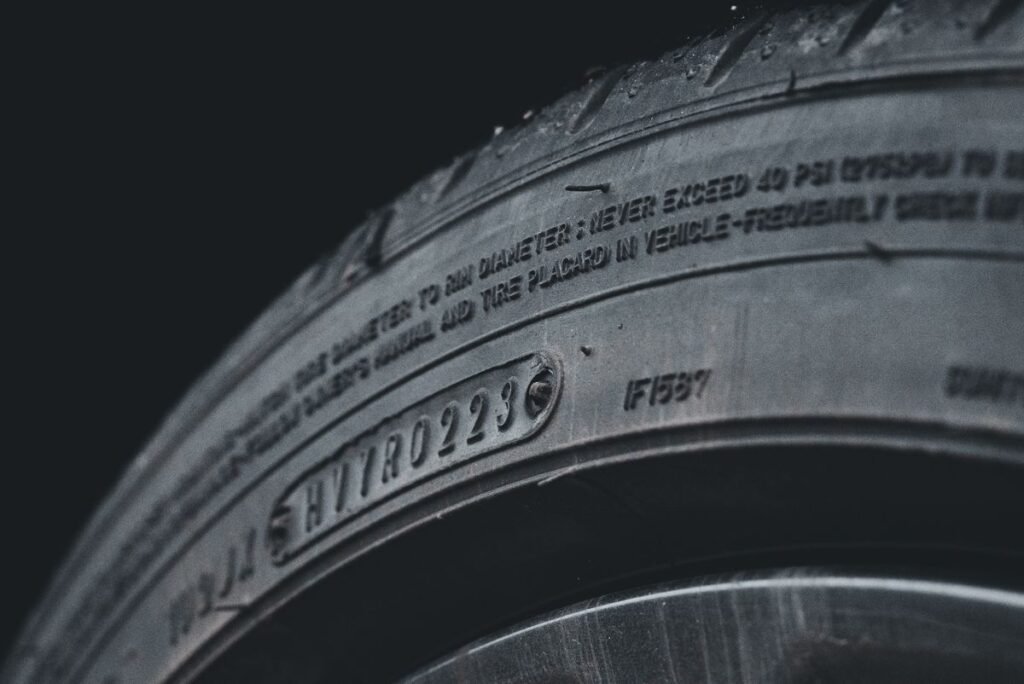
The long code on your tire sidewall, something like 225/65R17 102H, tells you the tire width, profile, construction, wheel size, load capacity and speed rating in one short string. Once you have tire numbers explained in plain language, you can check in seconds whether a replacement tire truly matches your car. This guide decodes every part of that code, plus the other markings that matter.
Reading the main size code step by step
Take the common size 225/65R17 102H as our example and pull it apart.
225: the width in millimeters
The first number is the width of the tire from sidewall to sidewall, measured in millimeters. In our example the tire is 225 millimeters wide. Wider tires generally grip more but can cost more and use slightly more fuel.
65: the aspect ratio
The number after the slash is the height of the sidewall as a percentage of the width. Here the sidewall height is 65 percent of 225 millimeters. A lower number means a shorter, sportier sidewall. A higher number means a taller sidewall that usually rides softer and protects wheels better on rough roads.
R: radial construction
The letter R means radial, which describes how the layers inside the tire are arranged. Almost every modern car tire is radial, so you will nearly always see R here.
17: the wheel diameter in inches
This is the size of the wheel the tire fits, in inches. A tire marked 17 only fits a 17 inch wheel. This number must match your wheels exactly.
102: the load index
The number after the size is the load index, a code for how much weight one tire can carry. Index 102 means 850 kilograms, or about 1,874 pounds, per tire. You should never fit a tire with a lower load index than the car maker specifies.
H: the speed rating
The final letter is the speed rating, the maximum speed the tire is built to handle safely when properly inflated and loaded. H means 130 miles per hour. Speed ratings deserve their own close look, and our companion piece on tire speed ratings explained lists every letter and what it means for your driving.
A quick reference table
| Marking | Example | What it means |
|---|---|---|
| Width | 225 | Section width in millimeters |
| Aspect ratio | 65 | Sidewall height as a percent of width |
| Construction | R | Radial build |
| Wheel size | 17 | Wheel diameter in inches |
| Load index | 102 | 850 kg maximum per tire |
| Speed rating | H | Rated up to 130 mph |
The letters before the size
Many tires carry a letter or two in front of the width. P means passenger car, the most common marking in North America. LT means light truck, built stronger for pickups and large SUVs. ST means special trailer, and these must never be fitted to a car. T means a temporary spare. If there is no letter at all, the tire follows European sizing, which is normal and fine for passenger cars.
Other sidewall numbers worth knowing
- DOT code and age. The DOT marking ends with four digits that give the week and year the tire was made. 2321 means week 23 of 2021. Age matters: many makers suggest replacing tires at around six to ten years old regardless of tread, because rubber hardens over time.
- Treadwear, traction and temperature grades. These comparative ratings appear on most tires. Higher treadwear numbers suggest longer life, traction is graded from AA down to C, and temperature from A to C. They help compare tires within a brand but are not perfectly consistent between brands.
- Maximum pressure and load. The small print lists the maximum cold pressure the tire can hold. This is a ceiling for the tire, not your target. Your correct pressure is on the driver door jamb sticker or in the manual.
- M plus S and the snowflake symbol. M+S means the tread is designed for mud and snow. The three peak mountain snowflake symbol means the tire passed proper winter testing, which is a much stronger claim.
- Rotation arrows and outside markings. Directional tires have an arrow that must point in the direction of travel. Asymmetric tires are marked outside, and that side must face outward.
Safety warning: never mix a lower load index or a much lower speed rating than the maker specifies, and never fit a tire size that rubs or changes the overall diameter a lot. A wrong diameter also makes your speedometer read incorrectly, which can put you over a speed limit while the dial says otherwise.
Where to find the size your car actually needs
The sidewall of your current tires is only a guide, because a previous owner may have fitted a different size. The official size is printed on the driver door jamb sticker, inside the fuel door on some cars, and in the owner manual. Many cars list two or three approved sizes for different wheel options. When you replace tires, match the approved size, and keep load index and speed rating equal or higher.
When the time comes to buy, prices swing widely by size and brand. Our new tire cost guide breaks down what a single tire and a full set typically cost, so you can budget before you shop.
Frequently asked questions
Can I fit a slightly different tire size than standard?
Small changes are common, such as going one step wider, as long as the overall diameter stays within about 3 percent of standard and the tire does not rub. A tire shop calculator can confirm this before you buy.
What happens if I fit tires with a lower speed rating?
The car will feel fine at everyday speeds, but the tire is not built or tested for the higher rating, and some insurers take a dim view of it after a claim. Match or exceed the original rating to stay safe and covered.
Do all four tires need identical numbers?
Ideally yes. At minimum, both tires on the same axle should match in size, type and roughly in tread depth. On all wheel drive cars, all four should match closely, because different diameters make the system work constantly and can wear it out.
The sidewall code looks like a secret language, but it is really a compact label for size, strength and speed. Learn it once, and you will never again have to take a tire shop word for whether a tire belongs on your car.