
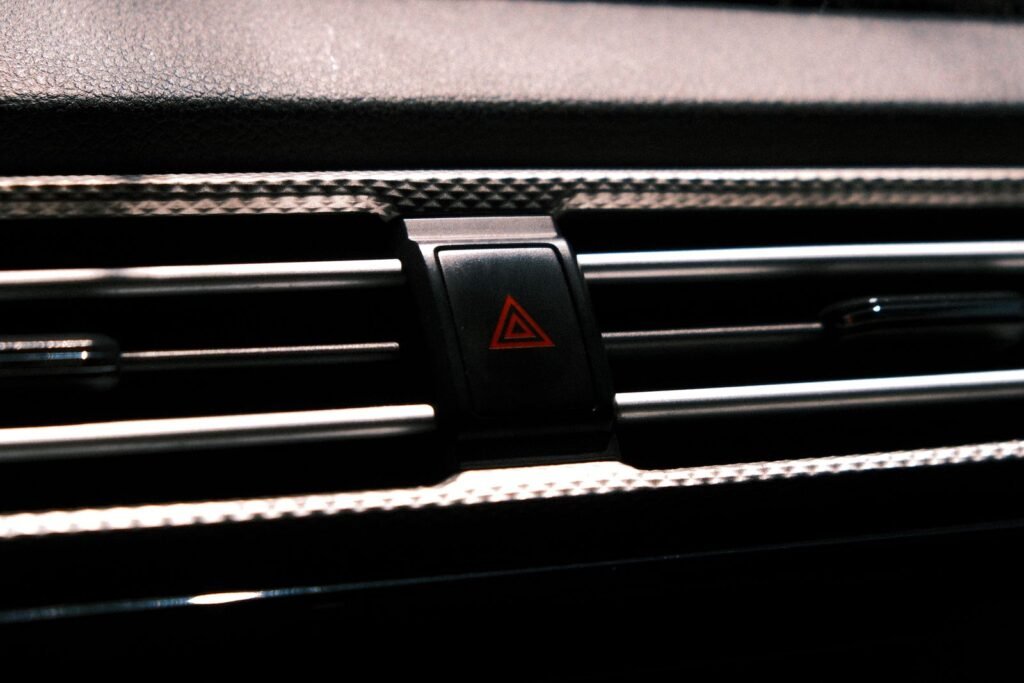
Hazard lights, also called hazard warning lights or four way flashers, switch on all four turn signals at once to warn other drivers that your car is stopped, broken down, or moving very slowly in a dangerous situation. The short answer: press the hazard button, usually marked with a red triangle, whenever you are stopped in a place where other drivers may not expect a stationary car, when you break down, or when you must drive very slowly because of a fault, fog, or an emergency. If your hazard lights do not work, check the fuse and bulbs first, then the flasher relay and switch. A bulb commonly costs 5 to 25 dollars, a flasher relay commonly costs 15 to 50 dollars as a part, and a professional relay replacement commonly costs 75 to 150 dollars in total, based on current workshop pricing guides checked during this run. Your first decision is to use hazards early, not after other drivers are already close behind you.
Hazards work even when the ignition is off on most cars, which is deliberate, so you can warn traffic after a breakdown or a crash without keeping the engine running. They flash all indicators together at a steady rate, which makes your car stand out from normal traffic and signals that something is wrong or unusual. That simple warning can prevent a rear end collision on a motorway hard shoulder, in a tunnel, or on a dark road. It is not a parking permit, and it does not make an illegal stop legal, but in a genuine emergency it is one of the most important safety tools on the car.
When to use hazard lights
Use hazards when you break down, when you stop on a hard shoulder or a narrow road, when you are involved in a crash and must wait for help, when you are towing or being towed at low speed, and when visibility drops sharply in fog, heavy rain, or dust and you must slow well below traffic speed. Use them also when you are the last car in a sudden traffic jam on a fast road, to warn drivers behind you that traffic ahead has stopped. Your action: switch hazards on as soon as you realise you must stop or slow sharply, before you open a door or step out, and keep them on until you are safely off the road or moving normally again.
Do not use hazards as a substitute for parking lights in a legal parking bay, as a way to double park, or while driving normally in rain just because visibility is poor but traffic is moving at a normal speed. In many places, driving with hazards on at normal speed confuses other drivers, because they cannot tell whether you are turning, stopping, or changing lanes, since your turn signals are already flashing. Your action: in heavy rain with traffic moving normally, use headlights and fog lights as your car allows, slow down, increase following distance, and save hazards for a genuine stop, a breakdown, or a sharp slowdown that other drivers need to see early.
How hazard lights work
Pressing the hazard button sends power through a fuse, a flasher relay or flasher unit, and the hazard switch to all four indicator bulbs at once. The flasher unit switches power on and off at a steady rate, which creates the flashing pattern. On older cars the flasher is a separate small relay, often under the dashboard near the fuse box. On many newer cars the flashing is controlled by a body control module, with no separate relay to swap. Your action: if your hazards fail, find out which system your car uses from the owner manual before buying parts, because a module controlled system needs a diagnostic scan, not a relay swap.
Turn signals and hazards share much of the same circuit, so comparing them helps diagnosis. If turn signals work normally but hazards do not, the fault is often the hazard switch itself. If neither turn signals nor hazards work, the fault is more likely a fuse, a flasher unit, or a shared wiring fault. If hazards flash very fast on one side, a bulb on that side has often failed. Your action: test both systems before you call a shop, and note exactly which lights flash, which stay solid, and which stay dark, because that pattern points to the faulty part.
Step 1: check bulbs and fuse first
Switch hazards on and walk around the car. Check front and rear indicators on both sides, and check the dashboard indicator lights. Replace any failed bulb with the exact bulb type in your manual, and check the bulb socket for corrosion, a loose fit, or melted plastic. Next, find the fuse box diagram in the owner manual, locate the fuse for turn signals or hazards, and check whether its wire inside is broken. Your action: replace a blown fuse only with the same rating, never a higher rating, and if the new fuse blows at once, stop and book an electrical diagnosis, because a short circuit is blowing it, not a weak fuse.
On many cars, hazard lights use LED units built into a headlight or taillight assembly rather than a simple bulb. Those units cost more, often 100 dollars or more for the part alone, and replacement may need a full assembly or a shop visit. Your action: check your manual or a parts listing for your exact model before assuming a cheap bulb fix, so you are not surprised by a sealed unit price.
Step 2: check the flasher relay and switch
If bulbs and fuse are good, the next suspects are the flasher relay and the hazard switch. On cars with a separate relay, the relay is usually a small plug in unit that can be swapped in minutes, and a part commonly costs 15 to 50 dollars, with a professional replacement commonly totalling 75 to 150 dollars including labour. Listen for a clicking sound when hazards are on. No click, a buzz, or a relay that clicks but lights do not flash all point to a relay or wiring fault. Your action: if you swap a relay yourself, match the part number exactly, because a relay with the wrong pin layout or flash rate can cause fast flashing or no flashing at all.
A hazard switch that feels loose, sticks, or needs pressing hard to work often has worn contacts inside. On some cars the switch and the flasher unit are one combined part behind the dashboard button. A multifunction switch fault, which also affects turn signals or wipers, commonly costs 200 to 275 dollars professionally, including parts and labour, based on current guides. Your action: if the switch feels faulty, or if turn signals and wipers also act oddly, tell the shop about all symptoms together, because a combined switch fault is easier to diagnose when the full pattern is known.
Step 3: when to seek an electrical diagnosis
Book a diagnosis if fuses keep blowing, if wiring smells burnt, if lights flash at random, if hazards work only when you press the button hard, or if a scan is needed for a module controlled system. An electrical fault that keeps blowing fuses can damage wiring and, in rare cases, cause a fire risk, so do not keep replacing fuses and driving. Your action: switch hazards off if they behave erratically, use a reflective triangle and keep a safe distance from traffic if you are stopped, and get the car to a shop promptly rather than relying on faulty warning lights in traffic.
For related lighting work, such as a failed front bulb that also affects visibility at night, read our guide on how to change a front light bulb and follow its safe access steps for your car. For what other dashboard warnings mean when they appear with a lighting fault, read our guide on car dashboard symbols and meanings before you drive on, so you do not confuse a lighting fault with a more serious engine or brake warning. Your action: fix hazard lights before a long trip or a motorway drive, because a breakdown without working hazards on a fast road is far more dangerous than the same fault in town.
Frequently asked questions
Can I drive if my hazard lights do not work
For a short trip in town, you can usually drive carefully to a shop, but you lose an important emergency warning tool. Your action: avoid motorways and night driving until hazards are fixed, carry a reflective triangle, and book the repair promptly, because a breakdown without hazards on a fast road puts you and other drivers at risk.
Why do my hazard lights flash too fast
Fast flashing usually means a bulb has failed on one side, a wrong bulb type has been fitted, or an LED conversion needs a compatible flasher or resistor. Your action: check all four indicator bulbs first, fit the exact bulb type from your manual, and if the fault remains, ask a shop to check the flasher unit and wiring for that side.
Do hazard lights drain the battery
Yes, slowly, because they draw power even with the engine off, but a healthy battery can run hazards for several hours. Your action: if you are broken down for a long time, keep hazards on for safety, but start the engine periodically if it is safe to do so, or call for help sooner, because a flat battery will add a second problem to the breakdown.
Hazard lights are a simple system with a serious job. Use them early when you stop unexpectedly, break down, or must slow sharply, and do not use them as a parking signal or a normal driving light. When they fail, work through bulbs, fuse, relay, and switch in that order, and get an electrical diagnosis if fuses keep blowing or the system is module controlled. Fixed and ready, hazards give other drivers the warning they need when your car cannot move as expected.
Pingback: What to Do If Your Car Breaks Down on the Highway