
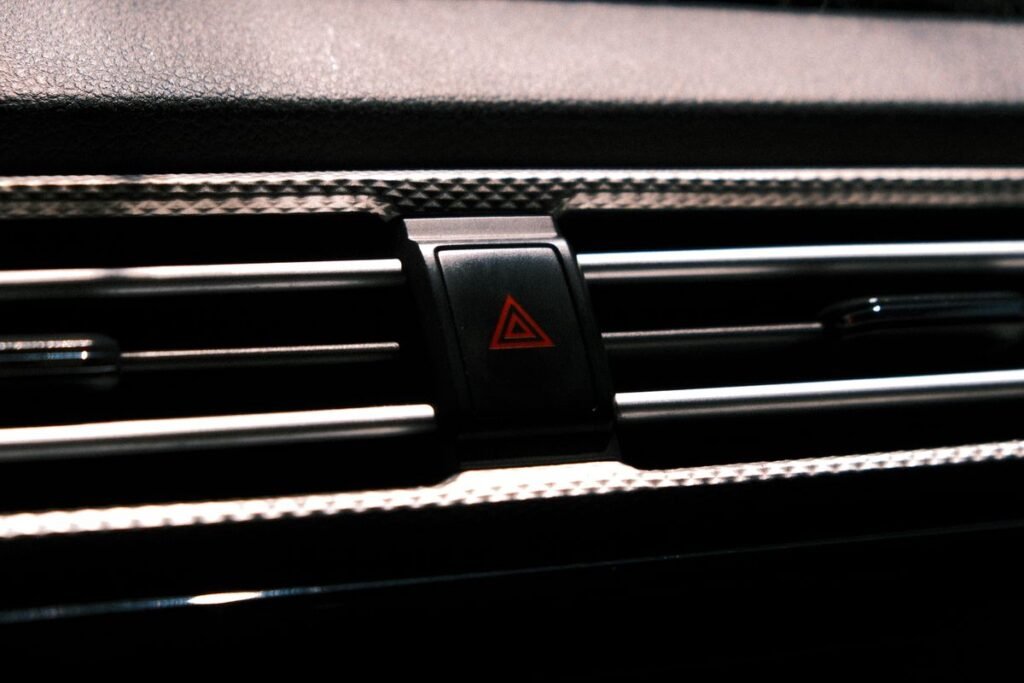
The triangle with exclamation point in a car is a general warning light, and it means the car has detected a problem that does not have a warning light of its own. It is often called the master warning light, and it almost always appears alongside another message, symbol, or system light that explains what is actually wrong. Think of it as the dashboard tapping you on the shoulder and pointing at something else, so your first job is to find the second clue.
What this warning light actually is
Car makers have dozens of specific warning lights, but not every fault deserves one. When a smaller issue shows up, many brands light the triangle with exclamation point and display a written message on the information screen at the same time. The symbol is usually yellow or amber, which in dashboard language means caution and attention soon, rather than the stop now urgency of a red light. You will find a broader overview in our complete guide to car dashboard symbols and their meanings, but this triangle deserves its own explanation because it confuses so many drivers.
Common reasons the triangle appears
The trigger depends heavily on the brand, yet the same handful of causes covers most cars:
- A service is due: on many cars the triangle is simply part of the scheduled maintenance reminder.
- Low washer fluid or a bulb out: small faults like these often have no dedicated light, so the triangle carries the message.
- Low tire pressure: some cars pair the triangle with the tire pressure warning.
- Stability or traction system fault: if the triangle appears with a car and squiggly lines symbol or an ESC message, the stability system needs attention. It is closely related to the system covered in our guide to the traction control light and its fixes.
- Driver assistance issues: a dirty or blocked radar or camera for cruise control and lane keeping can light the triangle.
- Low fuel or an open door, hood, or trunk: on some models these everyday warnings share the same symbol.
- A fault stored by another system: engine, transmission, or hybrid system problems can all bring the triangle up together with their own message.
How the meaning changes by brand
| Brand | What the triangle usually means |
|---|---|
| Toyota and Lexus | Master warning: check the message on the display; can signal anything from low washer fluid to a hybrid system fault |
| BMW and Mini | General vehicle check warning, often with a Check Control message explaining the fault |
| Volkswagen and Audi | Central warning light that appears with another specific warning or message |
| Honda and Acura | Often part of the vehicle stability assist warning, especially with a flashing behavior |
| Hyundai and Kia | Master warning for items such as low washer fluid, a bulb fault, or driver assistance system issues |
Because the meaning shifts between makers, your owner manual is the final word for your exact model. The pattern, though, is always the same: the triangle tells you to look for the message that comes with it.
What to do when it lights up
Start by reading the information display between the gauges, because the answer is usually written there in plain words. Then do a quick walk around check: tires that look low, lights that are out, doors or the fuel cap not closed properly. If the car drives normally, no other red lights are on, and the message is about something minor like washer fluid, you can normally continue your trip and fix the cause soon. If the triangle comes with a stability control message, drive gently, because the safety systems that help you in a skid may be off. Avoid hard acceleration and sharp steering on wet roads until it is checked.
When it is serious
Take the triangle seriously when it is red instead of amber, when it flashes, or when it arrives with company: an oil pressure light, a temperature warning, a brake warning, or a message about the hybrid or engine system. A red master warning means stop as soon as it is safe and do not keep driving on hope. Likewise, if the car feels different at the same time, with less power, strange noises, or warning chimes, have it scanned for fault codes promptly. A basic code scan at a parts store is often free, and a full diagnostic at a shop usually runs 50 to 150 dollars. Prices vary by car model and region. Guessing at parts without the message or the code is how small warnings turn into big repair bills.
How a mechanic tracks it down
If the cause is not obvious from the message, a technician reads the fault codes from all the car computers, not just the engine. The triangle itself rarely has a code of its own; the code lives in whichever system reported the problem. From there the fix is usually simple: top up a fluid, replace a bulb or a sensor, or update software. That is also why describing exactly what else you saw on the dash, and when the light appeared, helps the shop find it faster and keeps the diagnostic bill smaller.
Frequently asked questions
Can I keep driving with the triangle warning light on
Usually yes, if the light is amber, the car feels normal, and the matching message is about something minor. Read the message first, fix the cause as soon as you can, and stop driving if the light is red or other serious warnings join it.
Why does the triangle light come on and then go off again
Intermittent faults do this. A sensor may read out of range only in certain conditions, such as cold mornings or wet weather, and the warning clears when the reading returns to normal. The fault is still stored in the car memory, so a code scan can find it even with the light off.
Will the triangle light reset itself after I fix the problem
Often it will, once the car sees the fault is gone for a full drive cycle. Service reminders are the exception: those usually need to be reset through the dashboard menu after the service is done.
The triangle with exclamation point is less a diagnosis than a direction: look at the message, check the simple things, and respond to what the car is actually telling you. Treat it that way and this little symbol becomes helpful instead of worrying.