
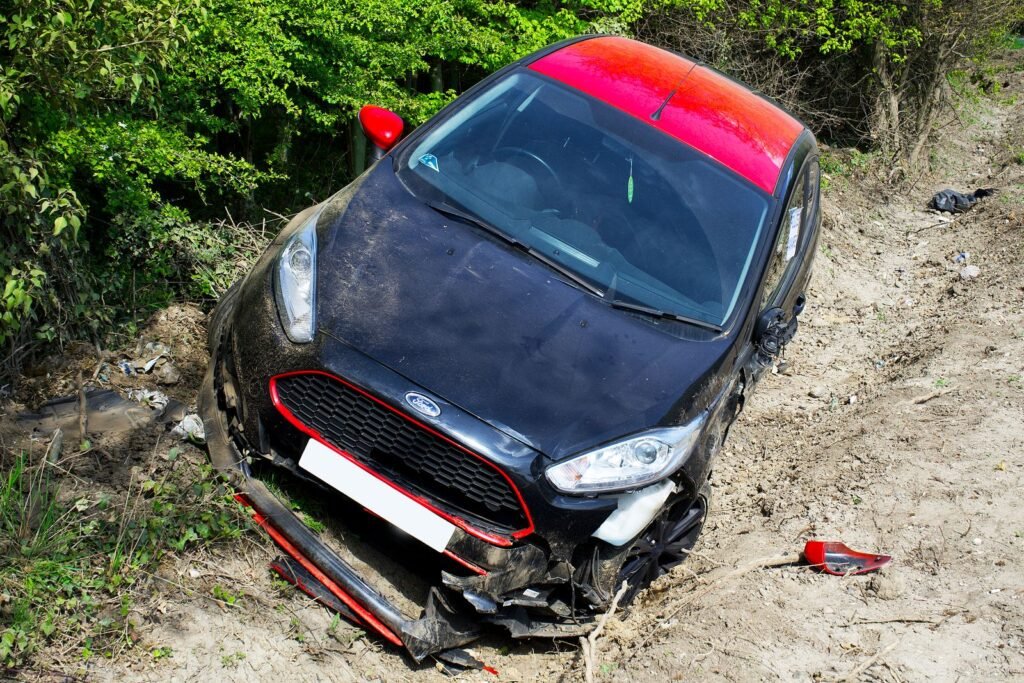
Totaled means your insurer has decided that repairing your car costs too much compared with what the car was worth before the damage. It is a financial decision, not a statement that the car is destroyed. A car can still start and still drive, and still be totaled, because fixing it no longer makes financial sense.
If your car has just been called totaled, do not sign anything yet. First understand the value the insurer put on your car, the repair estimate, and the options open to you. This guide explains what totaled means, how insurers decide, what happens when your car is totaled but still drivable, and what to do step by step after the decision.
What Totaled Means in Plain Language
When an insurer says a car is totaled, it means the car is a total loss in insurance language. The insurer has compared the cost to repair the damage with the actual cash value of the car before the damage, and decided that repair is not worth it. The insurer will usually pay you the value of the car instead of paying for the repair, in a total loss settlement.
The spelling totalled, with two l letters, means the same thing. It is the spelling used in the United Kingdom, while totaled, with one l, is the spelling used in the United States. Flood, fire, hail, theft recovery, and a hard collision can all lead to a total loss, and a car can also be totaled when parts are no longer available.
How Insurers Decide: Actual Cash Value Against Repair Cost
Insurers use two main methods, and which one applies depends on your state. Some states set a total loss threshold, a percentage of actual cash value. If the repair cost passes that percentage, the car must be declared a total loss. Other states use a total loss formula. Under that formula, the car is a total loss when the repair cost plus the salvage value reaches or exceeds the actual cash value. The Insurance Information Institute defines actual cash value as fair market value just before the loss, after depreciation.
There is no single universal percentage that applies everywhere, so do not accept one number as a fact for your state. State tables from ValuePenguin and Insurify show the range. Alabama and New York use 75 percent of actual cash value. Florida uses 80 percent. Oklahoma uses 60 percent. Iowa uses 50 percent. Texas uses the total loss formula, where repair cost plus salvage value is compared with actual cash value. Ask your insurer which method it used, and check your state rule with your state insurance department.
What Actual Cash Value Really Means
Actual cash value, often shortened to ACV, is what your car would have sold for in your local market just before the damage, in the condition it was in at that time. It is not the price you paid, it is not the amount you still owe on a loan, and it is not the cost of a brand new replacement, unless you bought separate replacement cost coverage. Depreciation, mileage, trim, optional equipment, condition, and local prices all move the number, according to the Insurance Information Institute.
Insurers usually work out actual cash value with a valuation report from a service such as CCC Intelligent Solutions or Mitchell, using recent sales of comparable cars in your area. You can check that number yourself with Kelley Blue Book and Edmunds, using your exact year, make, model, trim, mileage, and condition. Gather receipts for new tires or optional equipment the report missed. Your payout is usually actual cash value less your deductible, and less the salvage value if you keep the car. Ask your adjuster to show you each line in the settlement, including any tax and fees.
What Happens When Your Car Is Totaled but Still Drivable
A totaled car can still drive, and that surprises many owners. The term describes money, not motion. A car with a working engine can still be totaled if the repair cost is high enough, for example when airbags deployed, or when flood water reached the electronics. That is why the question what happens when your car is totaled but still drivable comes up so often, and why the answer starts with the title, not with the engine.
Once a total loss is declared, the insurer usually notifies your state motor vehicle agency, and the clean title is replaced with a salvage title. A car with a salvage title cannot be legally registered, insured for road use, or driven on public roads in most states until it is repaired, inspected, and retitled. ValuePenguin notes that it must be rebuilt and pass a state inspection before it can return to the road with a rebuilt title. Do not keep driving it on the old registration, because you risk fines and impoundment. Get a mechanic to check the frame, brakes, airbag system, and fluid leaks before you decide anything, and arrange a tow if the mechanic finds bent structure or leaking fuel.
Your Options After the Decision
You usually have three options. First, accept the payout and hand the car to the insurer. The insurer pays actual cash value less your deductible, takes the title, and usually sells the car at salvage auction. This suits you if you want a replacement fast, or if the damage is severe. Second, keep the car with a salvage title, which is called owner retained salvage. The insurer pays actual cash value less your deductible and less the salvage value, and you keep the car and the salvage title. Third, dispute the valuation if you believe the actual cash value is too low.
Keeping the car can make sense when the damage is mostly cosmetic, or when you can do some of the work yourself. It rarely makes sense when the repair needs frame straightening, a full airbag replacement, or a flood damaged wiring repair, because those jobs are costly. Kelley Blue Book guidance, reported by ValuePenguin and CarVertical, puts a salvage title car at 20 to 40 percent less in value than the same car with a clean title. Most insurers will offer liability coverage on a rebuilt title car, but many will not offer full collision and comprehensive coverage, so ask what coverage you can buy before you commit.
| Option | What you receive | What you give up | Best when |
|---|---|---|---|
| Accept payout, hand over car | Actual cash value less deductible | The car and the title | You want a fast clean replacement |
| Keep car with salvage title | Actual cash value less deductible and less salvage value | Clean title, easy resale, easy full coverage | Damage is light and repair is affordable |
| Dispute valuation first | Chance of a higher payout | Time, and you must prove value with evidence | Comps show your car is worth more |
Use the repair cost to test each option. Get a written estimate for the full repair, and compare it with the payout you would keep. If the repair is small, read our guide on bumper repair cost, and read our guide on dent repair cost before you price any panel work. For larger crash damage, read our guide on collision repair cost to compare body shop prices before you decide.
How to Dispute a Low Valuation Step by Step
If the offer looks low, do not accept it on the phone. Ask the adjuster for the full valuation report in writing, including every comparable car used and the deductions applied to your car. State insurance regulators, including the Washington Office of the Insurance Commissioner, recommend this first step. Check the report line by line for errors in year, trim, mileage, options, and condition, because a wrong trim or a missed option can move the value by a large amount.
Next, gather your own comparable sales. Look for cars of the same year, make, model, trim, and engine, with similar mileage, for sale by dealers and private sellers near you, on sites such as Cars.com, AutoTrader, and CarGurus. Save the price, date, mileage, and location for each one, and keep at least three strong matches. Add service records and photos of the car from before the accident. Then put your counteroffer in writing, with those documents attached. If direct negotiation fails, check your policy for the appraisal clause, which usually lets each side choose an independent appraiser, with a neutral umpire if they cannot agree. You usually pay your own appraiser and share the umpire cost, so ask for the fee in writing first.
What to Do After the Decision, in Order
First, remove your belongings and take photos of the damage, the odometer, and the interior, so you have a record. Second, get the valuation report, the repair estimate, and the settlement offer in writing, and do not sign a title transfer or a release until you agree with the numbers. Third, call your lender if you have a loan, and get the payoff amount in writing, so you know whether the settlement covers the loan.
Fourth, decide whether to accept, keep, or dispute, using the comparison in this guide and the repair estimate you gathered. Fifth, if you accept, sign the title over only after the payment method and date are confirmed in writing, and keep a copy of the signed title and the settlement letter. Sixth, if you keep the car, ask your state motor vehicle agency what form, fee, and inspection you need for a salvage title and then for a rebuilt title, and do not drive the car until the rebuilt title and registration are in hand. Seventh, update your insurance, and shop for a replacement only after you know the final payout and the loan payoff. Keep a file with the police report, the valuation report, the settlement letter, and the lender payoff letter.
Frequently asked questions
Can a totaled car still be driven?
A totaled car can still start and drive, because totaled is a financial decision about repair cost against value. In most states it cannot be legally driven on public roads once it has a salvage title until it is repaired, inspected, and retitled as rebuilt.
What does totaled mean for a car with only cosmetic damage?
It means the insurer decided the repair cost was too high compared with the actual cash value, even if the car still runs. Cosmetic damage can still total an older or low value car, so compare the full written repair estimate with the valuation before you decide to keep it.
Can I keep my car if the insurance company totals it?
Yes, in most cases you can keep it through owner retained salvage. The insurer pays actual cash value less your deductible and less the salvage value, and the car gets a salvage title. You must repair it, pass a state inspection, and get a rebuilt title before you can legally drive it again.
How do I dispute a totaled car valuation that looks too low?
Ask for the full valuation report in writing, check it for errors in trim, mileage, options, and condition, gather comparable sales near you, and send a written counteroffer with those comps and your service records. If negotiation fails, use the appraisal clause in your policy or file a complaint with your state insurance department.