
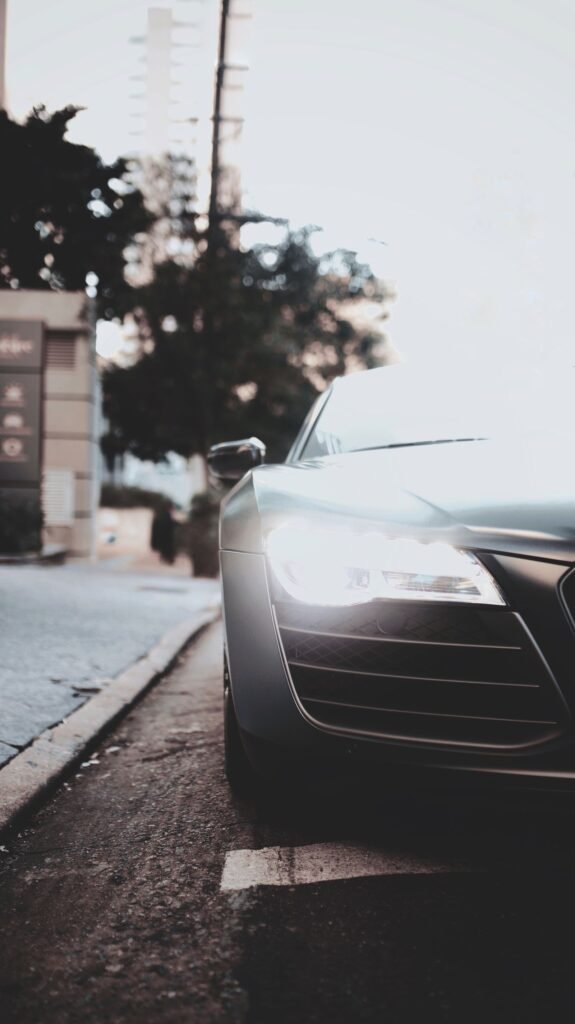
DRLs are low intensity front lights that switch on automatically when the engine is running. The short answer to what are daytime running lights is simple. They help other drivers, pedestrians and cyclists see your car in daylight, not light up the road in front of you. If you have asked whats a drl, think of it as a visibility light. A daytime running light makes your car stand out in bright sun, glare and shade, when a car with no lights on can blend into the road.
A drl is not a headlight, and drl headlights is a misleading phrase you will see online. The two systems look similar from the front, but they do different jobs. According to the National Highway Traffic Safety Administration, known as NHTSA, DRLs reduced opposite direction daytime fatal and non fatal crashes by 5 percent, and pedestrian and cyclist fatalities in single vehicle crashes by 12 percent.
What DRLs Are and How They Switch On
A daytime running light is a dedicated front light, a low beam headlight run at reduced power, or a separate LED strip near the headlight. On most modern cars it is an LED strip or a small lamp built into the headlight housing. On some older cars it is the high beam bulb or the low beam bulb run at lower power.
In normal use you do nothing at all. Start the engine, release the parking brake, and the DRLs come on. Switch on the low beam headlights and the DRLs usually dim or switch off, because the headlights take over. Switch the engine off and the DRLs go out. If your car lets you switch DRLs off in the settings menu, leave them on. The safety gain costs almost nothing on a modern LED system.
DRLs, Headlights and Fog Lights: How They Differ
The confusion is understandable, because all three sit at the front of the car. The difference is purpose. DRLs help other people see your car. Headlights help you see the road. Fog lights help you see the road surface in fog, heavy rain and snow, when normal headlights reflect back at you. Use the wrong light and you either cannot see well enough, or you dazzle other drivers.
Headlights also switch on the tail lights, the side marker lights and the license plate light. DRLs do none of that on most cars. That is the dangerous gap, because a driver can drive at dusk with dark tail lights. Learn the fog light symbol too, and use fog lights only in poor visibility, never as a substitute for headlights at night.
| Light | What it does | When to use it | What it does not do |
|---|---|---|---|
| Daytime running light | Makes your car visible to others in daylight | Automatic, whenever the engine runs in daylight | Does not light the road or switch on tail lights |
| Headlight, low beam | Lights the road ahead and makes your car visible | At night, at dusk, in rain, fog and low visibility | Does not cut through thick fog on its own |
| Fog light | Casts a low, wide beam under fog and heavy rain | Only in fog, heavy rain, snow or dust | Does not replace headlights and must be switched off in clear weather |
Why Cars Have DRLs and What They Do for Safety
Cars have DRLs because a car is hardest to spot when it is coming toward you in daylight. Bright sun, glare off wet roads, shade and pale road surfaces all reduce contrast. A lit front end gives the other driver an earlier cue about your position, your speed and whether you are turning. That cue matters most at junctions and on two lane roads, where a driver has only a second to judge a gap.
NHTSA also found a 23 percent reduction in opposite direction fatal crashes involving a passenger vehicle and a motorcycle. Treat DRLs as one safety layer, not a full solution. They do not replace careful observation or proper headlights at night. If your car does not have DRLs, switch your low beam headlights on in daylight on busy roads and in glare.
Are DRLs Required by Law
In the United States, DRLs are permitted but not required by federal law. Federal Motor Vehicle Safety Standard 108 allows manufacturers to fit them, and NHTSA first allowed them as optional equipment in 1993, but no federal rule and no state rule requires a driver to have them. General Motors asked NHTSA in 2001 to make DRLs mandatory, and NHTSA denied that request in 2009.
The law is different in other countries. Canada has required DRLs on all new vehicles made or imported since 1 January 1990, under Canada Motor Vehicle Safety Standard 108. The European Union has required DRLs on all new cars and small vans type approved since 7 February 2011, under Directive 2008/89/EC, with trucks and buses following in August 2012, according to the European Commission road safety pages. If you fit an aftermarket kit, use one made for your car and wired to dim or switch off when the headlights come on.
How to Tell If Your DRLs Are On
Most cars give you no dashboard light for DRLs, so check them from outside the car. Park facing a shop window or a light coloured wall in daylight. Start the engine, release the parking brake, and leave the headlight switch in Auto or Off. Look at the reflection. You should see two bright front lights, with the tail lights dark. That is the normal DRL pattern.
Some cars show a small green DRL symbol or a Check DRL System message when there is a fault. Read our guide on car dashboard symbols and meanings if any light is unfamiliar. If the DRLs stay off with the engine running and the parking brake released, check that the switch is not set to parking lights only, and that nothing is covering the light sensor on the dashboard. If one side is bright and the other is dark, that side has a fault, not a setting problem.
Common DRL Problems and Warning Signs
One DRL out and the other working usually means a burnt out bulb, a failed LED unit or a loose or corroded connector on that side. Act on it the same week, because a single DRL can confuse other drivers about your size and distance. Both DRLs out at the same time usually points to a shared part of the circuit, so check the fuse and the relay first.
Flickering, dimming or a yellow tint are warning signs too. Flickering often means a poor connection, a voltage problem or a failing LED driver, the small circuit board that controls power to the LEDs. A yellow or dim LED strip is a known module fault on some cars, so do not ignore a colour change. A Check DRL System message, a DRL warning light or a DRL that stays on after you switch the engine off all mean the control module, the sensor or the wiring needs testing. Book a diagnostic check, because a blown fuse often signals a short circuit, and a new fuse will blow again until the short is fixed.
What to Do When a DRL Stops Working
Work in order, from the simple checks to the parts that need a mechanic. First, start the engine, release the parking brake fully and set the headlight switch to Auto or Off. On many cars the DRLs will not come on while the parking brake is engaged. Second, look at the bulb or LED unit. If one side is dark, check the connector for corrosion or a loose fit. Read our guide on how to change a front light before you touch any bulb, and never touch a halogen bulb with bare fingers.
Third, check the fuse. Your owner manual shows the fuse box location and the exact fuse for the DRL circuit. Pull it with a fuse puller and look for a broken metal strip inside. Replace a blown fuse only with a new fuse of the exact same amperage. If the new fuse blows at once, stop and book a mechanic, because there is a short in the wiring. Fourth, if the fuse is sound, the relay or the control module may be at fault. A mechanic can swap a suspect relay with a known good relay of the same type, and can scan the body control module for fault codes.
What a DRL Repair Costs and When to Book a Mechanic
Cost depends on whether your car uses a replaceable bulb or a sealed LED assembly. According to EngineerFix, a standard halogen DRL bulb costs about 10 dollars to 30 dollars for a pair, and a simple professional bulb swap often brings the total bill to under 150 dollars. A separate LED driver or module costs about 40 dollars to 150 dollars as a part, while a full LED module can cost 250 dollars to over 400 dollars. The expensive case is a sealed unit, where the only fix is a new headlight assembly, with aftermarket assemblies from about 700 dollars to 900 dollars, and original equipment assemblies at 1500 dollars to 2300 dollars for one side, before labour.
Book a mechanic at once if both DRLs fail together, if a new fuse blows immediately, if you see melted plastic, a burning smell or damaged wiring, or if a Check DRL System warning stays on. Book a mechanic soon if one DRL is out and you cannot reach the bulb safely, or if the fault is in a sealed LED assembly. You can drive during the day with a failed DRL, because DRLs are not required by law in the United States, but switch your low beam headlights on in daylight until it is fixed. Never drive at night on DRLs alone, because your tail lights will be dark.
Frequently asked questions
What are daytime running lights?
Daytime running lights are low intensity front lights that switch on automatically when the engine is running. They make your car easier to see in daylight. They do not light the road ahead, and they do not switch on your tail lights, so they are not a substitute for headlights at night.
Are DRLs the same as headlights?
No. DRLs are dimmer, switch on automatically in daylight, and only light the front of the car. Headlights are brighter, light the road ahead, and switch on the tail lights and license plate light. Always switch on your headlights at night, at dusk, in rain and in fog, even if your DRLs are already on.
Can I drive with a DRL not working?
Yes, you can drive in daylight in the United States, because DRLs are not required by federal law there, but fix it soon. Switch your low beam headlights on in daylight until the repair is done. Check the parking brake, the fuse and the bulb first, and book a mechanic if both sides fail or a new fuse blows at once.
Why does my car have a Check DRL System warning?
That warning usually means a burnt out bulb or LED unit, a blown fuse, a faulty relay, a corroded connector or a failed control module. Check one side against the other, then check the fuse. If the bulb and fuse are sound, book a diagnostic scan.