
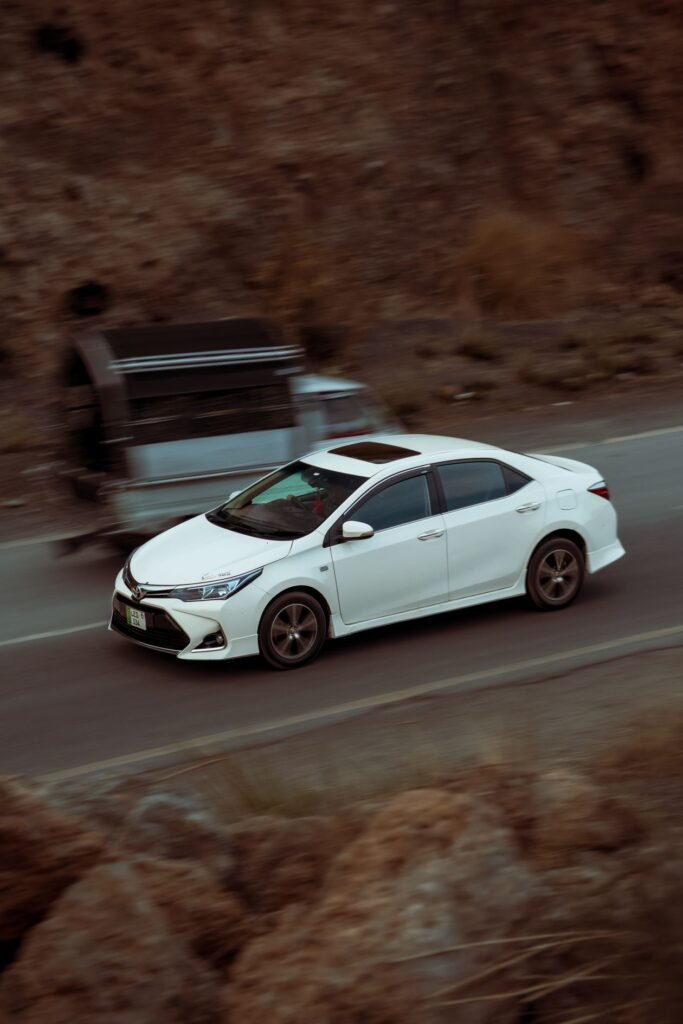
The Toyota Corolla is the safe answer to a simple question: what car should I buy if I just want it to work? Toyota has sold the Corolla since 1966, through twelve generations, and it has spent much of that life as the best selling car name in the world. Taxi drivers, driving schools, first time buyers and families on five continents all reach the same conclusion. This is a car you buy with your head.
So who does it suit? Almost anyone who does not need a big SUV. Commuters get low fuel bills. New drivers get a car that is easy to place on the road and cheap to insure in most markets. Families get five seats and a sensible boot. Used buyers get the deepest pool of second hand stock of any compact car, which means more choice and softer prices.
People search for the Corolla more than almost any other car because it is always on the shortlist. This page covers the generations from 2000 onward, the engines worth having, the problems owners actually report, the years to buy, and what the car costs to run.
Toyota Corolla at a glance
The quick facts first. Engine codes and trim names change by country, but the basic shape of the car has stayed the same for decades.
| Item | Details |
|---|---|
| Generation count and years sold | 12 generations, on sale since 1966 and still in production today |
| Body styles | Saloon (called the sedan in the US), hatchback and estate (sold as the Touring Sports in Europe). Older cars also came as a coupe and a wagon. |
| Main engines | 1.8 litre and 2.0 litre petrol, 1.8 litre and 2.0 litre hybrid. Some markets also get a 1.2 litre turbo, a 1.5 litre and a 1.6 litre petrol. |
| Gearboxes | 6 speed manual, CVT automatic and the hybrid eCVT. Older cars used a 4 speed automatic. |
| Drive | Front wheel drive. All wheel drive is offered on some hybrid versions in some markets. |
| Seats | 5 |
| Boot space range | About 371 litres in the current saloon, up to 596 litres in the Touring Sports estate with the seats up |
Generations explained
Four generations cover every Corolla built from 2000 onward. Note that US model years run ahead of the calendar, so a car sold as a 2020 model in America arrived during 2019.
| Generation | Years | What changed |
|---|---|---|
| Ninth generation, E120 and E130 | 2000 to 2008 | Sharper styling, a bigger cabin, and the 1.8 litre engine became the standard choice in the US. |
| Tenth generation, E140 and E150 | 2006 to 2013 | A wider body on a new platform, with the 1.8 litre 2ZR FE engine taking over as the main engine. The hatchback became the Auris in Europe. |
| Eleventh generation, E170 and E180 | 2013 to 2019 | Bolder looks, more rear legroom, and a CVT gearbox replaced most automatics. A hybrid version was sold in some markets. |
| Twelfth generation, E210 | 2018 to present | Built on the TNGA platform. The hatchback returned to the US, a hybrid joined the US range for the first time, and the hot GR Corolla arrived in 2022. |
The eleventh generation car, sold from 2013 to 2019 and as the 2014 to 2019 model years in the US, is the used buy most people will meet first. It looks sharper than the car before it and the longer wheelbase gave rear passengers noticeably more legroom. Most cars use the 1.8 litre 2ZR FE petrol engine, an engine Toyota had already built in huge numbers, paired with a CVT gearbox. A 4 speed automatic and a manual were still offered on some versions early on. It is not exciting, but it is the point where the Corolla started to feel like a modern car rather than a basic one.
The twelfth generation car arrived in 2018 and is still the current Corolla. It sits on the TNGA GA C platform, which made it stiffer, lower and better to drive than any Corolla before it. Buyers get a saloon, a hatchback and, in Europe, the Touring Sports estate. The big news was hybrid power in every body style and, for the US, the first hybrid Corolla ever. Sportier SE versions use a stronger 2.0 litre petrol engine, and the GR Corolla turned the hatchback into a genuine performance car. Safety kit took a step forward as well, with Toyota Safety Sense driver aids standard in most markets.
Generations in detail
- Toyota Corolla 2019 to Present: Specs, Problems and Costs
- Toyota Corolla 2013 to 2019: Specs, Problems and Costs
Engines and specs that matter
Four engines matter in the recent cars. The entry petrol is a 1.8 litre four cylinder, sold in the E210 saloon in the US with about 139 hp and in other markets with output in the low 130s to 140 hp depending on tune. It is paired with a CVT gearbox. This engine is calm, simple and easy to live with. It does not feel quick, but it pulls the car along without stress and it has the longest track record of any engine here, because versions of it powered the previous generation too.
The 2.0 litre Dynamic Force petrol is the one for drivers who cover long distances or just want more response. In the US it makes 169 hp and comes with either a 6 speed manual or a Direct Shift CVT that uses a physical first gear to pull away, which makes town driving feel more natural than a plain CVT. It is the keen driver pick in the petrol range.
Most European buyers, and a growing share of US buyers, go hybrid. The 1.8 litre hybrid pairs a petrol engine with an electric motor and an eCVT gearbox. Early cars made about 122 hp in total, and output has risen since, to about 138 hp in the newest European cars. Toyota quotes fuel use of 4.5 litres per 100 km for the US hybrid saloon, which is 52 mpg, and owners report figures close to that. The 2.0 litre hybrid, sold in Europe in the hatchback and estate, is much stronger, around 180 hp in earlier cars and close to 193 hp in the newest ones.
Petrol cars use more fuel, as expected. Official figures for the 1.8 litre CVT sit in the low to mid 30s mpg in the US, and gentle drivers do better on a run. The hybrid is the clear winner in town, where it can run on electric power alone for short stretches, while the 2.0 litre petrol closes the gap on the highway.
Which engine suits you? Do mostly short trips and town driving and the 1.8 hybrid is the obvious pick. Cover long highway miles and want a lower purchase price, take the 2.0 petrol. Want the cheapest and simplest used buy, the 1.8 petrol is easy to service anywhere. One warning for used buyers: if a car idles roughly, hesitates or has lost its smoothness, start with the cheap stuff before fearing the worst, because worn plugs produce exactly those symptoms and the signs of bad spark plugs are easy to check in minutes.
Common problems by generation
No car is fault free, and the Corolla is no exception. What it offers instead is a short, predictable list of problems. These are the issues that come up again and again in owner reports and buying guides for the recent generations.
Eleventh generation, 2013 to 2019
The gearbox is the first thing to check. Some owners of 2014 to 2017 cars report CVT trouble, and you can feel it on a test drive: a shudder as the car pulls away, hesitation when you press the throttle, or a faint whine that rises with speed. A healthy CVT is smooth and quiet. Fluid condition matters a lot here, and since many owners never change it, knowing how often to change transmission fluid is worth five minutes before you buy any automatic Corolla.
The rest of the list is minor but annoying. Early cars are known for climate control quirks, where the air conditioning blows warm on one side or the fan settings stop responding. Rattling dashboards and loose trim come up often in owner reports, so listen for buzzes over rough roads. Some owners of early cars report the radio or touchscreen failing outright. Paint also deserves a close look, because some cars suffer peeling clear coat, worst on white cars.
Twelfth generation, 2019 to present
This generation has a strong record so far, and most complaints are about electronics rather than mechanics. Owners report infotainment screens that freeze, restart or lose the phone connection, which a dealer software update often sorts. Squeaks from the suspension over speed bumps are another regular report, usually traced to bushes rather than anything serious. Some owners report a small jolt at low speed from the Direct Shift CVT as its launch gear hands over. It is a trait of the design, but feel for it on a test drive.
Two checks matter on the paperwork. Some cars from the first years of production were recalled over a fuel pump fault that could make the engine stall, so confirm the recall work was done. And some owners of newer cars report the small 12 volt battery going flat when the car sits unused, which shows up as a dead car on a Monday morning rather than any fault while driving.
Older cars, a short warning
If your budget points at a tenth generation car, be picky about the year. The 2009 and 2010 cars are known for using too much engine oil and for water pump failures. Oil use shows up as a level that keeps dropping between services, long before any smoke appears. A failing water pump weeps coolant from the front of the engine and can let the temperature climb, which is the one fault that can kill an otherwise tough engine. Later cars in that generation are much safer buys.
Which Toyota Corolla should you buy
On a tight budget, look at a 2016 to 2019 eleventh generation car. By then the early CVT complaints had faded, equipment is decent, and prices are fair because supply is huge. If the budget is smaller still, a 2011 to 2013 car with full service history is a sound runabout, as long as you avoid the 2009 and 2010 years.
In the middle ground, a 2020 to 2022 hybrid from the current generation is the sweet spot. You get the modern safety kit, the best fuel economy the Corolla has ever offered, and a car that still feels new. Drivers who enjoy the drive itself should look at the 2.0 litre petrol SE instead.
Years to be careful with are 2009 and 2010 for oil consumption and water pumps, and 2014 as the first year of a new model with a new gearbox, where early build niggles are most likely. None of these years is an automatic no. A cared for 2014 with records beats a neglected 2018 every time.
Whatever the year, run through this checklist before you hand over money:
- Ask for service records and check oil changes were done on time, every time.
- Check the engine oil level yourself and ask the seller directly if the car uses oil between services.
- Look for proof the CVT fluid has been changed on automatic cars.
- Start the engine from cold and listen for rattles in the first few seconds.
- Test drive for at least fifteen minutes and feel for CVT shudder, hesitation or whining.
- Run the air conditioning on full cold and check for smells and weak airflow.
- On a hybrid, ask for a battery health check printout from a Toyota dealer.
- Check every recall is closed by running the VIN through the maker recall checker for your country.
- Look at all four tyres for uneven wear, which points at alignment or suspension wear.
Running and repair costs
Cheap running costs are the main reason people buy this car. Parts are sold everywhere, every independent garage knows the engines, and jobs that scare owners of German cars are routine here. Brakes are a good example of how predictable the bills are, and our full breakdown of brake pad replacement cost shows what the job involves. Typical US prices for the common jobs look like this:
| Job | Typical cost in US dollars |
|---|---|
| Front brake pads, fitted | 150 to 300 |
| 12 volt battery, fitted | 150 to 250 |
| Four tyres, fitted | 400 to 800 |
| Major service at an independent garage | 300 to 600 |
| CVT fluid change | 200 to 350 |
Parts availability is as good as it gets. Wear parts are stocked by every parts store, pattern parts are cheap because volumes are enormous, and hybrid parts are widely supported. Insurance is usually kind too, because the car is common and repair costs are low, though young drivers should still shop around since ratings vary by state and trim.
Questions and answers
Is the Toyota Corolla reliable?
Yes, and that is its whole reputation. The eleventh and twelfth generation cars are the strongest of the modern cars, with short problem lists and engines Toyota built in the millions. The weakest years of the modern era are 2009 and 2010. Any Corolla still needs servicing on time, and a neglected one can be as much trouble as any other car.
Which is the best Corolla year to buy used?
For value, a 2018 or 2019 car from the eleventh generation gives you the most for your money, because the design was fully sorted by then and prices have dropped. If you can stretch further, a 2020 or newer hybrid from the current generation is the better long term buy, with stronger safety kit and the lowest fuel bills.
How much fuel does a Corolla use in the real world?
Expect the low to mid 30s mpg in US terms from the petrol cars in mixed driving, and better on a steady highway run. The hybrid is the standout: Toyota quotes 52 mpg for the US saloon, and owners report real figures in the high 40s to low 50s without trying hard.
How long does the Corolla hybrid battery last?
Longer than most buyers fear. Toyota hybrid packs commonly pass 150,000 miles, and the system has been in production cars for decades, so independent specialists can test and repair individual parts rather than replacing the whole pack. Warranty terms for the battery differ by country and year, so check the book pack of the exact car you are buying.