
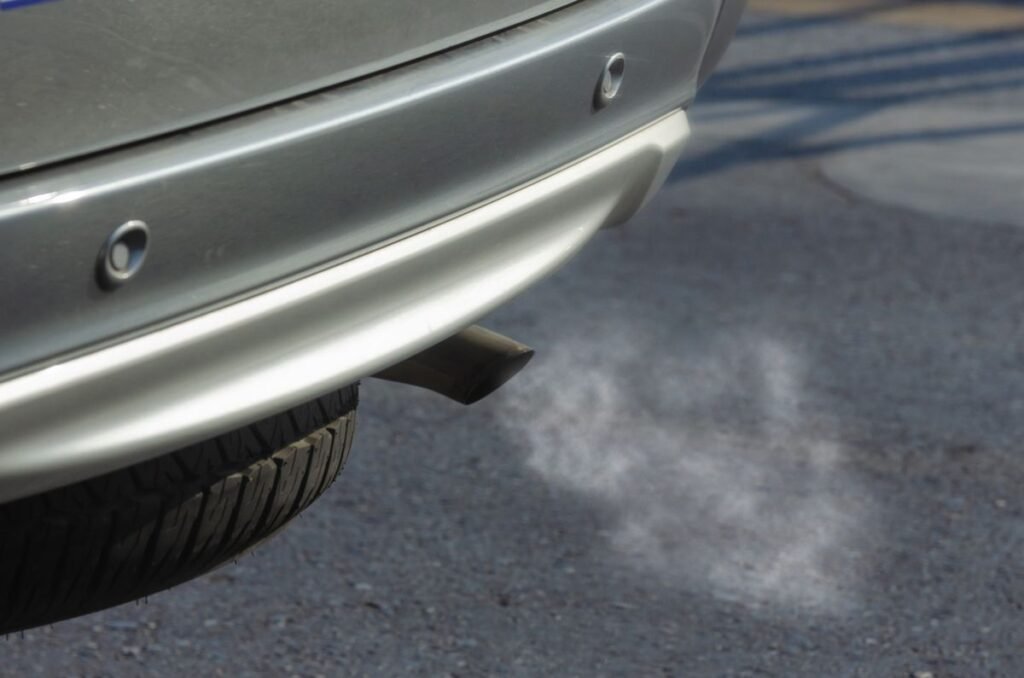
Why does my car smell like rotten eggs? The most common cause is hydrogen sulfide gas escaping because the catalytic converter is no longer converting sulfur compounds properly, and the smell usually comes from the exhaust area or drifts into the cabin at idle. Other common causes include a failing battery that is overcharging and giving off gas, a rich running engine that overwhelms the converter, an exhaust leak that draws fumes into the cabin, and a single tank of high sulfur or stale fuel. The short answer: if the smell appears once after refuelling and fades, note it and watch for a repeat. If it persists, comes with a check engine light, poor acceleration, or a flashing warning light, book a diagnosis promptly, because a failing converter and a misfire can damage each other quickly.
Hydrogen sulfide is the gas that gives rotten eggs their smell. A healthy catalytic converter uses precious metals inside a honeycomb core to convert harmful exhaust gases into less harmful compounds, and part of that process turns hydrogen sulfide into odourless sulfur dioxide. When the converter is worn, clogged, or poisoned by oil, coolant, or excess fuel, that conversion fails and the gas passes straight through the tailpipe. Your action: do not mask the smell with air freshener and keep driving, because the smell is a symptom of an emissions fault that can also affect performance and fuel economy.
Check the pattern first
Start by noting when the smell appears. A smell only after refuelling that fades over one tank points to fuel quality. A smell that appears when accelerating hard, climbing a hill, or sitting in traffic points to a converter struggling under load or an engine running rich. A smell strongest near the front of the car, especially with the bonnet open, points to the battery or charging system. A smell inside the cabin with the heater or air conditioning on points to an exhaust leak or fumes entering through the ventilation system. Your action: write down the pattern, plus any warning lights and any change in power or fuel use, before you call a shop, because that pattern separates a fuel issue from a converter issue in minutes.
Check the battery area safely, without touching terminals with bare hands if you see swelling, heat, or hissing. A battery that is hot, swollen, or giving off a strong smell near the battery itself needs professional attention at once, because overcharging can create hydrogen sulfide gas at the battery. Your action: if the battery looks swollen, smells strongly, or feels hot, do not jump start the car and do not keep driving, and ask a shop or roadside service to test the charging system and battery together.
Catalytic converter failure: the main cause
A failing converter usually brings more than smell alone. Watch for sluggish acceleration, reduced fuel economy, a steady check engine light, and fault codes for catalyst efficiency, commonly P0420 or P0430. A converter can fail from age, from oil or coolant contamination, or from a long running misfire that dumps raw fuel into the exhaust and overheats the core. Replacement commonly costs 900 to 2500 dollars, with some models higher, based on current cost guides checked during this run. That price reflects the precious metals inside the part and the labour to fit it, and it varies widely by model and by whether the converter is part of a larger exhaust assembly. Your action: ask the shop to find and fix the upstream cause before fitting a new converter, because a new converter fitted over an unresolved misfire, oil leak, or rich running fault can fail again far sooner than it should.
Do not buy a converter cleaner as a guaranteed fix. A cleaner may help a mildly clogged unit for a short time, but it cannot repair a melted core, a broken substrate, or a converter that has lost its catalyst coating. Your action: treat a cleaner as a low cost experiment only if a scan shows no misfire and no severe efficiency fault, and book a proper diagnosis if the smell returns after one tank of fuel.
Other causes worth checking
A faulty oxygen sensor can make the engine run rich, which overloads the converter with unburned fuel and creates the sulfur smell. Oxygen sensor replacement commonly costs 200 to 400 dollars per sensor. An exhaust leak upstream of the converter can let fumes escape before conversion and draw them into the cabin, with repair commonly costing 100 to 600 dollars depending on the part. A misfire from worn spark plugs or coils can cost 150 to 600 dollars to fix on its own, but it becomes far more expensive if it damages the converter, which is why a flashing check engine light needs immediate attention. For other cabin smells and how to tell them apart, read our guide on why a car smells like gas and compare its fuel leak warnings with your symptoms before driving further.
Fuel quality is the simplest cause and the easiest to test. Fill up at a different reputable station, preferably with Top Tier detergent fuel, and drive through most of that tank on normal trips, including at least one longer drive that fully warms the converter. Your action: if the smell fades and does not return, fuel was the likely cause. If it returns on fresh fuel from a different station, book an exhaust and emissions diagnosis. For general smell removal after the mechanical cause is fixed, read our guide on how to remove bad smells from a car and follow its cleaning steps only after the fault itself is repaired, because cleaning a cabin does not fix an exhaust fault.
When to stop driving and get help
Stop driving and call for help if the check engine light flashes, the engine shakes or misfires badly, power drops sharply, or you feel dizzy or unwell inside the car. A flashing light means a misfire that can overheat the converter and damage the engine, and fumes inside the cabin are a health risk that should not be ignored. Your action: pull over safely, open windows for fresh air if you can do so safely, switch off the engine, and call roadside assistance rather than driving to a distant shop. If the smell is mild, the car runs normally, and no warning light is on, you can drive gently to a nearby shop for a scan, but do not put the visit off for weeks.
Ask the shop for a scan result, a charging system test if the battery is suspect, and an exhaust inspection before approving a converter replacement. A good diagnosis checks for misfires, oxygen sensor readings, fuel trim, and exhaust leaks, not just the catalyst code alone. Your action: keep the scan report with the invoice, and check whether emissions warranty cover applies, because federal emissions cover in the United States can apply for up to 8 years or 80,000 miles on some components, depending on the part and the model.
Frequently asked questions
Is a rotten egg smell dangerous
Hydrogen sulfide in small amounts outside the car is mainly a warning sign, but fumes inside the cabin should be treated seriously, and a failing converter or misfire can cause engine damage if ignored. Your action: ventilate the cabin, avoid long drives with the smell inside the car, and book a diagnosis promptly, especially if you feel unwell, the engine runs rough, or a warning light is on.
Will the smell go away if I change fuel
It can, if the cause was a single tank of high sulfur or stale fuel. Your action: run that tank low, refill with fresh fuel from a reputable station, take a longer drive to warm the converter fully, and book a scan if the smell returns on the fresh tank, because a repeat smell points to a mechanical cause.
Can I pass an emissions test with this smell
Usually not, if the converter is failing or a catalyst efficiency code is stored. Your action: get the scan and repair done before the test, and ask the shop to confirm that readiness monitors are set after the repair, so you do not fail the test on a technicality after paying for the fix.
A rotten egg smell is rarely just an odour problem. Note the pattern, rule out fuel and battery causes first, get a scan before approving a converter replacement, and fix the upstream cause so a new converter lasts. Acting early keeps a mid range repair from becoming a converter plus engine bill.
Pingback: How Do You Tell If Your Catalytic Converter Is Bad? Signs, Tests and Costs