
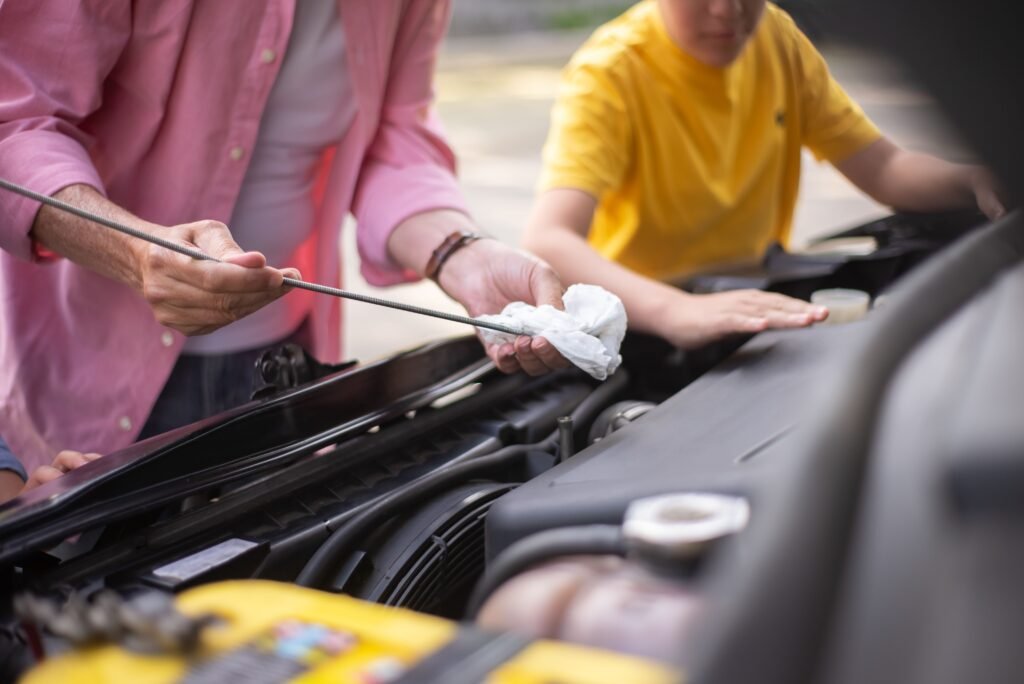
How to service your car at home, safely, is a question every beginner should ask before touching a tool. Your direct answer is this: you can safely do basic checks and simple jobs at home, such as pressures, fluid levels, lights, wipers, and visual inspections, but a home service does not replace a garage service, and brakes, steering, suspension, and electrical work belong to a qualified mechanic unless you have proper training, tools, and a safe way to do the job. This guide gives you safe DIY basics, a clear boundary for what to leave alone, and a step by step home check you can repeat with confidence.
Safety first: the rules that come before any job
Before you learn how to fix a car problem, learn when to stop. These rules protect you, and they apply to every job in this article. Your action is to read them, follow them, and stop if any rule cannot be met.
- Work on a flat, firm surface, with the car parked, the handbrake on, and the engine off unless your manual says otherwise for a specific check. Action: if the surface is soft, sloped, or busy with traffic, do not start the job.
- Never work under a car supported only by a jack. Action: use proper stands rated for the car, on a firm surface, and only if you are trained to do so. If you are not trained, do not go under the car at all.
- Let a hot engine, exhaust, and cooling system cool before you touch them. Action: never open a hot cooling system, and never touch a hot exhaust, because burns happen fast and badly.
- Keep hands, clothing, and tools away from moving belts and fans. Action: if the engine must run for a check, keep clear, and stop at once if anything feels unsafe.
- Use the correct specification for oil, coolant, and other fluids. Action: check your manual, not a generic video, because the wrong fluid can damage the car.
- If a warning light is red, a brake feels different, steering feels different, or you smell fuel, stop and get professional help. Action: do not use a DIY video to talk yourself past a safety symptom.
If you follow those rules, home basics are useful and low risk. If you break them to save time, a simple job can become a dangerous one.
The basics of cars every beginner should understand first
The basics of cars are simpler than they look, once you know the five systems to check. Your engine makes power. Your cooling system keeps temperatures safe. Your brakes stop the car. Your tyres connect the car to the road. Your electrical system starts the car and powers lights and safety systems. Most home checks touch one of those five systems, and most serious faults show up in one of them first. Your action is to learn where, on your own car, to find the oil dipstick or level check, the coolant reservoir, the washer fluid reservoir, the tyre pressure sticker, and the fuse and battery locations, using your manual. Do that learning once, with the car parked and cool, and every later check becomes faster. Do not guess at a reservoir or cap. A wrong cap opened on a hot car, or a wrong fluid added, can cause damage that a minute with the manual would have prevented.
Safe DIY basics: what you can do at home
These are the beginner jobs this article recommends. Each one ends in a decision, so you know what to do next if something looks wrong.
- Tyre pressures and condition. Steps: check pressures when tyres are cold, against the sticker on the driver door or fuel flap, inflate to the correct pressure, and look for cuts, bulges, or uneven wear. Decision: if a tyre is damaged, worn, or keeps losing pressure, book a tyre check before a long drive.
- Engine oil level check, and top up only if needed and only with the correct grade. Steps: park on a level surface, follow your manual for hot or cold checking, wipe the dipstick, reinsert it, and read the level. Decision: if oil is low, top up a small amount with the correct grade, recheck, and book a diagnosis if oil keeps dropping.
- Coolant level check, when cool. Steps: look at the reservoir level against the minimum and maximum marks, without opening a hot system. Decision: if coolant is low, top up only with the correct specification when cool, and book a diagnosis if it keeps dropping, because that points to a leak.
- Washer fluid top up, lights check, and wiper check. Steps: fill washer fluid, check all lights with a helper or a reflection, and check wipers for streaking or damage. Decision: replace a simple bulb or wiper only if your manual shows a safe method for your car, or book it if access is awkward or you are unsure.
- Battery visual check, without touching terminals if you are unsure. Steps: look for corrosion, loose connections, or a swollen case, from a safe distance and with the engine off. Decision: if the battery is swollen, leaking, or smells strong, do not touch it and get professional help. If terminals are corroded and you are not confident, book a battery check rather than cleaning them by guesswork.
- Cabin filter change, where your manual shows easy access. Steps: follow your manual exactly, note the airflow direction if shown, and refit all covers. Decision: if access requires removing trim you are not confident about, stop and book it. A broken clip is a small cost, but a forced trim panel can become a larger repair.
- Visual inspection walk around. Steps: look under the car for fresh leaks, look at tyres, lights, and body damage, and listen for new noises on start up. Decision: note anything new, with date and mileage, and book a diagnosis if it affects safety or keeps happening.
Those jobs are the core of a safe home service. They do not replace a garage service, but they keep you informed between services, and they help you describe a problem clearly to a mechanic.
How to service car at home: a repeatable ten minute routine
Use this routine monthly, and before a long trip. It is the home version of the preventative checklist, written for a beginner.
- Park flat, handbrake on, engine off and cool. Action: gather your manual, a tyre pressure gauge, and a clean cloth, before you start.
- Walk around the car. Action: note damage, leaks, tyre condition, and lights that are out.
- Check tyre pressures and tread. Action: inflate to the correct pressure, and book a tyre check if anything is damaged or worn.
- Check oil, coolant, and washer fluid levels. Action: top up only with the correct specification, and book a diagnosis if a level keeps falling.
- Check lights, wipers, and horn. Action: book a simple fix if you are unsure, rather than forcing a fitting.
- Start the car and listen. Action: note any warning light, new noise, or change in starting or braking, and book a diagnosis if anything is new or worrying.
- Write one line in your car note. Action: record date, mileage, pressures, levels, and anything booked.
That routine is a service check, not a full service. The full service, with inspection, filter changes, and safety checks at the manual interval, still belongs in a garage, with a record for warranty and resale.
Do it yourself versus leave to a mechanic: the clear boundary
This boundary is the most important section in this article. It is written to keep you safe, not to limit your confidence. If a job is in the leave to a mechanic column, do not attempt it because a video made it look easy. Videos rarely show the training, tools, torque settings, and safety checks behind a job.
| System | Safe DIY basics | Leave to a mechanic |
|---|---|---|
| Brakes | Notice noise, feel, or pedal change, and book a check | Pad, disc, caliper, brake fluid, or brake line work, unless you are trained and equipped |
| Steering | Notice pull, vibration, or new noise, and book a check | Steering rack, joint, alignment, or power steering repair |
| Suspension | Notice bounce, noise over bumps, or uneven tyre wear, and book a check | Spring, damper, bush, or suspension arm replacement |
| Electrical | Check lights, fuses only if your manual shows a safe method, and battery visual check | Wiring, airbag, hybrid or electric high voltage, and complex diagnosis work |
| Engine and transmission | Level checks, and simple filter changes only where your manual shows easy access | Internal engine work, timing, transmission service, and fault diagnosis beyond a level check |
| Cooling | Level check when cool, and leak spotting | Pressure testing, radiator, water pump, or thermostat replacement |
| Tyres | Pressure, tread, and visual checks | Tyre fitting, balancing, and repair of a damaged tyre, unless a temporary repair kit is designed for your car |
Your action after reading this table is to sort any job you are considering into one column before you buy parts or tools. If it falls in the mechanic column, your DIY job is to describe the symptom clearly, book the right visit, and avoid driving if the symptom affects safety. That is not a failure of DIY. It is good DIY judgement.
Cars and tips: useful tips that do not create risk
The phrase cars and tips covers a lot of advice online, and not all of it is safe. Use these tips, because they help without creating risk. Keep your manual in the car or on your phone, so you can check a specification before you act. Photograph a warning light, a leak, or a worn part before you call a garage, because a photo helps a mechanic book the right job. Keep a simple car note with date, mileage, and what you checked, because a pattern over months is more useful than a single memory. Buy a good tyre pressure gauge, because a cheap gauge that reads wrong is worse than no gauge. Finally, never buy a part before you know the fault, because a guessed part wastes money and can hide the real problem. Your action is to treat tips as checks and records first, and repairs second, and only within the safe boundary above.
When a home check means book now, not next month
Some findings should not wait for the next monthly routine. Book now, and do not drive if safety is affected, if you find a brake change, a steering change, a suspension noise that is new and loud, a coolant leak, an oil leak that is large or growing, a fuel smell, a red warning light, a tyre bulge or cut, or a battery that is swollen or leaking. Your action is to call the garage, describe the finding first, and ask whether it is safe to drive to the garage or whether recovery is needed. That call takes two minutes, and it is the safest DIY decision you can make.
Frequently asked questions
Can I service my car fully at home?
You can do basic checks and simple jobs at home, but a full service with inspection, safety checks, and a warranty record still belongs in a garage at the manual interval. A home check supports a garage service, it does not replace it.
What DIY jobs are safe for a beginner?
Tyre pressures and visual checks, oil and coolant level checks, washer fluid, lights and wiper checks, and a visual walk around, all done on a flat surface with a cool engine and your manual to hand.
Should I do my own brakes, steering, or suspension work?
No, unless you are trained and properly equipped. Those systems affect safety directly, and a mistake can cause a failure. Your safe DIY job is to notice a change early and book a mechanic.
What should I do if I find a leak at home?
Note what the fluid looks like, where it is under the car, and whether the level is dropping, then book a diagnosis. Do not drive on if the leak is large, if it smells of fuel, or if a warning light is on.
Does a home check affect my warranty?
A basic check, done correctly with the right specification, does not replace a warranty service. Keep garage service invoices with date, mileage, and parts, because that record is what protects a warranty claim.
What tools does a beginner need for home checks?
Your manual, a tyre pressure gauge, a clean cloth, washer fluid, and a phone for notes and photos. Do not buy specialist tools for a job in the mechanic column, because the tool does not make the job safe.
More guides in this series: what a car service is, the car preventative maintenance checklist, how often you should service your car and common car problems and symptoms.
Pingback: What Is a Car Service: What a Basic Service Includes, What It Costs, and What New Owners Should Ask - MotorVento
Pingback: What Is Wrong With My Car: A Simple Troubleshooting Guide for Any Problem - MotorVento