
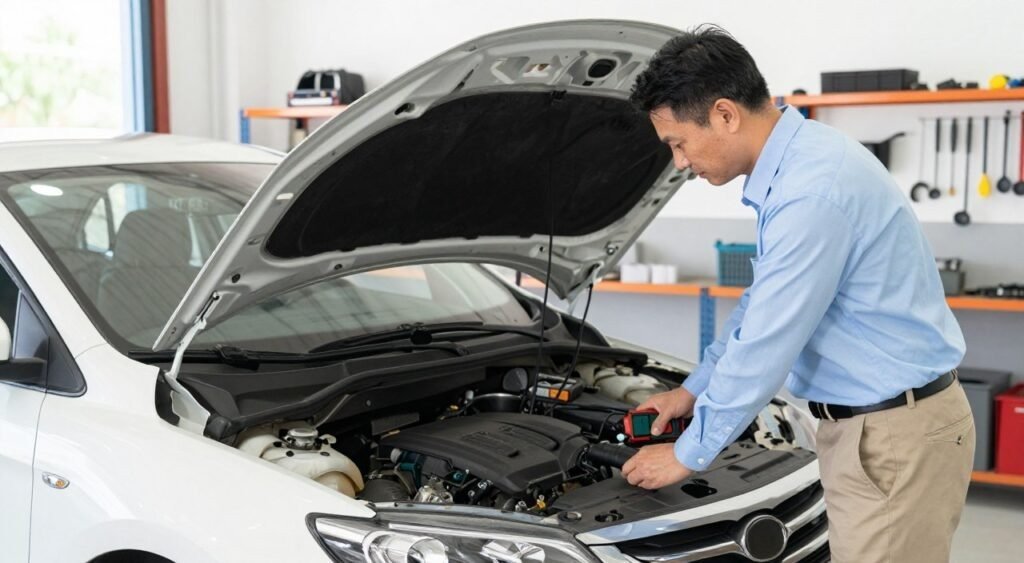
A used car can look clean in photos and still hide accident repair, flood damage, worn suspension, or a tired engine. A structured inspection before you pay protects you from the most expensive surprises, and it gives you a clear basis to negotiate or walk away. Use this checklist in order, and do not let excitement or pressure skip the mechanical checks.
Check the paperwork and history first
A car with missing paperwork or a gap in its history deserves extra caution. Service records, ownership history, and any accident reports tell you how the car was treated. Action: ask for the service book, receipts, and the vehicle history report. If the seller cannot provide them, or the story does not add up, be prepared to walk away.
Inspect the body for accident repair
Mismatched paint, uneven panel gaps, and overspray point to accident repair. A well-repaired car can be fine, but a poorly repaired one hides problems. Action: look along the body in good light for colour differences and check the gaps between panels. Open the bonnet and boot and look for non-factory welds or paint. If you find signs of a major repair, have the car inspected professionally.
Look for flood damage
Flood-damaged cars develop electrical faults and corrosion that appear months later. A musty smell, silt under the carpets, or corrosion on seat bolts are warning signs. Action: smell the interior, lift the carpets at the edges, and check under the seats for rust or silt. If you find these signs, walk away, because flood damage is rarely worth the risk.
Check the engine cold
An engine that is already warm when you arrive may be hiding a cold-start problem. Always inspect and start the engine from cold. Action: arrange to see the car after it has sat overnight. Check the oil and coolant levels, look for leaks, then start the engine and listen for unusual noises. Blue or white smoke from the exhaust on a cold start is a warning sign.
Test all the electrics
Every switch, light, and feature should work. Electrical faults are annoying and can be expensive to trace. Action: try every window, lock, light, wiper, heater setting, and infotainment function. If several unrelated electrics fail, suspect wiring or module issues and have the car checked.
Drive the car properly
A short drive around the block does not reveal much. You need varied speeds, braking, and steering to judge the car. Action: drive on different roads, test the brakes firmly, listen for suspension noises over bumps, and check that the gearbox shifts smoothly. If the seller restricts the test drive, treat that as a warning sign.
Check the tyres and brakes
Tyres and brakes are safety items and also tell you how the car was maintained. Uneven wear points to alignment or suspension faults. Action: check the tread depth across each tyre, look for uneven wear, and check the brake discs and pads. Factor the cost of replacements into your offer if they are worn.
Look underneath the car
Rust, leaks, and damage hide underneath. A quick look with a torch reveals a lot. Action: look under the car for oil or coolant leaks, rust on the subframe and sills, and damage to the exhaust. If you see heavy rust or fresh underseal hiding it, have the car inspected on a lift.
Get a professional inspection
Even a careful buyer misses things. A professional pre-purchase inspection is cheap compared to a bad buy. Action: if you are serious about the car, pay for an independent inspection. A good inspector will put the car on a lift, scan for fault codes, and give you a written report you can use to negotiate.
Know when to walk away
Not every car is worth buying at any price. Multiple warning signs, a reluctant seller, or pressure to decide quickly are reasons to walk away. Action: set your limits before you go. If the car fails the history check, shows flood damage, or the seller will not allow a proper inspection, walk away. There is always another car.
Lesson from everyday garage work
A common pattern in everyday garage work is that a buyer falls in love with a car and skips the inspection, then pays for someone else’s neglected maintenance. The lesson is to inspect first and decide second. Action: follow the checklist in order, get a professional inspection for any car you are serious about, and be ready to walk away. The money you spend on an inspection is the cheapest part of buying a used car.
For related buying checks, learn how to check the engine oil properly, read why a flashing check engine light needs quick action, and see how to find a battery drain if the electrics look suspect.