
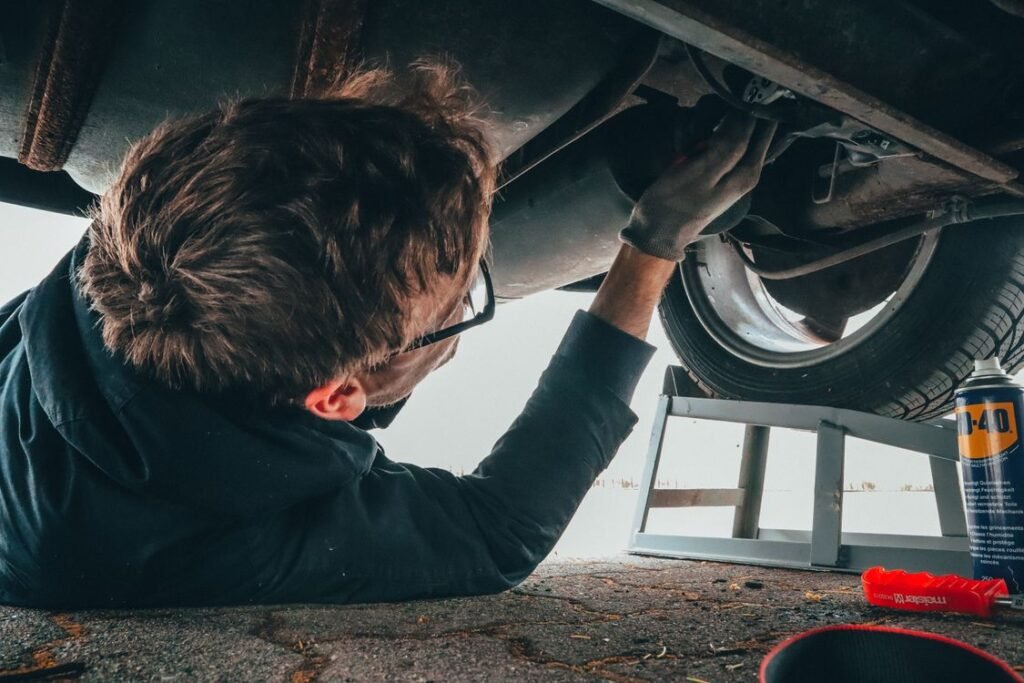
Oil pan gasket replacement cost averages 583 to 798 dollars, and most of that bill is labor. RepairPal puts labor at 455 to 668 dollars and parts at 128 to 130 dollars in its September 2026 estimate. The gasket itself is cheap, and reaching it is the expensive part. This guide covers the cost of fixing oil pan leak trouble, whether the gasket is the cause, what the repair should cost, and when to book a mechanic.
An oil pan gasket is a seal between the oil pan at the bottom of the engine and the engine block above it. It keeps engine oil inside the pan while the engine runs, and it must stay flexible through heat, cold, vibration and years of use. Over time the material hardens, shrinks and cracks, and oil starts to seep out along the edge of the pan. That slow seep can turn into a steady drip, and a steady drip can turn into a low oil level that puts the whole engine at risk.
How Much Does Oil Pan Gasket Replacement Cost
The average oil pan gasket replacement cost is 583 to 798 dollars, according to the RepairPal September 2026 estimate. Labor makes up the largest share, at 455 to 668 dollars, while parts cost only 128 to 130 dollars. You are paying mainly for the time it takes a mechanic to reach the gasket, remove the pan, clean the sealing surfaces, fit the new gasket and put everything back together.
Your own bill can sit above or below that average range, and the reason is access. On some cars the oil pan is easy to reach once the car is on a lift, so the job is straightforward. On other cars the mechanic must move parts out of the way first, and that extra work adds labor time and cost. Ask any shop for a written quote that separates labor and parts before you agree to the work. If you are comparing oil pan leak repair cost, our guide on oil leak repair cost explains how other common leaks are priced.
| Repair | Average cost | Main cost driver |
|---|---|---|
| Oil pan gasket replacement | 583 to 798 dollars | Labor to reach and reseal the pan |
| Full oil pan replacement | 868 to 1094 dollars | New pan plus labor to fit it |
Signs Your Oil Pan Gasket Is Leaking
The clearest sign is oil on the ground where you park. Look for dark brown or black spots under the front of the car, and check whether they grow after the car has sat overnight. A small spot can mean a slow seep, while a larger puddle that appears quickly means the leak is active and needs attention soon. Place clean cardboard under the engine overnight if you want a clear picture of where the oil lands.
A dropping oil level is the next sign to watch, and it matters even when you see no puddle, because oil can leak while you drive and blow back along the underside of the car. Check the dipstick regularly and watch for a level that falls between checks. Our guide on how to check oil in your car shows the full routine. A burning oil smell after a drive is another clue, because oil that seeps from the gasket can run onto a hot exhaust part and burn off. Watch the oil warning light too: if it comes on, pull over safely, switch the engine off and check the level before you drive on.
How to Tell the Gasket Is the Real Source
Oil leaks can look alike from the ground, so confirming the source before you pay for a repair is worth the effort. A leak at the drain plug, a leak at the oil filter and a leak from the valve cover can all leave oil in a similar area, and fixing the wrong one wastes money and leaves the real leak in place. Ask the mechanic to clean the underside of the engine first, then run the engine and watch where fresh oil appears. If fresh oil appears along the seam where the pan meets the engine block, the gasket is the likely cause.
Check the simple causes yourself before you book the job. Look at the drain plug at the bottom of the pan and see whether oil is weeping from the plug itself, and look at the oil filter to see whether oil is running down from the filter seal. Then look higher up the engine for oil running down from the valve cover, because that oil can travel down and collect near the pan. If the top of the engine is dry and the oil is coming only from the pan seam, the gasket is the stronger suspect. Ask for proof before you approve the work, with a clear photo of the leaking seam.
What Makes the Price Go Up or Down
Access is the largest factor in oil pan seal replacement cost. When the pan is easy to reach, the mechanic can remove it, clean it and refit it without moving much else, and the labor bill stays near the lower end of the range. When the pan sits above a subframe, behind an exhaust section or close to other parts that must come off first, the mechanic must remove and refit those parts as well, and that extra work pushes the labor bill higher. Some models cost far more when the subframe or exhaust must come off, so a quote that looks high on one car can be fair on another.
Oil Pan Gasket Replacement or a Full Oil Pan Replacement
Choosing between oil pan gasket replacement and a full oil pan replacement comes down to the condition of the pan itself. If the pan is straight, solid and free of cracks, a new gasket is enough, and you should not pay for a new pan you do not need. The mechanic removes the pan, cleans the old gasket material from both sealing surfaces, fits the new gasket, refits the pan and fills the engine with fresh oil, then checks for leaks with the engine running.
If the pan is damaged, the decision changes. A pan hit by road debris can be dented so it no longer seals flat, a pan that has rusted can be thin and weak, and a pan that has cracked will leak no matter how good the new gasket is. In those cases a full oil pan replacement is the right repair, and the average cost is 868 to 1094 dollars, because the price includes a new pan as well as the labor to fit it. Ask the mechanic to show you the dent, crack or rust before you agree to the higher cost.
Can You Keep Driving With an Oil Pan Leak
A very slow seep may let you drive for a short time while you arrange the repair, but only if you check the oil level often and keep it topped up to the correct mark. That is a short term plan, not a fix, and it only works when the leak is small and the level stays steady between checks. Check the level before every drive, carry the correct oil with you, and watch for any change in the spots under the car. If the leak grows, the level falls quickly or the warning light comes on, stop driving and book the repair at once.
Driving with low oil risks serious engine damage, because oil is what keeps the moving parts inside the engine separated and cool. When the level falls too low, parts rub without enough lubrication, heat builds up, and wear happens fast. That damage can turn a gasket repair into an engine repair, and the cost of that outcome is far beyond the cost of fixing the leak in good time. Avoid common shortcuts: do not use a leak stopping additive as a substitute for a repair, and do not overtighten the pan bolts to try to stop the seep, because the bolts can strip the threads or bend the pan flange and create a worse leak.
What the Repair Involves and When to Book It
Book the repair as soon as you have confirmed the gasket is the source, and do not wait for the leak to grow. A mechanic will lift the car, drain the oil, remove the pan, clean both sealing surfaces until they are free of old gasket material and oil, fit the new gasket with the correct sealant if your engine needs it, refit the pan and tighten the bolts in the right order, then fill the engine with fresh oil and a new filter and run the engine to check for leaks. A dirty sealing surface or a bolt tightened out of order can cause a new leak from the same place. If you change your own oil, our guide on how to do an oil change explains the oil and filter routine.
Frequently asked questions
How much does oil pan gasket replacement cost on average?
Oil pan gasket replacement cost averages 583 to 798 dollars, based on the RepairPal September 2026 estimate. Labor costs 455 to 668 dollars and parts cost 128 to 130 dollars, so labor is the largest part of the bill. Your exact price depends on how easy the pan is to reach on your model.
How do I know the leak is the oil pan gasket and not something else?
Clean the underside of the engine, then run the engine and watch where fresh oil first appears. If fresh oil appears along the seam where the oil pan meets the engine block, the gasket is the likely source. If oil appears at the drain plug, at the oil filter or running down from the valve cover, that part is the more likely cause.
Can I drive with a leaking oil pan gasket?
You can drive for a short time with a very slow seep if you check the oil level before every drive and keep it at the correct mark, but this is only a short term plan while you arrange the repair. Do not drive if the leak is active, the level falls quickly or the oil warning light comes on, because driving with low oil risks serious engine damage.
Should I replace the gasket or the whole oil pan?
Replace only the gasket when the pan is straight, solid and free of cracks, because a new gasket will seal a sound pan and the average cost stays at 583 to 798 dollars. Replace the whole oil pan when it is cracked, badly dented or rusted through, because a new gasket cannot seal a damaged pan, and a full oil pan replacement averages 868 to 1094 dollars.