
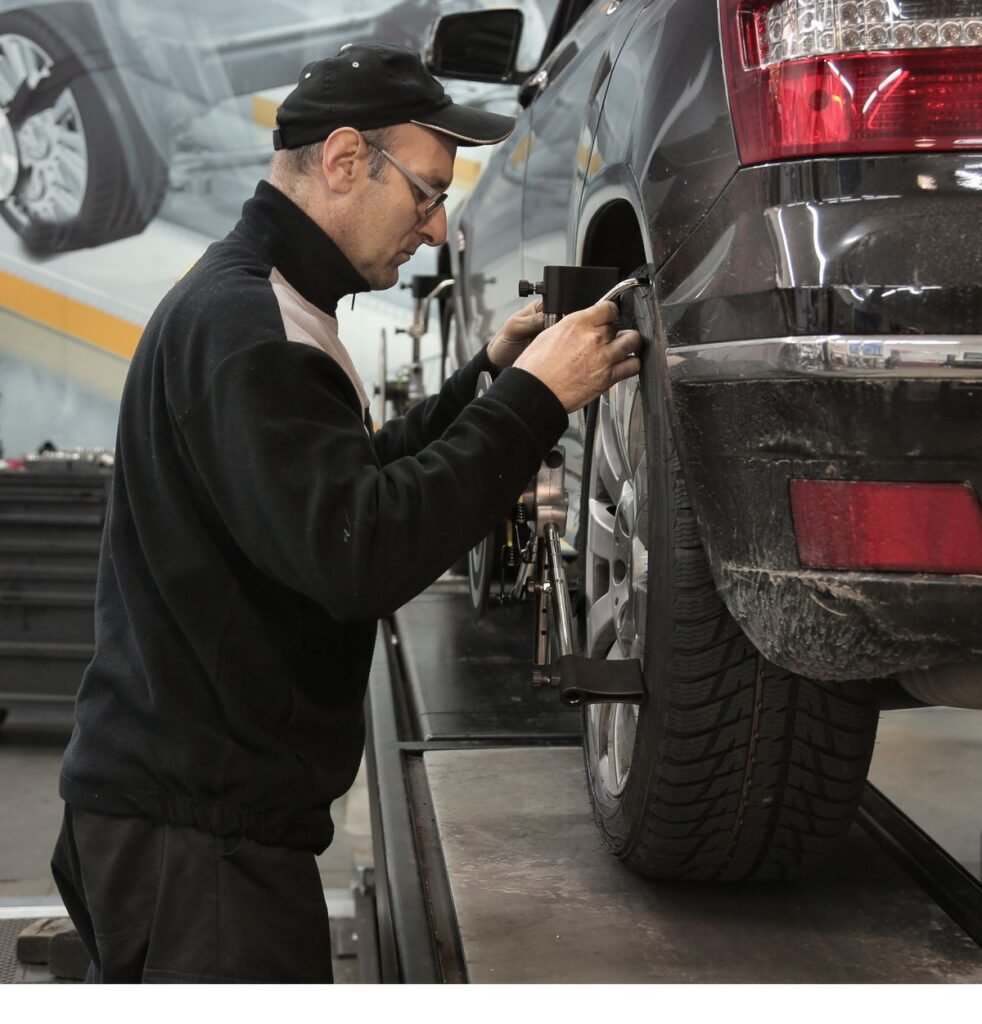
If you have car shaking while driving, the most common causes are unbalanced wheels, worn tires, bent rims, or worn suspension and steering parts, and the speed at which the shaking happens is your best clue. A shake that appears around highway speed and fades when you slow down usually points at the wheels and tires, while a shake at low speed often means a tire or wheel is physically out of shape. None of these causes fix themselves, so the sooner you track it down, the cheaper it tends to be.
Start with the pattern: when does it shake
Before spending anything, notice the pattern carefully, because it narrows the search enormously:
- Shaking that starts around 50 to 70 mph and smooths out above or below that range: classic wheel balance problem.
- Shaking at low speed that feels like a wobble: a bent wheel, a tire with a bulge or separated belt, or a badly worn tire.
- Shaking that gets steadily worse the faster you go: treat it as urgent; a tire may be failing.
- Shaking felt mostly in the seat: problem is usually at the rear wheels. Felt mostly in the steering wheel: usually the front wheels.
- Shaking only while accelerating: points more to the drivetrain, such as worn CV joints or engine mounts, than to balance.
If the shaking in your case happens when you press the brake pedal rather than while cruising, that is a different fault with different causes, and our guide to why a car shakes when braking covers it in detail.
The most common causes, one by one
Wheel balance and alignment
Wheels are balanced with small weights, and those weights can fall off or the balance can shift as tires wear. An out of balance wheel shakes at speed because it is effectively heavier on one side. Balancing is quick and cheap, typically 15 to 30 dollars per wheel. Alignment being out does not usually cause a shake by itself, but it wears tires unevenly, and uneven tires then shake and pull. An alignment typically costs 100 to 200 dollars.
Tires
Tires are the number one cause overall. Look for uneven wear, cupping (a scalloped pattern around the tread), flat spots after the car sat unused, bulges in the sidewall, and low pressure. A separated belt inside the tire makes the car wobble at low speed and can lead to a blowout. Any bulge in a sidewall means that tire should be replaced, not repaired.
Wheels and wheel bearings
A rim bent by a pothole or curb will shake no matter how well it is balanced. A worn wheel bearing more often growls or hums, but a badly worn one can add looseness and vibration too. Bearings typically cost 250 to 450 dollars per wheel fitted.
Suspension and steering parts
Ball joints, tie rod ends, control arm bushings, and worn shock absorbers or struts all hold the wheel steady. When they wear, the wheel can move in ways it should not, and the shake shows up over bumps or at speed. These parts connect closely with the steering system itself, so if your steering also feels loose or vague, read our steering column guide for the related checks. Individual joints and bushings range widely, from about 150 to 600 dollars fitted depending on the car.
Drivetrain causes
On front wheel drive cars, worn inner CV joints classically cause a shake under acceleration that disappears when you lift off the throttle. Bent axle shafts, a damaged driveshaft on rear wheel drive cars, and worn engine or transmission mounts can all do similar things. CV axle replacement typically runs 250 to 500 dollars per side.
What it usually costs to fix
| Fix | Typical cost range |
|---|---|
| Wheel balancing, per wheel | 15 to 30 dollars |
| Wheel alignment | 100 to 200 dollars |
| New tire, fitted | 120 to 350 dollars each |
| Wheel bearing, per wheel | 250 to 450 dollars |
| CV axle, per side | 250 to 500 dollars |
| Ball joint or tie rod end | 150 to 400 dollars |
Prices vary by car model and region, and luxury or large vehicles sit at the top of these ranges.
A simple order to check things
Start free: check tire pressures, look closely at all four tires for damage and uneven wear, and make sure the lug nuts are tight. Then rotate the tires front to back; if the shake moves from the steering wheel to the seat or the other way round, you have confirmed it is a wheel or tire problem. After that, a balance and inspection at a tire shop is the best value step, because they will spot a bent rim or a failing tire while the wheels are off. Leave suspension and drivetrain diagnosis for after the simple causes are ruled out.
When shaking means stop driving
Pull over and arrange help if the shaking is violent, starts suddenly after hitting something, comes with a loud noise, or the steering feels like it is fighting you. A tire that is about to fail or a wheel that is coming loose gives exactly this kind of warning. Gentle shaking that has crept in over weeks is a book it in soon problem; sudden severe shaking is a stop now problem.
Frequently asked questions
Why does my car shake at 60 mph but not at 40
That pattern almost always means a wheel balance issue. An unbalanced wheel has a speed range where its vibration matches the natural rhythm of the suspension, which for most cars falls around 50 to 70 mph. Balancing the wheels usually cures it completely.
Can bad brakes make a car shake while driving
Only while braking, in most cases. A warped rotor shakes the car when you press the pedal, not while cruising at a steady speed. If the shake is there without touching the brakes, look at wheels, tires, and suspension first.
Is it safe to drive with a shaking car
A mild, long standing shake at highway speed is usually safe for a short trip to a shop, but it should not be ignored for weeks. Severe or sudden shaking is not safe at all. When in doubt, slow down and get the car inspected before your next long drive.
A shaking car is giving you information with every mile. Read the pattern, start with the tires and balance, and work outward from there. Most drivers find the cause is simple, common, and far cheaper than they feared.