
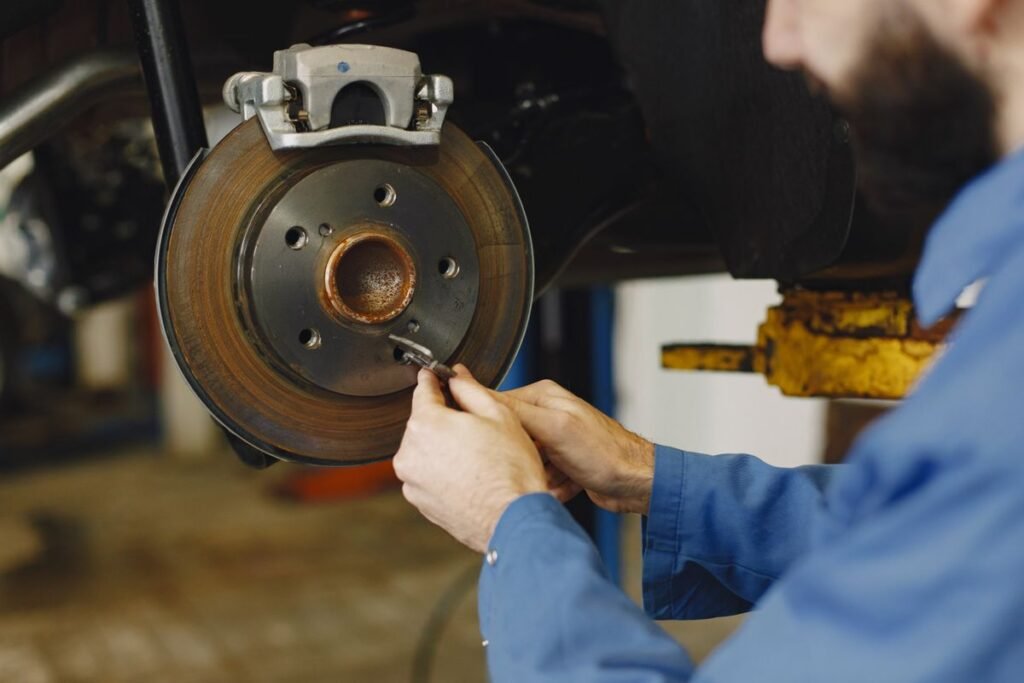
If your brakes squeal, grind, or feel weaker than they used to, worn brake pads are the most likely cause, and the good news is that the brake pad replacement cost is one of the more predictable repair bills. Most drivers pay between $150 and $300 per axle for parts and labor at a workshop, which covers either the two front wheels or the two rear wheels. Doing the job yourself with a basic set of tools can bring the cost down to $40 to $120 for the pads alone.
Brake pads are wear items, just like tires. They press against the brake discs to slow the car, and every stop shaves a little material off them. Most pads last between 30,000 and 70,000 miles depending on the car, the pad material, and how and where you drive. City driving with constant stopping wears them out far faster than relaxed highway miles.
What the brake pad replacement cost includes
A standard quote for new brake pads usually covers more than the pads themselves. A proper job includes removing the wheels, fitting the new pads, checking the discs and calipers, cleaning and lubricating the slide pins, and testing the brakes afterward. Some workshops also top up the brake fluid if the level has dropped.
- New brake pads for one axle, front or rear
- Labor, usually 1 to 2 hours per axle
- Inspection of discs, calipers, and brake lines
- Bedding in, which means a short test drive so the pads seat correctly
If a mechanic suggests extra work, ask what is worn and why. Pads and discs wear together, so an honest inspection matters more than the cheapest quote. Our guide to brake fluid, brake noise and pad change timing explains the warning signs in more detail.
Average costs at a glance
The table below shows typical brake pads replacement cost ranges in the United States. Prices vary by car model and region, and luxury or performance cars with larger brakes sit at the top of every range.
| Job | Parts | Labor | Typical total |
|---|---|---|---|
| Pads only, one axle | $35 to $120 | $100 to $200 | $150 to $300 |
| Pads only, both axles | $70 to $240 | $180 to $350 | $280 to $550 |
| Pads and discs, one axle | $150 to $400 | $120 to $220 | $300 to $650 |
| Pads for a large SUV or truck, one axle | $60 to $180 | $120 to $250 | $200 to $450 |
What makes the price go up or down
Pad material
Organic pads are the cheapest and quietest but wear fastest. Semi metallic pads cost a little more and handle heat better, which suits heavier cars. Ceramic pads are the most expensive common option, produce less dust, and last longer, so many drivers find them worth the extra money.
Car make and model
A small hatchback uses small, cheap pads. A European luxury sedan or a full size truck uses bigger brakes, pricier parts, and sometimes electronic wear sensors that must be replaced with the pads. Some modern cars also need a scan tool to retract the electronic parking brake before the rear pads can be changed, which adds labor time.
Where you live and who does the work
Dealer labor rates are usually the highest, independent workshops sit in the middle, and mobile mechanics or small local shops are often the lowest. Labor rates also vary a lot between big cities and rural areas.
Do you need new discs as well
Discs, also called rotors, wear down more slowly than pads, but a scored or warped disc will ruin new pads quickly and cause vibration when braking. The price for brake disc replacement is usually $150 to $400 per axle for parts, plus similar labor to the pad job, so pads and discs together on one axle commonly total $300 to $650.
A workshop should measure disc thickness before recommending replacement. If the discs are within specification and smooth, new pads alone are fine. If they are near the minimum thickness, replacing both together saves paying the same labor twice. Our brake rotors guide covering signs, lifespan and replacement helps you judge whether yours still have life left.
DIY or workshop
Changing pads is one of the most popular home mechanic jobs because it needs only a jack, axle stands, a wrench set, and a tool to push the caliper piston back. Parts cost $35 to $120 per axle, so a careful DIY job can save $150 or more. The risks are real, though: a mistake with brakes is a safety problem, not just an inconvenience. If you are not confident, or if the caliper bolts are seized, pay a professional.
A safety warning worth repeating: never work under a car supported only by a jack. Use proper axle stands on solid ground, and pump the brake pedal until it feels firm before driving anywhere after the job.
Signs your pads are due
- Squealing or chirping when you brake lightly
- Grinding sounds, which mean the pad material is gone and metal is touching the disc
- A longer stopping distance or a soft, low pedal
- Vibration through the pedal or steering wheel
- A brake warning light or a pad wear message on the dashboard
- Pads visibly thinner than about 3 millimeters when you look through the wheel
Frequently asked questions
How long does a brake pad replacement take
A workshop usually needs 1 to 2 hours per axle. A first time DIY job often takes 2 to 3 hours for the front axle, and gets faster with practice.
Should I replace pads on both sides
Yes. Pads are always replaced as an axle set, meaning both front wheels or both rear wheels together. Replacing only one side can make the car pull to one side when braking.
Can I drive with worn brake pads
You can drive carefully for a short time with pads that are nearly worn, but grinding noises mean stop and get them changed now. Worn out pads damage the discs, raise the total bill, and seriously reduce stopping power.
Brake pads are one repair you should never stretch too far. Get two or three quotes, ask whether the discs were measured, and keep the receipt, because pad warranties and records help at resale time. A fair price, good parts, and a proper inspection will keep your brakes quiet and strong for years.