
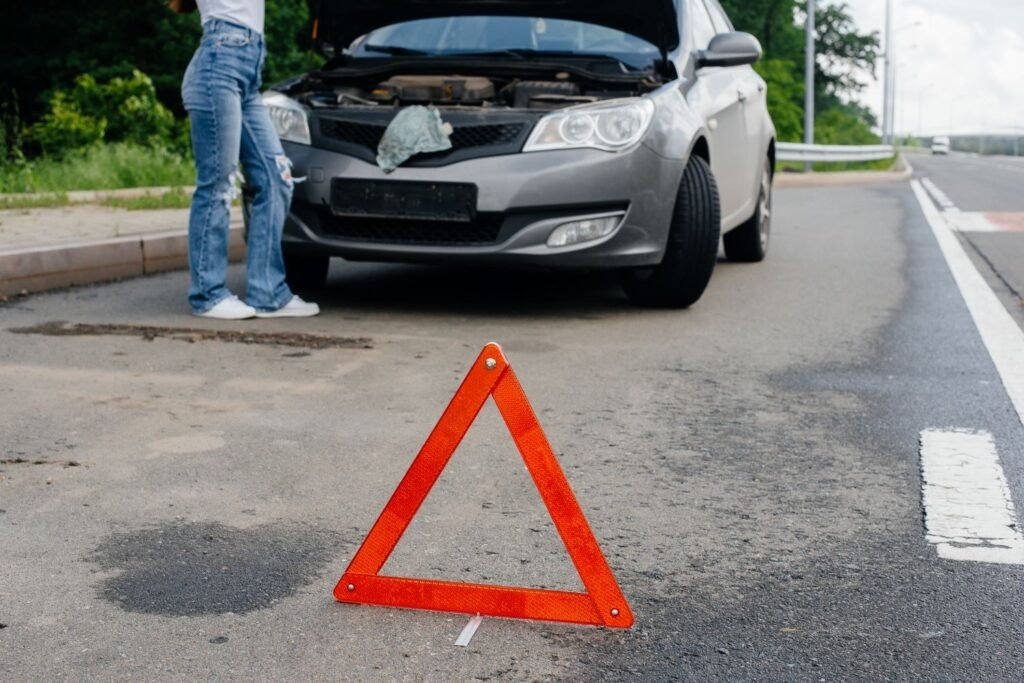
A car that stalls while driving is frightening, because steering and braking assistance can fade as the engine stops. The first job is safety, and the second job is diagnosis. Stalling can come from fuel delivery, ignition, air supply, electrical faults, or a faulty sensor, and the pattern of the stall often points to the cause. Note the pattern carefully, because that detail guides the garage.
Get to safety first
A stalling car loses power assistance, so the steering gets heavy and the brakes need a harder push. Do not panic. Action: grip the wheel firmly, signal, and steer to the side of the road or a safe layby. Once stopped, switch on hazard lights, apply the handbrake, and switch off the ignition. If you are on a motorway, get out and behind the barrier if it is safe to do so.
Note the pattern of the stall
How and when the car stalls narrows the cause. A stall at idle points one way, a stall under load points another. Action: write down what happened. Did it stall at idle, when slowing down, when accelerating, or at steady speed? Did it restart straight away? Did any warning lights come on? This pattern is the most useful thing you can tell the garage.
Check the fuel level and delivery
An empty tank is the simplest cause, and a faulty fuel gauge can hide it. Beyond that, a weak fuel pump or a clogged filter starves the engine under load. Action: check the fuel gauge and consider whether it reads correctly. If the tank has fuel but the car stalls under acceleration or load, have the fuel pressure and filter checked.
Look at the ignition system
Worn spark plugs, failing coils, or damaged leads cause misfires that can stall the engine, especially under load. The stall may come with a flashing check engine light. Action: if the car stutters or misfires before stalling, the ignition is suspect. Have the plugs, coils, and leads checked. A diagnostic scan will often show misfire codes that point to the faulty cylinder.
Check for air supply faults
The engine needs the right amount of air. A dirty throttle body, a faulty idle control valve, or a split air intake hose can stall the engine, especially at idle or when coming to a stop. Action: if the car stalls when you lift off the accelerator or at junctions, suspect the air supply. A garage can clean the throttle body and check for intake leaks.
Test the battery and charging system
A weak battery or a failing alternator can cause the electrics to drop out, stalling the engine. You may notice dim lights or a battery warning before the stall. Action: check the battery terminals are tight and clean. If the car needed a jump start recently or the battery is old, have the battery and alternator tested.
Look for a faulty crankshaft sensor
The crankshaft position sensor tells the engine computer when to fire the spark and inject fuel. When it fails, the engine can cut out without warning and may not restart until it cools. Action: if the car stalls when hot and restarts after cooling down, the crankshaft sensor is a prime suspect. A diagnostic scan can confirm it.
Check for overheating
An overheating engine can stall or shut down to protect itself. Action: check the temperature gauge. If it was in the red before the stall, do not try to restart and drive. Let the engine cool, check the coolant level when cold, and have the cooling system inspected before driving again.
Do not keep restarting a stalling car
Repeatedly restarting a car that stalls can drain the battery, flood the engine, or mask a fault that needs proper diagnosis. Action: if the car stalls twice, stop trying and call for recovery. Continuing to drive a car that stalls unpredictably is dangerous for you and other road users.
Know when it is safe to drive to a garage
A single stall with an obvious cause, like running out of fuel, is different from repeated unexplained stalls. Action: if the car restarts and runs normally, drive cautiously to a garage for a diagnostic check. If it stalls again on the way, pull over and call for recovery. Do not attempt a long journey until the cause is found.
Lesson from everyday garage work
A common pattern in everyday garage work is that a stalling fault gets expensive parts when the real cause was a dirty throttle body, a weak battery, or a failing sensor. The lesson is to note the pattern and check the simple causes first. Action: record when the stall happens, check fuel, battery, and warning lights, then let a diagnostic scan guide the repair rather than guessing.
For related engine checks, learn why a flashing check engine light needs quick action, read what to do when the car will not start and you hear a clicking noise, and see how to find a battery drain if the electrics look suspect.